Sign up for the daily CJR newsletter.
Last Sunday, Wilmer Roberto Solano Dávila, a Venezuelan journalist, was arrested and detained by US Customs and Border Protection (CBP) in Miami Beach, Florida. El Nuevo Herald, a Spanish-language newspaper in southeast Florida, reported that Solano entered the US legally with a journalist visa in January of 2015, citing immigration documents, and that he claimed asylum in December of that year. While working as a journalist in Venezuela, in August of 2011, Solano and a cameraman were attacked in the city of Tinaquillo by red-shirted supporters of the Hugo Chávez regime in retaliation for their reporting, according to IFEX, an organization headquartered in Canada that promotes freedom of expression; the assailants destroyed their camera. After Solano’s arrest, on July 26, María Moreno, his wife, wrote on a fundraising page to cover his legal bills that he “was taken into custody without a warrant or any criminal charges. He has no criminal record, has lived in the United States for almost twelve years, and has a pending asylum case.” She added, “He has always worked hard to support our family, and we are doing everything we can to make sure he has the legal representation he needs.”
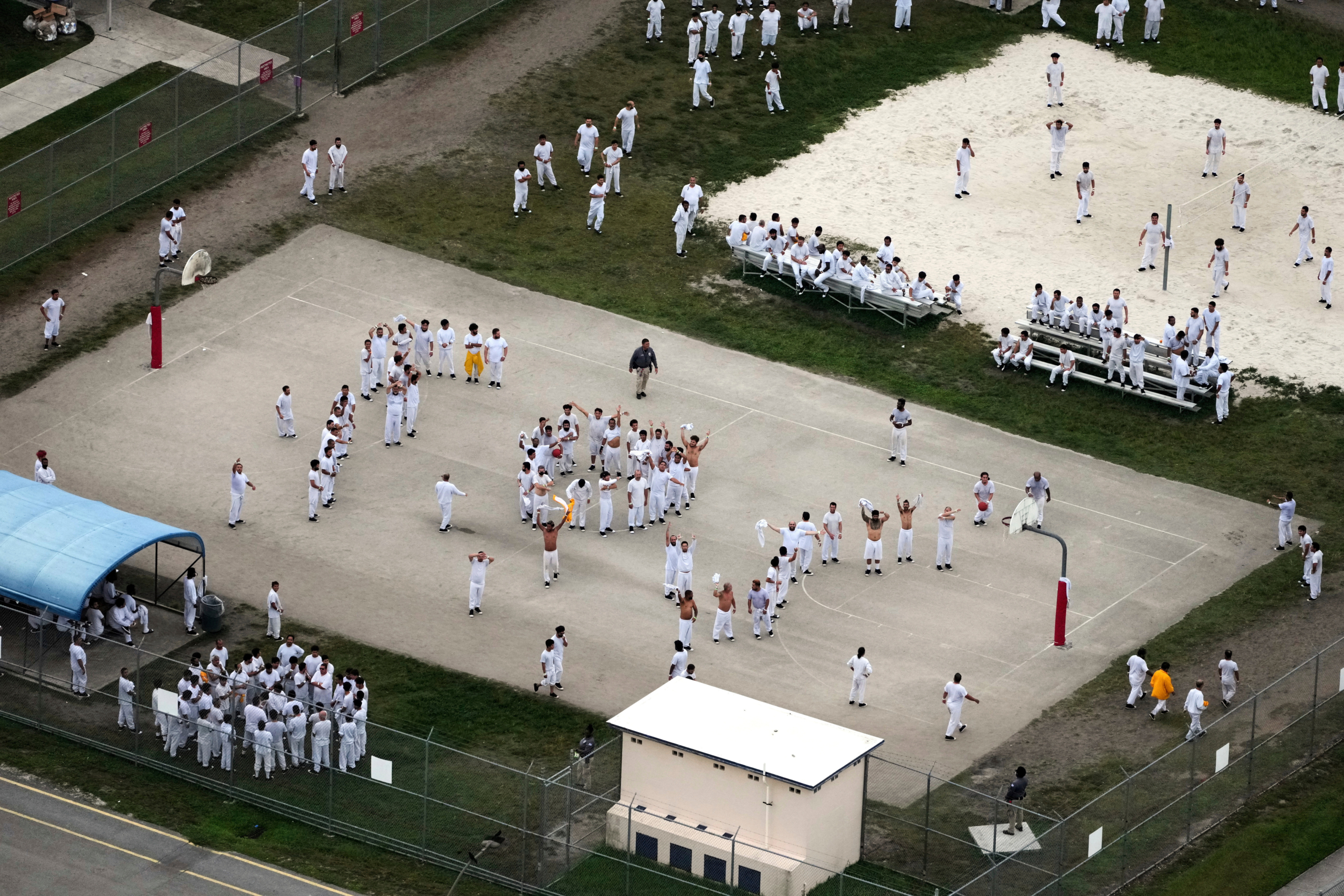
According to the US Immigration and Customs Enforcement (ICE) website, Solano is being held in the Krome North Service Processing Center in West Miami. A spokesperson for the Department of Homeland Security told the Los Angeles Times on Wednesday that Solano has “no status that would allow him to remain” in the US, and said that he “will receive full due process and remain in custody pending the outcome of his removal proceedings.” Sergio Novelli—a Venezuelan journalist also based in the Miami area, who posted about the arrest to his three million followers on Instagram—told El Nuevo Herald that Solano held a valid work permit and had an immigration court hearing scheduled for August 26. (CJR reached out to Novelli and DHS over the weekend but did not receive replies before publication. “To be clear, work authorization or a pending application do NOT confer legal status in the United States,” a DHS spokesperson told the LA Times.) El Nuevo Herald also reported that Solano had Temporary Protected Status (TPS) from 2021 until September of 2025; that month, the Trump administration abolished TPS status for Venezuelans in the US.
Solano does not appear to have been working as a journalist at the time of his arrest; it seems he was caught up in Donald Trump’s aggressive crackdown on immigrants, rather than his aggressive crackdown on the press. The Nuevo Herald report said that Solano, who is fifty-nine, was stopped by CBP agents at 4:40pm around Haulover Beach—an hour’s drive south of Mar-a-Lago—while working as a “private transport driver.” According to his LinkedIn profile, Solano worked for Globovisión in the aughts, and later for an agency he founded and led, Zorro Comunicaciones, which appears to have done journalistic and consulting work, until April of 2023. Moreno, his wife, did not respond to an interview request over the weekend. As of Monday morning, the family’s GoFundMe had raised nearly five thousand dollars.
Regardless of what he was doing when he was arrested last weekend, Solano’s name now joins the growing list of journalists detained in the US under the second Trump administration. At least thirty-two were arrested last year, according to a count by the Freedom of the Press Foundation’s US Press Freedom Tracker, and, as the LA Times’ Carlos De Loera pointed out, Solano is at least the third Latino journalist detained by federal officials. Last June, Mario Guevara, then forty-eight, was arrested while reporting on a “No Kings” rally in Doraville, Georgia. He was deported on October 3. (Betsy Morais, CJR’s editor in chief, wrote about the case.) Guevara’s removal to El Salvador is thought to have been the first case of someone deported from the US in retaliation for journalism. In March, as my colleague Carolina Abbott Galvão reported, Estefany Rodríguez, then thirty-five, was detained a day after reporting on an ICE raid in Nashville for Nashville Noticias. Her case remains ongoing.
Two things are happening simultaneously in these cases. The first is that the Trump administration seeks to get rid of people it deems undesirable—even if they have not committed a crime and are legally engaged in prolonged immigration or asylum processes. Second, the administration has sought to punish and deter journalists—such as Guevara in Georgia, Rodríguez in Tennessee, and Georgia Fort and Don Lemon in Minnesota—who shed light on the forcefulness and sheer brutality of its immigration policies. Its efforts to shut down critical reporting, though, do not appear to be working, either in the courtroom—where Trump has suffered setbacks in recent months—or in the court of public opinion. New polling published last week, commissioned by CNN and conducted by SSRS, found that 54 percent of those surveyed said Trump has gone too far in mass-deporting undocumented people. Overall, 73 percent said Trump has not paid enough attention to the country’s most important problems.
On Friday, Solano’s family posted an update to their GoFundMe page. It had been unclear where Solano was being held, the LA Times reported on Wednesday, but Moreno wrote that Solano had been “transferred to the detention center.” Krome, like “Alligator Alcatraz,” is the site of alleged human rights violations, according to Human Rights Watch and Amnesty International, the latter of which reported that some detainees there have been “forced to kneel to receive food, shackled, and held in frigid, overcrowded cells.” “These have been very difficult days filled with uncertainty for our family,” Moreno wrote. “However, every donation, message, prayer, and time you share this campaign makes us feel supported and gives us the strength to keep moving forward.”
Other Notable Stories …
By Jem Bartholomew
- Matthew Cole, a freelance national security reporter, has been fighting a subpoena from the Trump administration seeking to force him to reveal his sources for a New York Times article last year about a failed top-secret Navy SEAL mission in North Korea, the Times reported on Saturday. FBI agents arrived at Cole’s home in New York in February to serve the subpoena, which was issued by prosecutors in Virginia. (Cole was not home at the time; the subpoena was ultimately given to his lawyer.) The article’s coauthor, Dave Philipps, a Times staffer, was not subpoenaed. Investigators are seeking information about two years’ worth of Cole’s contacts and conversations, the Times reported. (The paper is providing a legal defense to Cole, who is challenging the subpoena.) Charlie Stadtlander, a Times spokesman, called it “another brazen and illegal attack from the administration designed to deny the public information of vital importance.” The news follows the Justice Department’s withdrawal of subpoenas to a separate team of Times reporters last month, which I wrote about at the time.
- BuzzFeed, HuffPost, and Tasty plan significant layoffs in a major restructuring under the ownership of Byron Allen, the comedian turned entrepreneur, who announced plans to acquire about 52 percent of BuzzFeed in May as part of an agreement worth a hundred and twenty million dollars, according to the Hollywood Reporter. “As of this moment, BuzzFeed is officially chasing YouTube and the other big tech platforms,” Allen said in May. The layoffs would cut around a hundred and eighty staffers, about 35 percent of the company’s staff and contractors, Deadline reported. “Today’s changes include the elimination of positions across the entire company,” a memo obtained by Deadline said.
- For the New York Times, Stuart A. Thompson reported on Friday that right-wing media influencers are losing viewers, in a piece headlined “The MAGA Media Machine is Fracturing.” The article analyzed several years of audience data for prominent right-wing content creators across various platforms. Weekly YouTube views, for instance, were all down in recent months, for creators including Megyn Kelly, Benny Johnson, Candace Owens, Matt Walsh, and Tucker Carlson. Podcast listens and views of right-wing influencer-generated content on X and Rumble have also slid. “The shifts add to a growing body of evidence that suggests the audience for pro-Trump content has fallen from its heights and, for some creators, has reached new lows,” Thompson wrote. “Only a few saw their audiences grow since Mr. Trump’s inauguration, while many more have seen their viewerships decline.”
- In Glasgow, Scotland, the editor of the Daily Record, Neil McIntosh, said the newspaper would “continue to report without fear” after a fascist-style protest was held outside its offices on July 24. About fifty far-right demonstrators stood in military-style formation—“appearing to imitate the Blackshirts of Mussolini’s National Fascist Party,” Press Gazette reported—while one person planted a flag emblazoned with the phrase “protecting Scotland.” The demonstration appeared to be in retaliation for reporting from the Record that unmasked one of the group’s activists as a “notorious football thug.” “No journalist should face harassment as part of their job in a democratic society,” Nick McGowan-Lowe, of Scotland’s branch of the UK National Union of Journalists, told Press Gazette.
- And some notable industry moves were announced last week. Ross Douthat, a conservative columnist and podcast host at New York Times Opinion, is joining CBS News as a 60 Minutes correspondent; the storied newsmagazine also hired Sebastian Junger, a writer and documentary filmmaker; Gianna Toboni, a filmmaker formerly of Vice News; and Trevor Phillips, a British broadcaster who recently left Sky News, as contributors. (I wrote for CJR in June about Nick Bilton, Bari Weiss’s pick for executive producer of 60 Minutes, and his push to revolutionize the show.) In other job news, Adam O’Neal, editor of the Washington Post’s opinion section, abruptly told staff last week that he will be leaving at the end of the month. O’Neal took charge of the section last year as the Post’s owner, Jeff Bezos, pushed for it to promote “personal liberties and free markets.”
Editor’s Note: This article has been updated to correct the location of El Nuevo Herald.
Has America ever needed a media defender more than now? Help us by joining CJR today.