

Sign up for the daily CJR newsletter.
The landing page for “Trump: A Second Chance?”—an episode of the BBC’s investigative show Panorama, which originally aired in October of 2024—is missing a play button. In its place, there’s a note: “Sorry, this episode is not currently available.” A disclaimer says that the documentary has been retracted. All that remains is a still photograph of Trump, glowering into the camera.
That episode—or, really, a snippet from it—is at the heart of Donald Trump’s defamation lawsuit against the BBC. In an edited clip of a Trump speech, delivered on January 6, 2021, the BBC stitched together sentences he had uttered about fifty minutes apart, making it sound like he was directly inciting the insurrection at the Capitol that day. After the edit was highlighted in a leaked internal memo in 2025, the BBC apologized for the error. (As I wrote for CJR last November, though, the episode’s wider contention that Trump was cheering on an antidemocratic riot is not really wrong.) But Trump has demanded more than an apology. Despite the show never having aired in Florida, his lawyers are seeking ten billion dollars in damages in a federal court there, alleging that the segment violated the state’s Unfair and Deceptive Trade Practices Act. Trump’s lawyers, who did not respond to my comment request, have said the misleading edit was malicious and defamatory, causing “injury to President Trump’s business and personal reputation.”
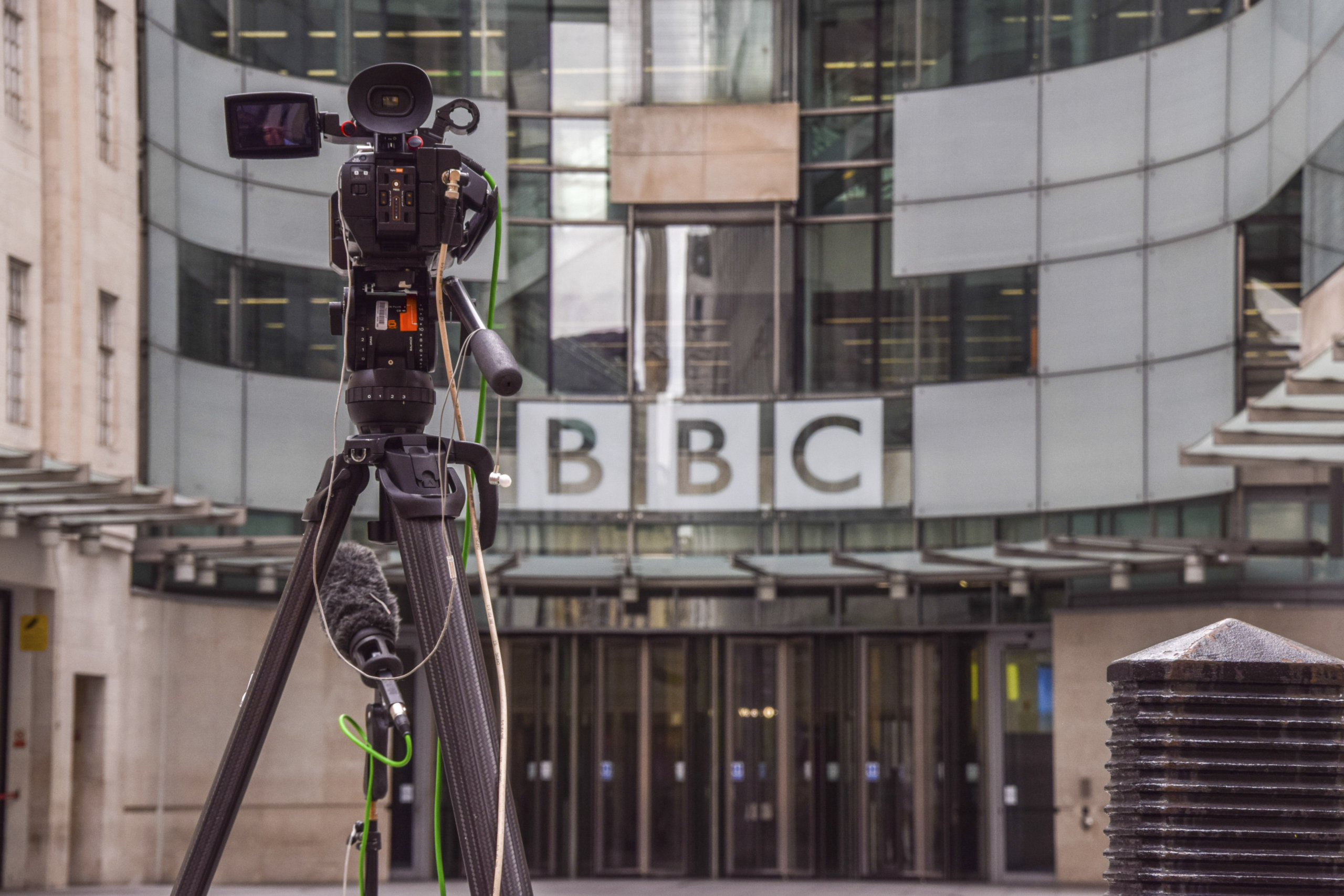
The BBC declined to speak to me about the case over the weekend. But its lawyers, after unsuccessfully asking that Trump’s suit be dismissed, have been fighting it aggressively. As part of discovery, they have sought to turn the tables on him, asking for business documents relating to Mar-a-Lago—such as the total cost of membership and initiation fees, and the number of applications each year—as well as Trump’s diary and phone logs around the time of the Capitol riot. They have also asked that the president sit for a deposition. Their approach is similar to the strategy pursued by lawyers for the Pulitzer Prize Board—which Trump also sued for defamation in Florida—who sought access to Trump’s tax returns, dating back to 2015, and medical records, including possible psychological records. (That case, filed in 2022, remains ongoing. Trump sparked criticism when he nominated to the federal bench two state appeals court judges who had ruled in his favor in his battle against the Pulitzer board.)
As with the Pulitzer suit, Trump’s lawyers have dragged their feet on the BBC’s discovery requests. A deposition was originally scheduled for October 16, but his lawyers canceled, citing “other matters of national importance.” (Trump, among other things, was making a speech in Georgia that day. He arrived at the podium and did a little dance to Lee Greenwood’s “God Bless the USA.”) And, in a discovery hearing last Thursday, Charles Tobin, an attorney for the BBC, said Trump’s lawyers “have produced absolutely nothing of any substance” in response to its document requests, The Guardian reported. During that hearing, Enjoliqué A. Lett, a US magistrate for the Southern District of Florida, ordered that Trump must sit for a deposition before December 11, and rejected his lawyers’ request that the session not be videotaped. Lett also allowed the BBC to subpoena business records related to Mar-a-Lago. The judge added a warning: with only two months left of discovery, failure to properly engage in the process “could result in sanctions, including possible dismissal of the suit.” In other words, Trump should cough up, or see it tossed out.
The news was warmly received in several media reports. The Daily Beast framed the judge’s order as Trump suffering a “stinging defeat,” while a New Republic headline said: “Trump Ordered to Sit for Deposition as His BBC Lawsuit Blows Up.” These characterizations may be a stretch. The judge’s order is “significant in the context of this litigation, because the president seems to think he’s above the law,” David A. Schulz, the director of the Media Freedom and Information Access Clinic at Yale Law School, told me. But “in a routine libel case, these would be run-of-the-mill orders, that you’re entitled to evidence that is relevant to your damage claims, you’re entitled to take the plaintiff’s deposition if there are disputed questions of fact.” Even if Trump plays ball—finally sitting for a deposition, and giving the BBC’s lawyers access to business documents—there’s no guarantee the material would lead to any journalistic benefit. If the material is sealed, making it public would likely require the approval of a judge down the line. Still, it has been refreshing to see the BBC defend on the front foot. With any luck the broadcaster will find ways to use Trump’s deposition and business records to its—and the public’s—advantage.
“Obviously, President Trump will make every effort he can to have those records sealed, but in the United States, presumptively, these are open cases, these are civil lawsuits, and at some point I have a feeling that most of that information will migrate in one way or another into the public realm,” Clay Calvert, a nonresident senior fellow at the American Enterprise Institute and professor of law and Brechner Eminent Scholar Emeritus at the University of Florida, told me. He called the BBC’s push to depose Trump a “wise strategy,” adding: “I think it’s time that defendants who are being sued by Donald Trump push back” and make him “explain publicly, on the record in a deposition, why he determines these cases are worth that amount of money.”
Other, US-based media outlets’ decisions, after Trump won the 2024 presidential election, to capitulate to his lawfare have cast a long shadow. Consider ABC’s settlement of a libel case for sixteen million dollars over how George Stephanopoulos characterized the successful outcome of E. Jean Carroll’s defamation suit against Trump. Then there was the settlement from CBS’s parent company, Paramount, which likewise paid Trump sixteen million to settle a lawsuit shortly before its merger with Skydance. “One of the ways that the BBC case is unusual is that they’re fighting back,” Schulz told me, unlike at the start of this administration, when “you saw these big media companies folding and settling with him on absolutely baseless litigation.” Part of that was fueled by the concentration of media ownership, he said, because “corporate entities that have ongoing business with the government” have not always been “willing to defend their reporting.”
Whether we have turned the corner on capitulation is unclear, Schulz said. With polls indicating that the Democratic Party is likely to win a majority in the House, and the Senate looking like a toss-up, Trump’s power may soon wane. But with regard to his ability to force media outlets into line, “I think it’s too soon to tell. He’s continuing to use his other government levers in really troubling ways,” Schulz said, citing comments by Brendan Carr, the chairman of the Federal Communications Commission, who said last week that broadcast networks reporting “entirely fake polls” could violate their regulatory obligations. “I don’t have a lot of hope that, as a lame duck,” Trump will “lose leverage,” he told me. “Because the key to politics in America today is money, and he will continue to control the money levers even as his term comes towards an end.”
BBC News is less bound by these questions of money and power than are the big corporate owners of many American news organizations. In the US, the BBC’s legal mandate to report “impartially” has likely helped it become the most trusted news organization if you don’t count the Weather Channel; it reaches a global audience of 467 million people a week. In December of 2019, during one of Vladimir Putin’s marathon end-of-year press conferences in Moscow, Steve Rosenberg, the BBC News Russia editor, posed one of the few critical questions. Citing numerous problems, he asked, “Do you think you have taken care of your country?” When the presser finished, Rosenberg was surrounded by journalists from the Russian media, who trained their cameras on him. “You wanted to provoke him, right?” one of them asked. “Do you love Russia?” another wanted to know. Rosenberg looked uncomfortable. He was being made into the story, but he used the attention to defend himself and his reporting. “I said I wasn’t asking a provocative question; I asked a normal journalistic question. I don’t simply repeat the official line, I try to question it. That’s what journalists do,” he later told Panorama. In that episode, “Our Man in Moscow,” Rosenberg used footage of the press conference to illustrate how drastically Russia, and the Russian media, had changed since Putin came to power. (“I find it upsetting,” he later said.) Whether the BBC and Panorama can do something similar with the evidence unearthed by Trump’s lawsuit remains to be seen.
Other Notable Stories…
By Jem Bartholomew
- Last Tuesday, Maggie Haberman and Jonathan Swan, White House reporters at the New York Times, published a piece that claimed Trump has talked about fully evicting the press corps from the White House complex and proposed the idea of turning the James S. Brady Press Briefing Room back into a swimming pool. Their reporting follows battles over recent weeks that have seen the administration block access—to the complex and to spaces required for press-pool duties—for media workers from outlets it dislikes. But it’s unclear how serious Trump’s comments were. In the meantime, Trump has attracted heavy criticism for continuing to lash out at reporters who ask questions he does not like, calling one a “sick person” last Tuesday, followed by a White House X account calling the journalist a slur when sharing a clip of the incident.
- Christiane Amanpour, CNN’s chief international anchor, said last Monday that she is leaving the network next year. She also announced the end of her PBS program Amanpour & Co. Amanpour’s exit comes after the takeover of CNN by Skydance. In a statement, Amanpour, who joined the network in 1983, said she will “always be rooting for CNN,” adding, “Remember: Always be truthful, not neutral.” In other job news, Bill Owens, the former executive producer of 60 Minutes, is joining Newpress, a video journalism startup that seeks to “build the most trusted network of creator-led media.” (Owens left CBS News in April of last year, a few months before its parent company, Paramount, merged with Skydance.) “We’re hoping to make some of the most ambitious and insightful storytelling that meets audiences where they are,” Owens, who starts March 1 of next year, said.
- Following a series of attacks on media workers, the Committee to Protect Journalists (CPJ) on Friday urged authorities in Serbia to “ensure that police protect journalists rather than obstruct them,” that all attacks are “promptly investigated,” and that local and international reporters can access events related to the country’s elections, which were held on Sunday. “Independent media have faced repeated verbal attacks from public officials and ruling party figures,” CPJ said, “and there have been political smears against journalists and outlets, and online threats of death, serious physical harm, and sexual violence, including against family members and children.”
- Rest of World will “cease publishing as a standalone entity” at the end of January, Ben Mullin of the Times reports, as its founder and financial backer, Sophie Schmidt, explores “options for its future,” according to Semafor. “One person familiar with her thinking told Semafor that while Schmidt is proud of the organization’s staff and journalism, she has privately conceded that the decline in audience has lessened Rest of World’s impact,” Max Tani wrote.
- The Daily Telegraph, the right-leaning British newspaper that was recently acquired by Axel Springer, is cutting up to a hundred jobs, according to The Guardian, with staff being told on Friday that the newspaper will be transformed “into a global, AI-powered premium media and intelligence business.” Mathias Döpfner, the chief executive of Axel Springer, which also owns Politico and Business Insider, has said he wants to “turbocharge the expansion” of the Telegraph into the US market. In other news, Hyphen, a news site focused on Muslim life in Europe, is set to close after its UAE-based owners withdrew funding.
- And the deaths of several prominent journalists have been reported in recent days. Caryle Murphy, a reporter for the Washington Post who won a Pulitzer Prize for her coverage of the Iraqi invasion of Kuwait in 1990, died on October 19. She was seventy-nine. On October 16, Noah Adams, who was a longtime host of All Things Considered on NPR, died at eighty-four. According to Adams’s NPR obituary, Ira Glass “would repeatedly cite Adams and his interviewing style as an inspiration for the feel and tone” of This American Life. And John Geddes, a former managing editor of the Times, who oversaw its transition to digital, died last Tuesday at seventy-four.
Has America ever needed a media defender more than now? Help us by joining CJR today.