Sign up for the daily CJR newsletter.
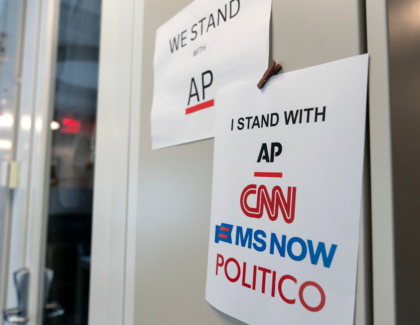
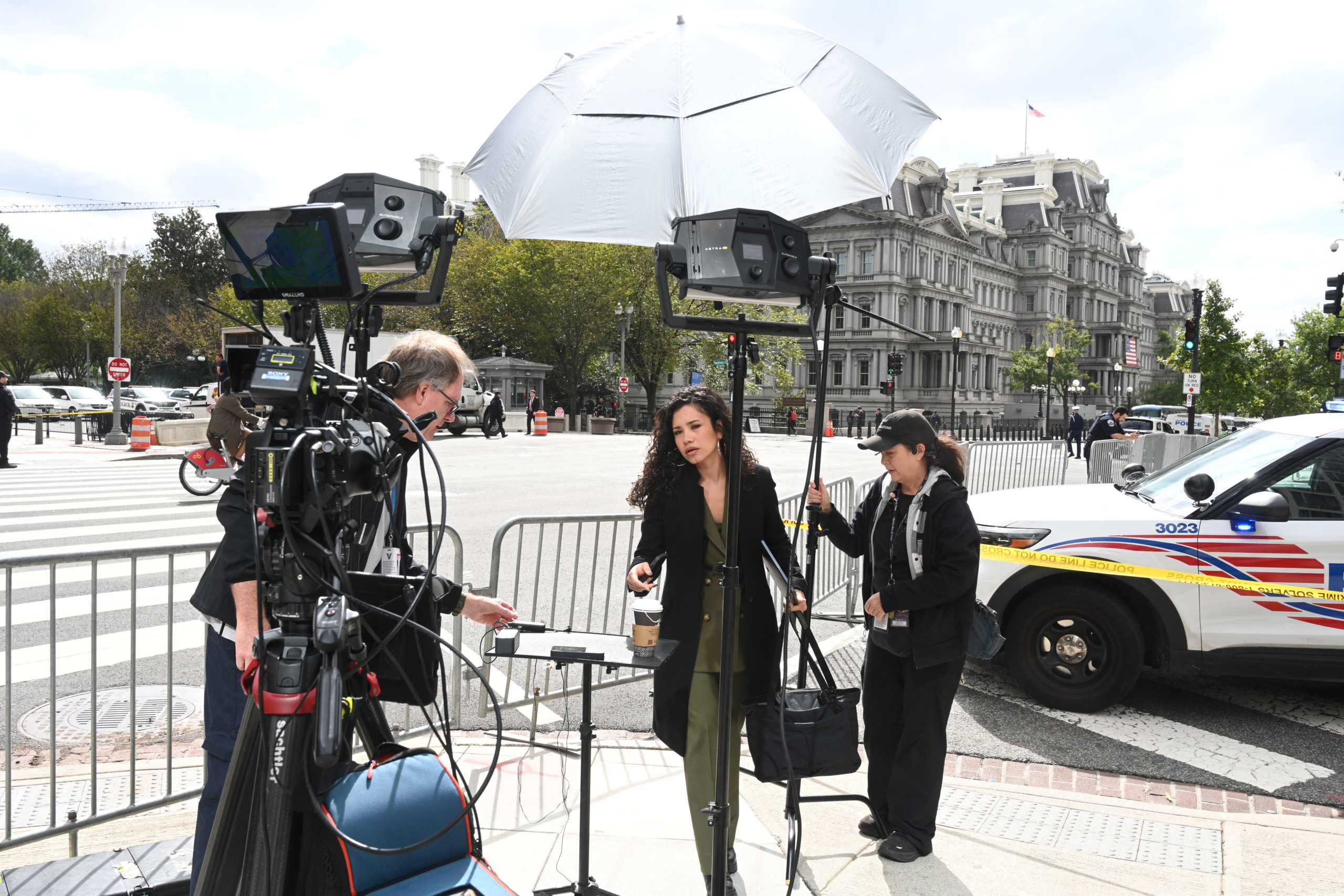
On Thursday morning, as President Donald Trump welcomed Xi Jinping, the president of the People’s Republic of China, to the White House, CNN’s Betsy Klein said she was turned away three times from the gates; MS Now’s Laura Barrón-López said Secret Service agents confiscated her pass. “I went to the Press Pass Security Hut,” Barrón-López said, but after tapping her badge and entering her PIN, “it started flashing red.” Klein and Barrón-López were among the journalists from CNN, MS Now, and Politico whom Trump had arbitrarily ejected from the White House a few days earlier, but on Thursday around 1am ET, Judge Timothy J. Kelly of the US District Court for the District of Columbia had issued a court order countering Trump’s ban and mandating the reinstatement of press access for fourteen days while litigation continues. Klein and Barrón-López eventually got into the White House around noon, but their difficulties had already resulted in a baffling situation, as Dana Bash noted on CNN, in which “Chinese state-run media is in the Oval Office and, until moments ago, the American media—part of a free press inside this wonderful democracy we live in—was not there.”
Since then, the Trump administration has continued to defy the ruling: On Thursday evening, it turned away CNN and MS Now journalists from a state dinner. On Saturday, it excluded CNN from an Air Force One flight to Tennessee, upending the network’s pool duties. And Trump, when questioned by MS Now’s Akayla Gardner (“Do you not want tough questions?”), told her to be “quiet.” “FAKE NEWS SHOULD NOT BE ALLOWED IN THE WHITE HOUSE!!!” he posted on Truth Social on Saturday. These acts and statements followed a familiar pattern in the administration’s dealings with the press—how much authoritarianism can we get away with?
In response to the White House ban, the TV pool (CNN, ABC, CBS, NBC, and Fox News) banded together to suspend operations until their CNN colleagues were reinstated—a move my CJR colleague Susie Banikarim praised as a “striking and heartening show of solidarity.” Withdrawing pool coverage was one of the most effective countermeasures to Trump’s misuse and abuse of the press, including his efforts to demonize journalists, since he first took office, in 2017. Six days after announcing that he would ban the outlets, he was complaining on Truth Social that CNN and MS Now had “refused to cover one of the Biggest and Most Beautiful Events to take place in many years”—the arrival of Xi, the authoritarian leader of China, which ranks one hundred and seventy-eighth out of the one hundred and eighty countries on Reporters Without Borders’ press freedom index—in a ceremony “Actually made for Television.” (One of the enduring paradoxes of Trumpism is that the pleasure Trump takes from bashing the press is equaled only by his neediness for coverage.)
But by Friday, network leaders were growing uncomfortable with this arrangement, and it appears the pool coverage will now resume, with the remaining networks deciding whether to fill in for the excluded CNN on a case-by-case basis. On Saturday, when CNN was not allowed to travel with Trump to Tennessee, the networks declined to send a substitute, again leaving the president without TV coverage. But on another day, they might make a different decision. As the New York Times put it: “Resuming the TV pool effectively hands Mr. Trump more control over the list of news outlets granted close-up access to many of his events.” That seems to me a grave mistake. Trump is still bullying and shutting out journalists. The White House press corps must use all the power it has to keep up the strike and deny Trump coverage until he backs down.
A second paradox of Trumpism on display last week was the president’s habitual eagerness for conflict paired with his utter lack of capacity for strategic thinking about how to win the fights he picks. We’ve seen this in his decision to wage war on Iran, but also in several of his lawsuits against the press. He’s suing BBC News, for example, over a documentary that never aired in the US. His dismissed defamation claim concerning a Wall Street Journal report—about a birthday letter he allegedly sent to Jeffrey Epstein in 2003—was described by Judge Darrin Gayles as “nowhere close” to proving malicious intent. Time and again in his legal wrangling with the press, Trump—to steal a metaphor from his days at WrestleMania—slaps his opponent in the face, only to find that he no longer controls the script.
The White House also made an embarrassing fumble with its attempt to justify the ban. On September 22, the press office sent a letter to Politico outlining the reasons for revoking its access. The letter listed six objectionable stories, accusing the outlet of “trafficking in verifiable falsehoods about national security and other issues” and of “publishing sensitive or classified information.” But reporting from Oliver Darcy, of Status, revealed that the source for one of those stories was actually a briefing, held on background, by Vice President JD Vance—implying a total vacuum of strategic thinking on the part of the White House. (Reporting from the Journal suggested that Trump only acted to ban the outlets on a whim, after Natalie Harp, his loyalist aide, showed him TV clips criticizing the administration.) The White House’s arguments were “what the courts call a classic post hoc rationalization, a pretext,” Ted Boutrous Jr., the attorney defending the banned outlets, told MS Now. Even Kelly, a Trump appointee, was pretty devastating in his court order reinstating press access to the White House. “The Court is skeptical—at least on this record—that Defendants’ interest in safeguarding national security is the actual motivation for, or is even advanced by, the revocation of Plaintiffs’ hard passes,” he wrote, adding that the ban “likely violated their constitutional due process rights.”
The ban, Boutrous said, was similar to Trump’s attempt to exclude Jim Acosta from the White House during his first term—or rather, “the Acosta case times at least seventy-eight, because we had seventy-eight journalists whose hard passes were taken away.” But even as ejecting the three media outlets is a flashing red light on the dashboard of American democracy, it is probably not the most troubling assault on press freedom the administration is engaged in. The increasing use of subpoenas against journalists—an effort to frisk them for anonymous sources—is a quieter encroachment, and deeply concerning. The Federal Communications Commission has been weaponized, and now uses its immense regulatory power to pressure broadcasters—such as ABC News, as Joel Simon wrote for CJR this month—and influence editorial strategy. Trump’s repeated lawsuits against newsrooms are malicious and onerous to fight, especially at a time when many media outlets are facing intense financial pressures. The administration has hobbled public media, shut out the Pentagon press corps, decapitated Stars and Stripes, and swept up a growing number of journalists in its deportation drive. Each of these hostile acts—although they lack the clear symbolism of reporters being turned away from the White House gates—should sound alarm bells.
Is all of this a ruse, a distraction engineered by a president quickly shedding support, engaged in a fruitless war with Iran, and watching the cost of living tick up and up as Republican candidates squirm before the midterms? Perhaps. There has certainly been an element of everyone look over here. But you could argue that Trump’s entire time in power has been a case of government by distraction—that since he ran for office in 2016, promising to make life better for “forgotten Americans” under the prevailing economic model, he has had to invent one foe after another to distract from the utter lack of substance at the heart of his political project. He has, until now, done so with remarkable success, and the media remains a reliable enemy. “The reason Trump appeals is that, in a country where there exists no plausible opposition to the present political-economic order, and in a world where the US’s room for maneuver has been drastically curtailed, the figure who can best simulate agency is king,” Thomas Meaney, the editor of Granta, wrote this summer, for an issue on the “American Berserk.”
This idea of simulated agency, I think, is a good way to understand Trump and his addiction to norm-breaking as spectacle. The challenge for the press now, as it has been for the entire Trump era, is to maintain the courage not to bend the knee. The White House press corps must refuse to give Trump the script he wants.
Other Notable Stories …
By Jem Bartholomew
- Last Monday, Paramount Skydance reached a deal with a group of state attorneys general—led by Rob Bonta, of California—to resolve an antitrust suit and clear the path for its takeover of Warner Bros. Discovery. That means the Ellison family, who have pushed CBS News to the right and forced out staff at 60 Minutes, will likely take charge of CNN in a matter of weeks. CJR’s Amos Barshad wrote about the deal last week, noting that, “for the Trump administration, news of the merger—and its implications for media coverage—will be warmly received.”
- On Thursday, the Committee to Protect Journalists (CPJ) published the findings of a “comprehensive review of its documentation of journalists and media workers killed in Israel and the Occupied Palestinian Territory.” The review instructed researchers to find two new sources to verify the status of each name on its tally of media workers killed. It led to twenty-two people being removed from the list; a further six being reinstated after “new research” confirmed that their deaths were “work-related”; and twelve being reclassified. “The review shows that Israeli forces remain responsible for by far the majority of killings of journalists and media workers worldwide since 2023,” CPJ said. In July, I reported for CJR on why this review was launched, and outlined how some media coverage was confusing two discrete processes inside CPJ.
- In Yemen, after a lightning offensive by the Houthis on September 9, local journalists have spoken about forced displacement, threats, and harassment, according to Reporters Without Borders (RSF). “Even on Facebook, no one dares to cover the news,” one journalist, based in the capital of Sana‘a, told RSF. In the organization’s press freedom index, Yemen ranks one hundred sixty-fourth out of a hundred and eighty countries. Foreign reporters have also faced obstacles. Quentin Müller, a French journalist, was ejected from the country in July of 2026 for working without a journalist visa, despite the fact that “obtaining one has become virtually impossible,” RSF said.
- The New York Times is one of numerous news organizations suing AI companies for alleged copyright infringement. On Thursday, a motion for summary judgment was unsealed in the Times’ case—against Microsoft and OpenAI—that revealed documents from inside the companies, Ars Technica reports. These included warnings from Brent Hecht, Microsoft’s director of applied science, that scraping news for AI training was “an astonishing theft of unprecedented proportions,” calling it perhaps the “largest theft of labor in human history.”
- On Thursday, Bari Weiss, the editor in chief of CBS News, lavished praise on Peter Thiel, the right-wing libertarian cofounder of Palantir, as he was awarded the Axel Springer 2026 award. Weiss said the character of Thiel, whose funding of a lawsuit forced the closure of Gawker in 2016, “embodies what I think of as the quintessential American spirit: heretical, driven, audacious, pioneering, innovative, entrepreneurial, original, eccentric, and above all, ferociously independent.” The Daily Beast described Weiss as “awkwardly fawning over yet another billionaire.”
- And Eugenia Apostol, a Filipino publisher who transformed her women’s magazine, Mr. & Ms., into a platform for public interest journalism, died this month in Manila. She was a hundred. The Ramon Magsaysay Award Foundation cited Apostol’s “important role in recent Philippine political history.” She is credited with helping turn public opinion against Ferdinand Marcos, the dictator who was removed from power in 1986. According to a Times obituary, at her Mr. & Ms. supplement, “the reporting, mostly by a number of young women journalists, defied censorship and intimidation by the military at a time when almost all publications in the Philippines had bowed to pressure and payoffs.”
Has America ever needed a media defender more than now? Help us by joining CJR today.