Sign up for the daily CJR newsletter.
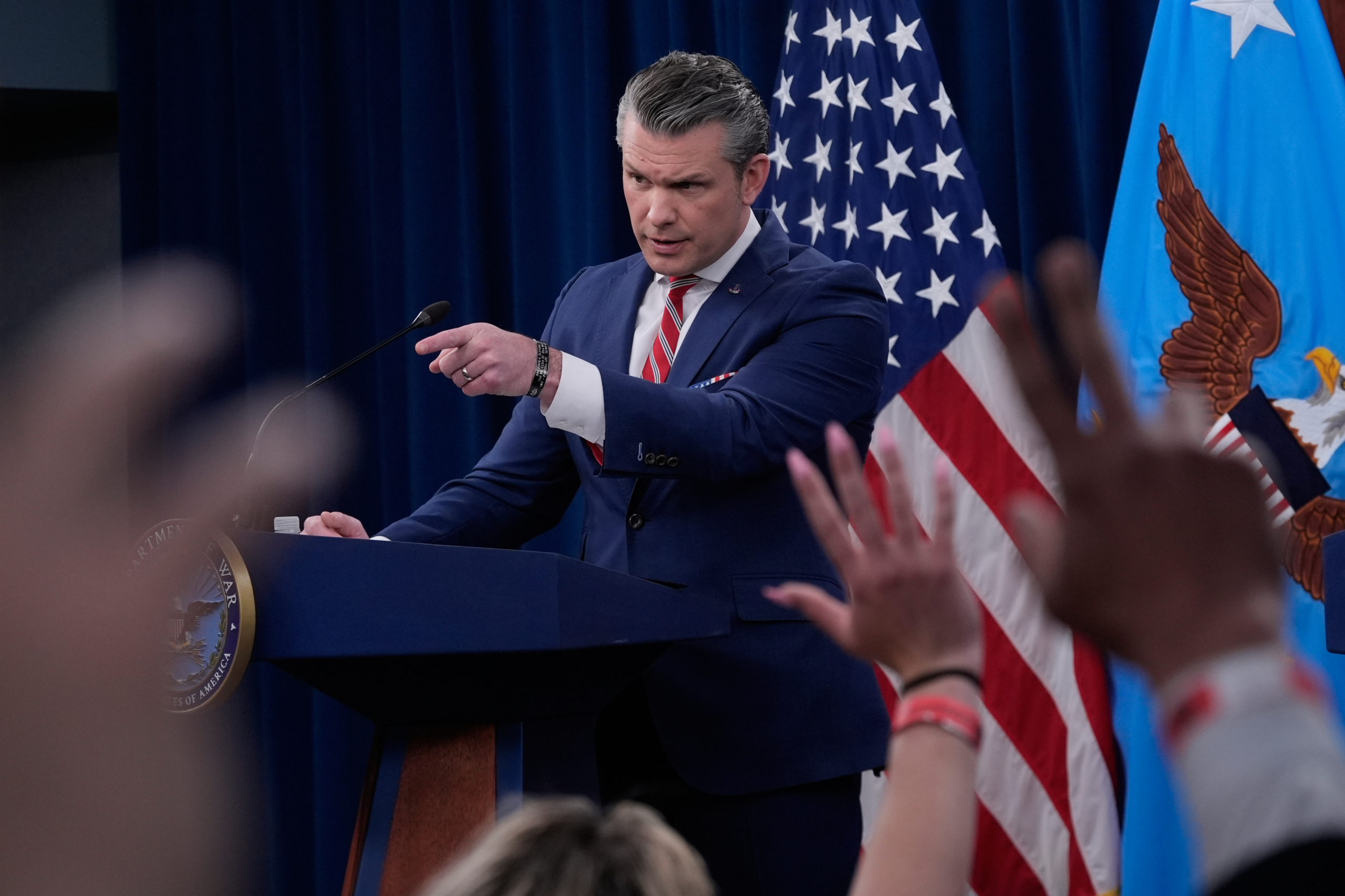
For CJR’s special issue on access, I put together a timeline showing how the Pentagon has forced journalists out of the building, stripping away the protections necessary for reporters to keep the military in check. Just this week—with the United States at war—the Department of Defense (or Department of War, if you’re Pete Hegseth) declared the Pentagon press office to be a “Sensitive Compartmented Information Facility,” or SCIF, and said this was a measure to protect the classified material handled by speechwriters. “As a result, journalists will no longer be permitted to enter the office space,” Joel Valdez, the acting Pentagon press secretary, told the Washington Post.
This heightened level of restriction has been in the making since Hegseth took office—and news outlets have pushed back. Thanks to a lawsuit filed by the New York Times, the Pentagon’s attempts to skirt the First and Fifth Amendments face a serious challenge. And on Wednesday, two members of the advisory board of Stars and Stripes, an independent military newspaper that receives DOD funding, sued the Pentagon, accusing it of violating the First Amendment through its efforts to expand control of the publication to rid it of alleged “woke distractions.” Below, you’ll find some notable moments we’ve pulled from the issue timeline—recent highs and lows of Pentagon reporting.

At the outset of the US-Israel war against Iran, on February 28, an air strike hit an elementary school in the country’s south, killing more than a hundred children. The US was quick to blame Iran, but dogged reporting soon revealed the truth. By March 5, a visual investigation by the New York Times’ Malachy Browne and Aaron Boxerman revealed that the US had been responsible. Reuters’s Phil Stewart and Idrees Ali reported that a US investigation also pointed to American culpability. And on March 11, the Post’s Tara Copp, Souad Mekhennet, Meg Kelly, Alex Horton, and Susannah George reported that the school was on the US military target list, having been mistaken for a military site. “We relied not only on US but also on Israeli officials. It took a very wide spread, thinking about who we knew. Because we know the administration wouldn’t say anything,” Copp told me.
To nail down the story, the Post spoke to more than a dozen people in the US and Israel, including some familiar with the role that artificial intelligence has played in the campaign against Iran—even as Hegseth claimed that the military was “still investigating” the strike, and US Central Command declined to comment. The story is devastating—highlighting the Pentagon’s use of AI to vet targets, as well as the horrors left in the wake of the attack, which Human Rights Watch flagged for investigation as a war crime. Among the sources was a retired Air Force lieutenant general, Jack Shanahan, who led the Pentagon’s early ventures in AI: “Anybody who thinks AI is going to magically solve the fog and friction of war is lying to you,” he said.

On September 18, 2025, the Pentagon issued a seventeen-page memo instructing journalists to report only on material “approved for public release by an appropriate authorizing official, even if it is unclassified.” Several weeks later, the Post’s Horton, Copp, and Ellen Nakashima learned of plans to tighten scrutiny over leaks, including random polygraph tests. “They even created a new category called CUI: Controlled Unclassified Information. It is literally unclassified information that they’re saying they can’t release,” Copp told me. “This level of secrecy isn’t normal.”
Following negotiations with the Pentagon Press Association, DOD officials issued a “revised” reporting policy that still prevented journalists from doing their jobs by banning the “solicitation” of unreleased information. No version of the policy proved acceptable to most long-standing Pentagon reporters, who opted not to sign on the dotted line—and thus sacrificed their access to the building. On October 15, most members of the press walked out, apart from a small few. Those who chose to stay not only served to legitimize a system designed to strip their First Amendment rights; they undermined the interests of the public, just as the US was about to enter new conflicts.
What journalists face now, the Associated Press’s Konstantin Toropin told me, “is a growing culture of fear among the service members we talk to, who may see something that concerns them and think that the public would deserve to know. It has a chilling effect.”
Reporters such as Toropin have made important connections between the military and the Trump administration’s broader culture-war aims. In late October of 2025, Toropin found that a Pentagon policy gave commanders the power to override separation board decisions that would have allowed trans officers to serve, a major advance toward the administration’s goal of pushing trans troops out of the armed services. “My reporting relied on a deep relationship with this community of service members who I got to know over the multiple stories I’ve written about them and who saw me as somebody who would take them seriously,” Toropin told me. “The elements of this story were flagged to me by the folks on the ground, and by advocates and attorneys who were working with them.”
This week, a panel of three federal judges ruled that the trans ban was illegal, finding that it had likely violated the constitutional rights of transgender service members. Their ruling prevents the Pentagon from removing current members of the military who are named in the lawsuit, even as the ban remains in effect. The Trump administration is likely to appeal the decision. (“See you at SCOTUS,” Hegseth tweeted in response to the news.)
If you have a suggestion for this column, please send it to laurelsanddarts@cjr.org. We can’t acknowledge all submissions, but we will mention you if we use your idea. For more on Laurels and Darts, please click here. To receive this and other CJR newsletters in your inbox, please click here.
Has America ever needed a media defender more than now? Help us by joining CJR today.