Sign up for the daily CJR newsletter.

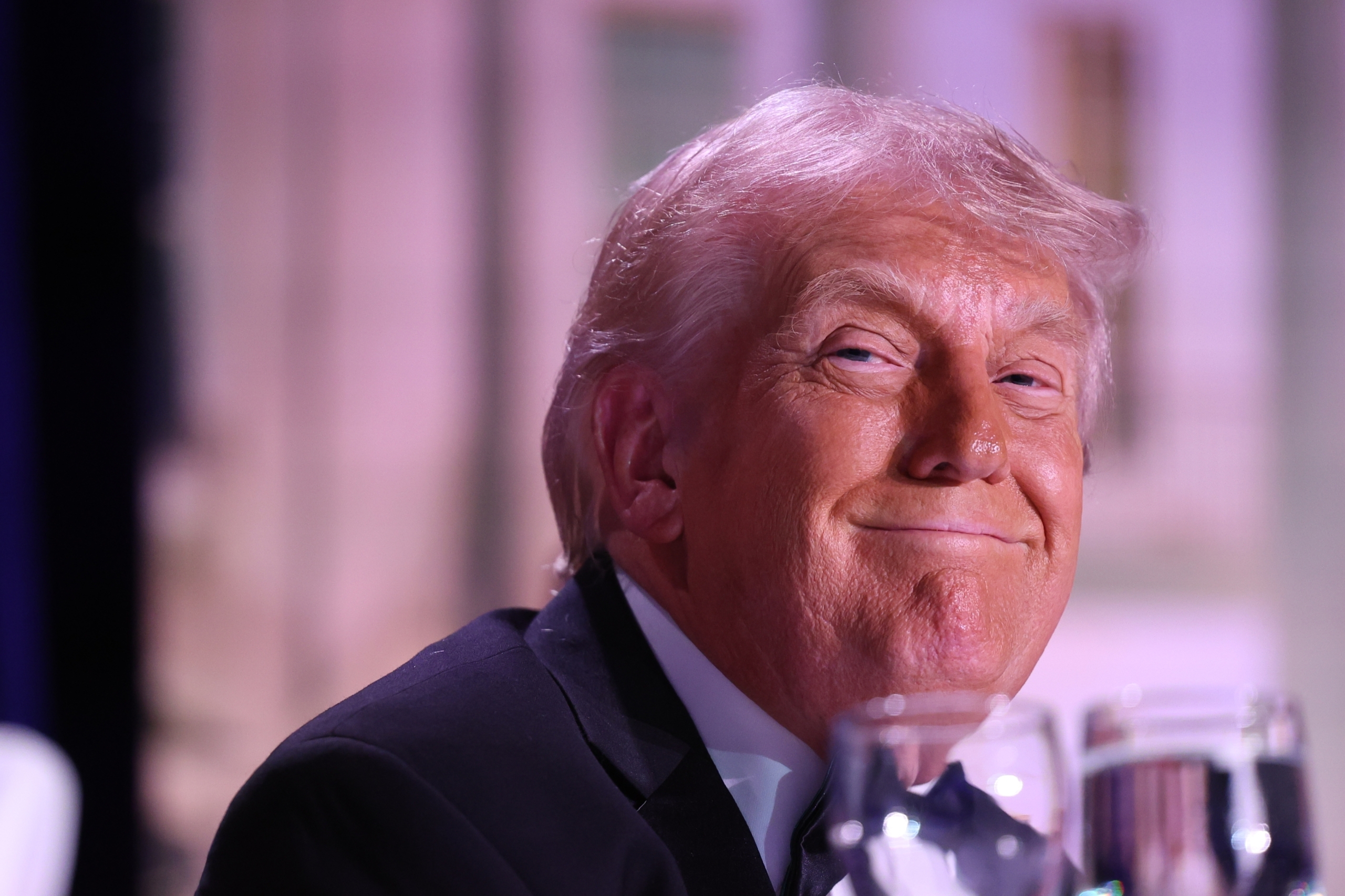
Next week, the White House Correspondents’ Association (WHCA) and its guests will reconvene for their annual dinner celebrating the First Amendment, after the April event was abruptly cut short by a gunman. Oz Pearlman, the mentalist, will return as the evening’s entertainment. And, once again, the main event will be President Donald Trump, the guest of honor and keynote speaker. “I don’t know whether or not I will give the same rather nasty statements, at least as it concerns certain people, but we will soon find out,” he said on Truth Social of his planned speech.
But Trump’s remarks may not be the most awkward moment of the night. That will likely come when Tyler Pager accepts an award for “the most fair, impartial, objective news reporting” by a member of the White House press corps. Last Friday, Pager was one of five New York Times journalists subpoenaed by the Trump administration in an effort to force the newspaper to reveal the confidential sources behind stories involving Trump’s Qatari-donated replacement for Air Force One. On Wednesday, the Times filed a motion to quash the subpoenas. In a statement, David McCraw, a lawyer for the paper, called them “abusive and improper” and said they had been “brought in bad faith to punish the Times for its coverage.”
“Looking at the fact pattern of these subpoenas, that they’re claiming that this story was some sort of national security threat is just an absolute total joke,” Trevor Timm, the executive director of the Freedom of the Press Foundation, told me. “It is blindingly obvious to anybody with a pulse that Trump ordered these subpoenas himself. The idea of celebrating the First Amendment with Trump in the room without any sort of strong pushback is somewhat absurd.”
Trump’s return to the annual dinner was controversial even before the subpoenas dropped. More than two hundred and fifty journalists signed a letter before the original event urging the WHCA to use the occasion “to forcefully demonstrate opposition to President Trump’s efforts to trample freedom of the press.” Some reporters waged a silent protest by wearing First Amendment lapel pins and pocket squares. Others had planned a walkout during Trump’s speech. (The Times stopped attending the event after the 2007 dinner.)
The WHCA represents the interests of the press. Its role is not to preserve access to the administration at all costs, but to use its collective power to ensure that the White House doesn’t decide what the American people deserve to know. The decision to forge ahead with the dinner, even after the extraordinary escalation against the Times, seems particularly egregious. As my colleague Jem Bartholomew pointed out this week, “the subpoenas must be seen as part of a wider push by the Trump administration to criminalize routine newsgathering practices.”
The WHCA declined to comment when I asked about having Trump speak at the makeup dinner. But on the matter of the subpoenas, the organization issued a statement saying that it “stands with the New York Times reporters who were targeted for doing their jobs to uphold the public’s right to know how its government operates. The WHCA condemns any act of intimidation against journalists, including attempts to pressure them into revealing sources.”
Now the WHCA has a chance to prove it.

In the prologue to her powerful new book, Catch the Devil: A True Story of Murder, Deception, and Injustice on the Gulf Coast, Pamela Colloff admits she was conned. In 2018, while working on a magazine piece, she traveled to a federal penitentiary in Texas to interview Paul Skalnik, “one of the most prolific, and most effective, jailhouse witnesses in American history.”
But Colloff’s years as an acclaimed investigative reporter for the New York Times magazine, ProPublica, and Texas Monthly did not make her immune to Skalnik’s deceptions: she left feeling “elated” that he’d agreed to cooperate, only realizing when it was “much too late” that he would never deliver. “It’s really easy, whenever you read about or watch a Netflix show about someone like Skalnik, to feel superior and to feel like I would never fall for such a thing,” Colloff told me of the encounter. “He could sense what I wanted to hear and what I needed and why I had come there. And so when he fulfilled that, that’s the part that I believed.”
That ability to instinctively identify what people need to hear is what makes Skalnik such a compelling—and disturbing—subject for Colloff’s first book, which she describes as a deliberate dismantling of the Catch Me If You Can charming-con-artist trope. Skalnik is a ruthless and unrepentant manipulator. His primary con: evading accountability for his own crimes, including the sexual assault of a twelve-year-old girl, by becoming a jailhouse snitch with an improbable record of eliciting conveniently timed confessions. For years, prosecutors relied on his testimony “to win a staggering number of felony convictions.”
To trace Skalnik’s forty-three-year journey through the criminal justice system, Colloff marries rigorous investigative reporting with deeply immersive, character-driven storytelling. She weaves the stories of Skalnik’s crimes with devastating accounts from his victims, many of whom are still grappling with the destruction he left in his wake. Among them is Jim Dailey, who was sentenced to death for the brutal 1985 killing of a teenage girl based on Skalnik’s testimony. After nearly four decades in prison, he has exhausted all his appeals. No condemned prisoner in Florida has been spared from execution since 1983.
“What made him so dangerous was not his intelligence or cunning, but rather how readily the institutions that were supposed to uphold the law and protect the most vulnerable had amplified his lies,” Colloff writes. “Without them, Skalnik would have been nothing more than a small-time con man.”
When OpenAI began construction on its flagship Stargate data center, on a sprawling eleven-hundred-acre campus in Abilene, Texas, in 2024, local residents had no idea what was being built just yards from their home. “We were never advised or anything,” Paul Daniel, an eighty-one-year-old retiree who has lived nearby for forty-four years, told Floodlight.
How could such a massive project move forward without any opportunity for input from the people whose lives it would affect? An excellent investigation from investigative producer Evan Simon of Floodlight, published in collaboration with the Texas Tribune and Wired, has the answer. Simon found that as Texas races to become the nation’s biggest data center hub, a regulatory loophole has allowed some AI facilities to quietly build massive on-site gas power plants with minimal public scrutiny. Rather than adhering to the rigorous permitting process typically required for major pollution sources, developers have secured initial “minor” permits, more commonly used for small businesses like dry cleaners. Those permits, never intended for use on large-scale projects, require “no environmental studies, public notice, or public comment periods.”
Brad Racino, Floodlight’s editor in chief, said that the story emerged from a pattern he and Simon noticed while reporting on the growth of data centers across the country. “If I saw a development next door to my house, how would I not know what was going on?” Racino told me. “This seems like a very basic question that is not answerable by Well, sometimes there are NDAs.” Racino said that Simon eventually uncovered the use of the loophole by pulling and analyzing twenty thousand permits from the website of the Texas Commission on Environmental Quality over a four-month period.
Unfortunately, the discovery has come too late for Abilene residents, who had no say in a decision that has reshaped their lives. Omaira Garcia, an Air Force veteran who lives next to Daniel, tried to sell her house but didn’t receive any offers. “We weren’t given any time to understand what this impact was going to be on us,” the mother of two told Simon through tears. “We’re trapped here.”
If you have a suggestion for this column, please send it to laurelsanddarts@cjr.org. We can’t acknowledge all submissions, but we will mention you if we use your idea. For more on Laurels and Darts, please click here. To receive this and other CJR newsletters in your inbox, please click here.
Has America ever needed a media defender more than now? Help us by joining CJR today.