Sign up for the daily CJR newsletter.
In late August, flash floods swept down a steep mountain valley in the Himalayas, killing more than thirteen hundred people in Nepal and Tibet. Thousands remain missing. The floods were caused, in part, scientists say, by the collapse of a glacier. Four years ago, Rebecca Hersher, a correspondent at NPR who has covered climate for the past decade, hiked a valley in Nepal to talk with residents about potential flash floods, related to a melting glacier, that could someday upend life there. The reporting she gathered, alongside colleagues Ryan Kellman and Pragati Shahi, became a portrait of a community in limbo. Upon seeing the recent news, “the feeling was just of being sick to my stomach,” she said, “because we knew this was going to happen. Not this specific disaster, of this scale, but the reporting we did years ago was driven by the understanding that flooding is a widespread risk in communities that are downstream of melting glaciers.”
Climate journalism can feel like a series of devastating yet foreseeable tragedies, all happening against a drumbeat of bad news—like the United Nations report this month that global temperatures will rise past a dangerous threshold. Meanwhile, climate desks at legacy organizations have shrunk or disbanded, including at NPR (Hersher was reassigned to another desk, although she continues to report on climate, among other topics). So how should we cover climate? Hersher said that amid everything, she prioritizes slower, human-centered stories because “disaster is headline-grabbing, but fleeting.”
Others urged ongoing preparation for the big, fleeting moment: “We’ve got a reporter every day on our staff on ‘Trump watch,’” Vernon Loeb, the executive editor at Inside Climate News, said. At the same time, consider the needs of an audience dealing with—as Emily Atkin, of the HEATED newsletter and podcast, put it—a “fried” attention span. In any case, meeting confusion with context is important because, as Katherine Bagley, the editor in chief of Grist, said, “a lot of coverage assumes that readers know what’s happening and accept the science and the urgency of it. But when you look at the polling of Americans, that’s actually not true.” As for good news, the public is hungry for it, Naomi Starkman, the founder and executive director of Civil Eats, said: “We profiled this regenerative chicken farmer, and that article did gangbusters.”
Whatever you do, never doubt the importance of the beat, Bill McKibben, the veteran climate journalist, said: “The El Niño that’s starting is of such scale that it will give us a preview of what weather in 2040 is going to look like, and it will scare us enough that this will no longer be an avoidable topic for politicians, or for editors.” The comments below have been condensed and edited for clarity. —Lindsay Muscato
Katherine Bagley
Editor in chief, GristWe have really leaned into providing context-rich stories that don’t assume that readers know anything about this topic. And so that means that when we cover something, we’re not just telling you the immediate thing that just happened. We’re telling you, “This is a little bit of the history; this is the science behind it; this is the future impact of it.”
If you look at the long history of climate change and how it’s been covered by the media over the past several decades, a lot of coverage assumes that readers know what’s happening and accept the science and the urgency of it. But when you look at the polling of Americans, that’s actually not true.
One of the things that I think is really interesting is that, as a nonprofit site, we really are not preaching to the choir, because we don’t have a paywall and because our content is syndicated widely. Instead, we’re asking, “Who else can we reach outside of our bubble?”
Alan Sealls
Emmy-winning meteorologist, president of the American Meteorological SocietyThe best practice for climate reporting is the same as any reporting: to give facts, make it clear, make it simple, and make it relevant to people’s everyday lives. I live in Mobile, Alabama. In my state, there are not a lot of signs of a changing climate except for the rising sea level along the coast. So one of the things I point out is that we have a causeway between our two major coastal counties that’s right at sea level. And whenever we get a strong south wind, the water gets blown onto the causeway and it blocks the eastbound lane. That is a direct impact to people trying to get home, trying to get to work, to commerce and convenience. So that’s a really practical example of how the climate is changing locally. It’s very subtle, and even though it has always happened, it seems to be happening more frequently as the sea level is going up.
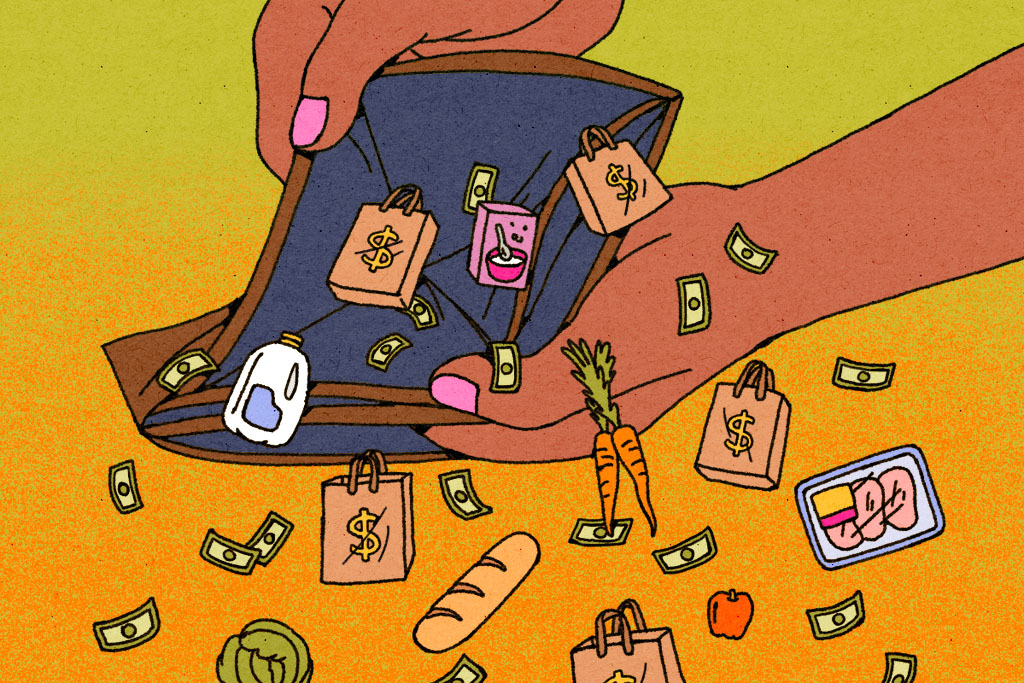
It also gets people’s attention when you talk about their wallet, like the price of groceries. A lot of what we eat comes from other countries. And if the climate is changing in those regions, it makes it more difficult to get, for example, coffee. So if you’re a big coffee drinker and the average weather of the region where coffee is grown is shifting, you realize the economic impact because you literally pay the price for it.
Adam Mahoney
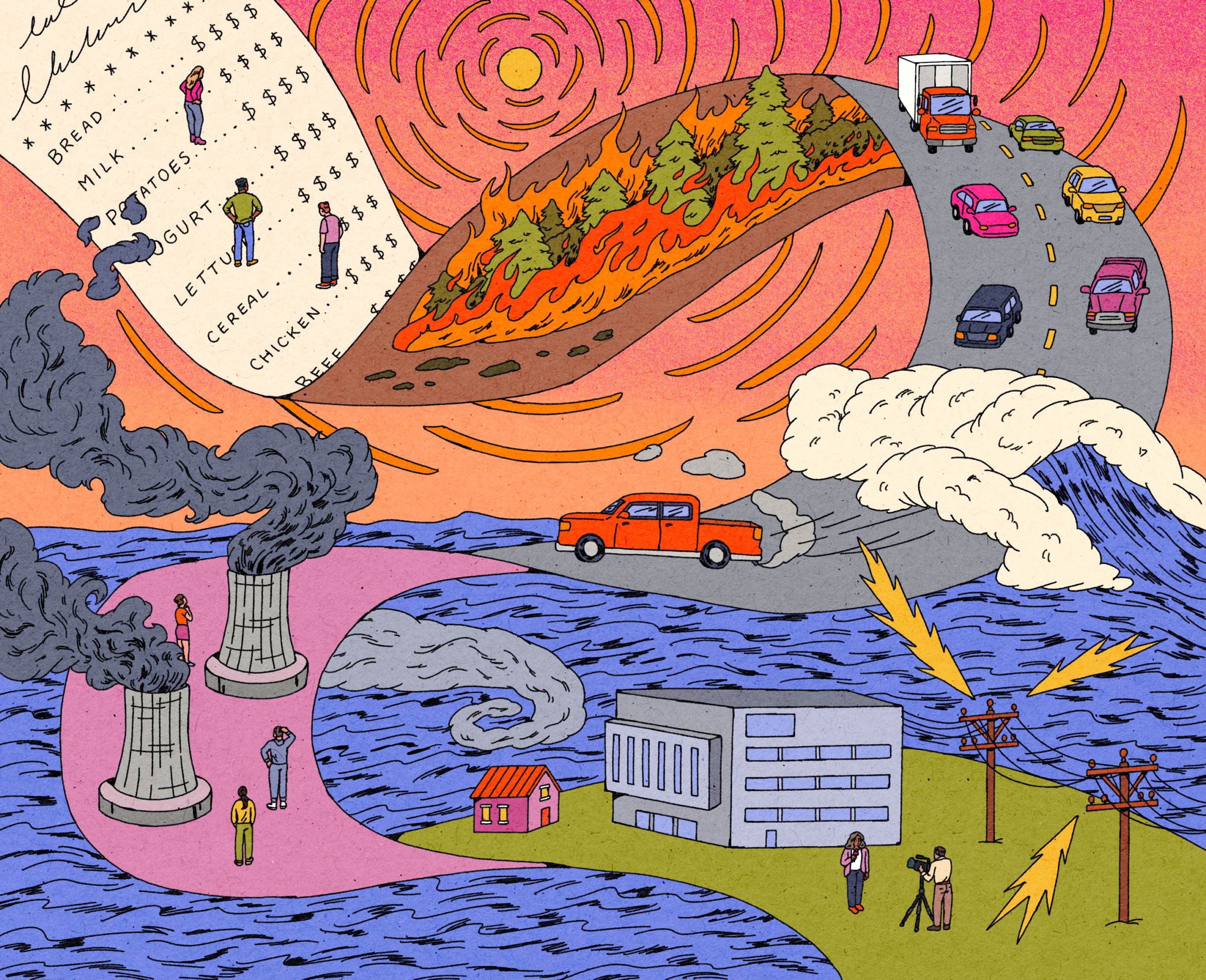
Climate and environment reporter at Capital BWhat has worked is just meeting people where they’re at. We’ve had a lot of success working on stories that connect people’s rising utility bills to the building of power plants or data centers, connecting people’s rising insurance costs to the wildfires on the West Coast. We’ve also done stories about the closure of hospitals and health institutions in the aftermath of hurricanes.
We actually don’t use the phrases “climate change” or “environmental justice,” because we learned that there has been a subset of this country that has demonized them. Pulling back on that specific rhetoric and actually doing the showing, not telling—that has been really helpful.
Naomi Starkman
Founder and executive director, Civil EatsWe try to do a lot of reporting on what’s working, especially as it relates to climate. So while there’s so much negative press, and people are really inundated by what’s broken, we feel there is an opportunity to identify and lift up underrepresented voices and people who really are working to improve things in their localities.
We profiled this regenerative chicken farmer, and that article did gangbusters because I think the public is hungry for good stories. We know that the climate is in crisis: we see it, we see the headlines. But we are also looking for ways forward. And I think food and agriculture can certainly be a way into showcasing what’s possible when it comes to solutions.
Emily Atkin
Chief editor and author of HEATED, a newsletter and podcastI’m working on stories about how the biggest climate problems of AI are not data centers, but the emissions enabled by AI—like how fossil fuel companies are using AI. That’s one of the most important stories right now, but I have found that it’s not enough. People’s attention spans are so fried these days that I have to spend a lot of time crafting sentences to make them as simple and straightforward as possible in a way that I don’t think I would have done five or six years ago.
Bill McKibben
Environmentalist, journalist, authorThe first thing is for no one to doubt for a minute that they’re covering the most important story in the world. Whatever editors think, the physics and chemistry are extremely clear. This continues to be—in fact, becomes with each passing month—ever more important.
I think people need to really keep an eye on the increasing economic friction that climate change is now creating. I don’t think we’re doing a very good job of adding up all the numbers, but between insurance and lost productivity, and on and on and on, we’re beginning to talk about this.
I think that there’s so much else that’s been going on in the past five years, mostly in our country, the rise of fascism, that it’s been hard for people to concentrate on lots of other stories, but for better or for worse, by this time next year, there’s no doubt in my mind that climate coverage will be at the forefront. The El Niño that’s starting is of such scale that it will give us a preview of what weather in 2040 is going to look like, and it will scare us enough that this will no longer be an avoidable topic for politicians, or for editors.
Somini Sengupta
International climate reporter, New York TimesInstead of constantly reminding my audience of this really big, amorphous, profound crisis that we face, of emissions in the atmosphere and how bad that is, I prefer to translate a really big global issue into human-scale stories.
I met a dentist in Cape Town who hated sending his patients back home because the power went down and his machines weren’t working, so he installed solar panels and a battery for his business. I saw how schools were installing shade structures in their playgrounds to protect children from extreme heat. These are human-size solutions for human-size problems, and not necessarily huge solutions to slow down global greenhouse gas emissions. I can tell you, from readers who I heard from on each of these stories, it was very clear that these stories resonated because they were about people or places that they could relate to. They could relate to going to a dentist’s office. They could relate to their kids needing a shaded playground, rather than molecules of carbon dioxide in the atmosphere.
Vernon Loeb
Executive editor, Inside Climate NewsWe’ve had a lot of success opening bureaus at the state level and covering climate-related issues, including energy regulation. With the advent of data centers, that has positioned us pretty well to get deeply into the debate. It’s also enabled us to cover the impacts of the Trump rollbacks at the state level, where they are felt more than they are in Washington.
Trump’s movement away from climate issues helped us play to our strength and focus on climate all the time. But we have to stay on top of the pace of news that he’s making. From the day he took office, we instituted a breaking-news rotation. We’ve got a reporter every day on our staff on “Trump watch.” And I think that’s been a good move to help us keep pace with this frenetic rollback activity.
Rebecca Hersher
Correspondent, NPRDisaster is headline-grabbing, but it’s fleeting. The depth comes from talking to people. That’s also NPR’s approach. In 2022 we spent about two weeks in Nepal, walking quite slowly up a valley, with a local guide, a local interpreter, and an NPR journalist, and we interviewed everyone through all these villages about what it was like to live downstream of this melting glacier. One interesting piece of it: we walked into this valley armed with the latest science about how quickly glaciers are melting, the various ways to address this kind of risk—alarms and things like draining these lakes or monitoring glaciers—and so, in addition to doing interviews, we were delivering some of that information to people who were curious, because sometimes our interviewees would ask, well, how does it work?
When I saw the recent news of floods, the feeling was just of being sick to my stomach, because we knew this was going to happen. Not this specific disaster, of this scale, but the reporting we did years ago was driven by the understanding that flooding is a widespread risk in communities that are downstream of melting glaciers. I didn’t do any additional meaningful reporting on the recent floods—our newsroom reorganized this summer, people on the climate desk were reassigned, and I’m now on the investigative desk—but I helped connect the dots for people working on the story. In a way, we’re lucky that we already covered this story in such depth.
Don Paul
Meteorologist and contributor to the Buffalo NewsI still see a whole lot of skepticism. Some of it is very politicized from the ideological right and on my personal Facebook page. I have blocked a lot of those people, because I found I was wasting too much time getting into an argument with someone who had no chance of changing my mind, and I had no chance of reaching his or her mind.
I find that it might just be off-putting for some people, if it sounds like I’m doing political science mixed in with the science, despite my own personal feelings. If I think I have a bias, I try to bend over backwards to pull away from the bias.
Gabriela Sá Pessoa
Amazon correspondent, Associated PressStories with a human component tend to work. I wrote a story about the Akuntsu, a tribe in the Amazon rainforest in the state of Rondônia in Brazil, which has been reduced to just three people and recently celebrated their first childbirth in decades. That story worked because it allowed me to touch on several other topics. Like, why were there only three women left? Because they were the victims of a genocide process that happened when the agribusiness frontier expanded into the territory during the Brazilian dictatorship. I could also talk about why Indigenous territories are important, by showing that the area they live in is pristine, while the surrounding forests no longer exist and are now soy farms. People found this interesting and moving and compelling. Also, it’s a baby, you know?
Stories that are too technical sometimes don’t work—but we also can’t escape that. There’s news avoidance of climate journalism because sometimes reading it can feel like eating your greens when people want hamburgers. But climate reporters can’t offer hamburgers every day. Sometimes you have to eat salad.
Sammy Roth
Author of Climate Colored Goggles newsletterI’m sad to be “contributing” to the loss of climate coverage from traditional media outlets, but one of the reasons I went independent was this broader understanding that news consumers are connecting better with independent voices. There’s just more trust in individual brands and voices than there is in large institutions. I have found that people connect better to stories where I can really show them why something matters to me personally.
I think there is still an important role for legacy media, but having a first-person voice in the story makes it feel extremely transparent. Like, “Hey, I’m in this because I’m trying to help make a safe climate for everybody.” I think that’s a pretty basic and obvious transparency measure.
Has America ever needed a media defender more than now? Help us by joining CJR today.