

Sign up for the daily CJR newsletter.
This spring, the Indian government announced that millions of young people would have to retake a medical-school entry exam because questions had been leaked. Some students, who had prepared for months, were so overcome with anxiety that they committed suicide. Many others took their frustration and outrage to the streets, giving rise to a movement that became known as the Cockroach Janta Party. The group took its name from the chief justice of the Indian Supreme Court, Surya Kant, who compared young people to parasites and cockroaches. The CJP led protests through the end of July, and ultimately forced India’s education minister to resign.
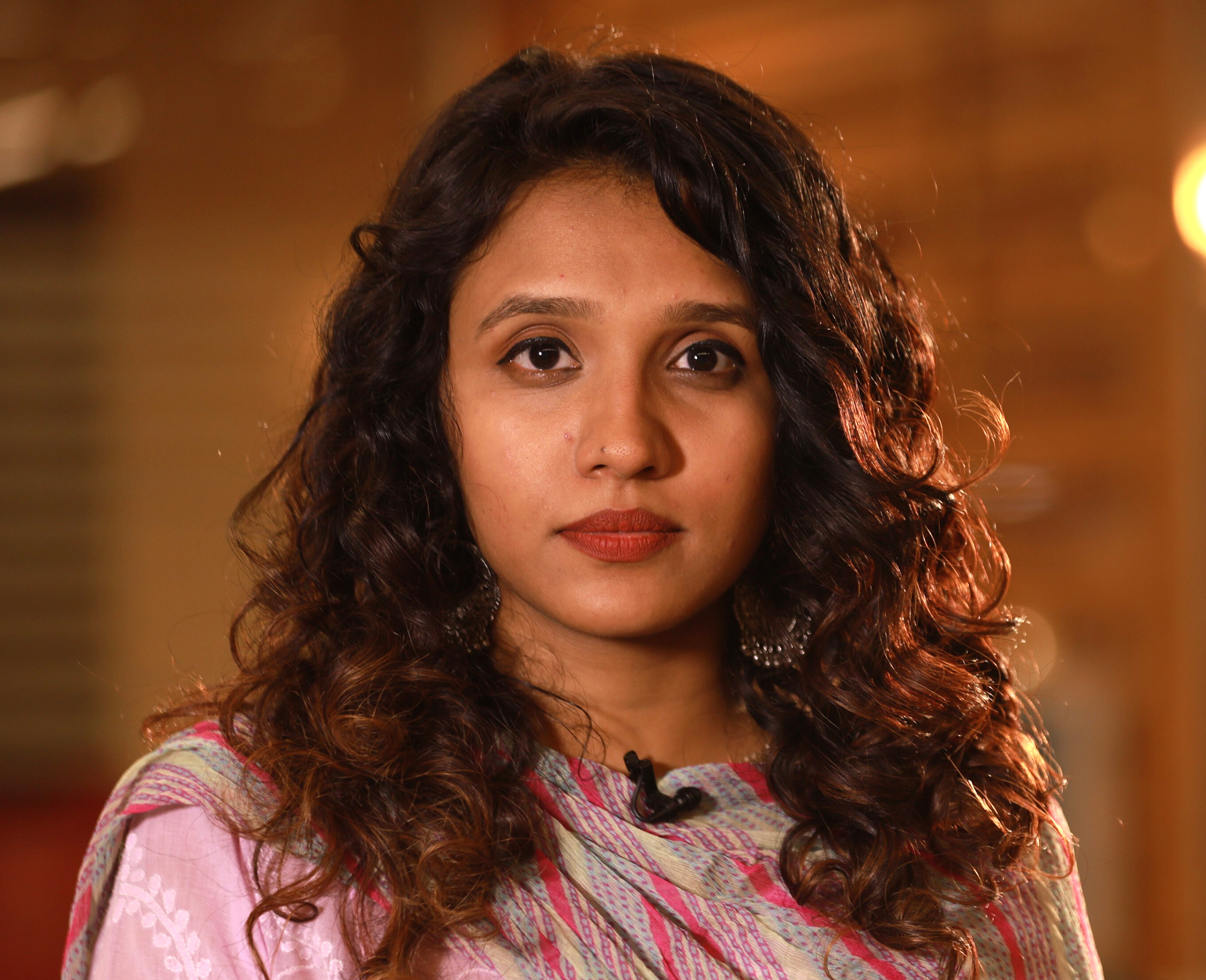
This month, protests resumed, now over the removal of more than a hundred and thirty million people from India’s voter rolls. Previous revisions of the voter rolls had been bureaucratic in nature, seeking to confirm addresses or remove names of the deceased. Suddenly, Fatima Khan, a twenty-nine-year-old independent journalist based in New Delhi, told me, people who had voted all their lives were being told they didn’t have the right documents. Protesters began calling for the resignation of the chief of India’s election commission. The government responded by beating and detaining demonstrators—and the journalists covering the story.
Khan, who has been reporting on politics, hate crimes, and social justice in India for several years, has been on the ground from the first day of the protests against the election commission, publishing her reporting in New Lines Magazine, Drop Site News, Article 14, and The Quint. Khan told me that the latest protests have brought together a wide range of constituents—not just Gen Z but older people who had supported the country’s ruling Bharatiya Janata Party, some from working-class backgrounds, as well as urban youth.
YouTubers and others posting on social media have led the charge in disseminating information, filling the gaps caused by distrust of the mainstream press—known for its loyalty to the Indian government—and prompting questions about who qualifies as a journalist and who should receive special treatment. These questions were recently taken to the Supreme Court of India, which said this month that it will decide whether there are different levels of protection needed for accredited journalists, individual freelancers, and influencers. “If everyone starts becoming a journalist,” Kant said, “it will create problems for every other person.” In the meantime, Khan told me, “there’s been just a complete disregard for even holding up a veneer of press freedom.” Our conversation has been edited for length and clarity.
RS: You’ve been reporting on the ground about the ways in which the police have cracked down on protesters and reporters. What have you been seeing?
FK: Since day one, it’s been pretty crazy. I remember on the very first day of these protests, October 10, the minute a protester would start sloganeering or would raise up a banner or just stand there, the police would just drag them and throw them into the detention buses, and there were so many detention buses. It happened in a matter of seconds in front of my eyes. And of course, at some point, they decided the demarcation we have of protesters versus the media, we don’t really care about that, and the lines became blurred, and they started also detaining journalists.
One of the people I interviewed is a student journalist. She’s twenty years old. In India, by law, you cannot detain a woman past 6pm, but she was detained around 7pm and kept in detention for a couple of hours. I met her outside the police station around 10:30 or 11pm that night, and of course, she was horrified. This is a student journalist who feels like she’s going out to cover this big thing happening in the national capital. And there is this recurring fear that has really been normalized amongst young reporters because of this round of protests and detentions that have taken place.
I think close to forty journalists have been detained now, and some of them have written really great personal accounts of what they witnessed inside detention centers, which is also interesting, because what are you doing? You’re taking a journalist from the street and putting them in a police station where they get to see how you treat other protesters, so it’s not the smartest move, right?
So it sounds like, initially, the police were respecting the role of the press, and that has changed.
It changed very quickly. For example, on October 10, I went out by myself. I had my phone and I had a mic. I don’t have fancy camera equipment; I don’t even have a selfie stick. I don’t have any of that. So I was recording someone, I was interviewing them, and then another person said, “I can hold the phone if you want to get in the frame,” and I said, “Okay, sure,” so then I started doing a round two of that interview with me in the frame, and this person was recording us. And at that point, he could very well have been from the media, right? I had no idea who he was, but he was just standing there, and maybe ten seconds into that video, a police officer came and grabbed him by his arms and started taking him away.
I also feel a bit uncomfortable constantly making this kind of distinction because, it’s like, are we justifying protesters being manhandled or detained just because they’re not journalists? There’s value in separately having a conversation about journalistic freedom and how this impedes it, but in front of me, when that happened, he wasn’t raising a slogan; he didn’t carry a banner or anything; he was just standing there and at that moment offered to record. I feel like, in that second, the only reason I was not detained was because this was a male cop. If it had been a female cop who had walked up to us, I would have been the one detained.
From what I’ve seen in your reporting and in general, there’s a disbelief on the part of the police that people identifying themselves as members of the press are actually journalists.
It’s a top-down effect. Even the Supreme Court made a remark about how today there are all these YouTubers who are out with a phone and a mic, and can all of them be called journalists? So in the last couple of months, especially around the CJP movement, lots and lots of YouTubers have emerged. People have started making videos of the protests that have gone viral, and they’ve made careers out of it. The subscriber base—the numbers are crazy. In many cases, the views and response they get online far exceed any mainstream TV coverage of the same event. It’s not even a comparison. This has really opened up the playing field, because there are all these young people who aren’t necessarily journalists, but who are going out and doing the work that journalists are meant to do, which is documenting.
The bigger conversation then is, can they be called journalists or not? They’re recording and interviewing people; they’re showing things happening in the field and putting it out there. Now, are they doing it with some kind of political slant or are they making their own commentary? Yes, absolutely. But the point is, mainstream media in India over the last twelve years has entirely given up on their responsibility and duty as journalists to speak truth to power or do basic work and due diligence. That has had a ripple effect where this space has opened up, and over time, this narrative that the mainstream media is Godi media, which basically means lapdog media, has really taken root in people’s hearts and minds. The 2024 election here was called the YouTube election because there were all these YouTubers breaking down news, doing incredible analysis that people were consuming in English and Hindi and various regional languages. Now it’s become very Instagram-centric, where there are all these people on Instagram putting out their information.
Mainstream media, for a long time, did not show up at the CJP protests. Or if they showed up, they showed up to create chaos, to demonize a lot of the protesters, to spread a lot of fake news. So if you’ve done that, of course it will leave this gap, and of course someone else will try to fill it.
So the police are approaching the media at the protests as if they are all YouTubers and social media influencers, not journalists?
Yeah, but I can tell you the names of people from established media houses who have been detained too. Another interesting thing that I’ve been noticing at a lot of protests lately is that a lot of reporters from mainstream media, which are known to have a pro-government bias, now when they’re showing up at these protests, they are not showing up with their mic that has the logo of the organization. They’re just showing up with the lapel mic in their hand, the same way YouTubers would, because they know that a lot of protesters immediately recognize the mic’s label, and they will think, Okay, this person is from Godi media, and they won’t want to talk to you, and they won’t want to engage with you. And in some cases, there have been videos of people surrounding journalists from these “Godi media” organizations and just shouting, “Godi Media, go back,” or “Go, Godi media, go.”
You’ve been a political journalist in India for a while. Does this protest stand out in terms of how the police and government are handling the press? Or is this normally how the press is treated in India?
This definitely stands out. For the last eight years, I’ve covered many protests, and some have lasted months. Of course, there’s brutality. I don’t want to make this a case of exceptional action by the Delhi police. We know how they acted even during the Delhi riots in 2020.
I haven’t witnessed journalists being detained the way they are now. There are the most striking visuals of a bus full of journalists showing their press cards out the windows. The first day, the sense was, “Okay, this is a misunderstanding. They don’t know, they don’t understand that we’re journalists, so if we just communicate clearly, they’ll understand.” And then they realized—the police don’t care.
Do you have any thoughts on what this means for press freedom in the country overall?
It’s a pretty despicable state of things, but also, there’s a saying that when press freedom is at its worst is when journalists are needed most. That is something that becomes clearer to me every time I’m here reporting, because if the mainstream media were actually doing its job, you wouldn’t see this flourishing outpouring of YouTubers who are doing what the media should be doing. Or these young people—eighteen, nineteen, twenty years old—out on the street recording, documenting, posting everywhere.
In terms of the state supporting or protecting press freedom, of course things are not looking good and this doesn’t bode well at all. But in terms of the reaction we can potentially see from the public and how they might perceive the need for honest and truthful media, I think that might be strengthened. I also think it might lead to greater media literacy generally—better conversations around what kind of media we need and what it means to be a journalist. Sparking those conversations can’t be a bad thing. The fact that more young people are now trying to document what’s going on gives me hope.
Has America ever needed a media defender more than now? Help us by joining CJR today.