Sign up for the daily CJR newsletter.
Writing about environmental toxicology—the ambient chemical exposure of our daily lives—has it all: public health threats, a nascent body of science, tight-lipped officials, industrial interests, and consumer unawareness.
Yesterday, at Columbia University, two news outlets were rewarded for doing it right.
The Milwaukee Journal Sentinel, for the second time in its history, took home the 2008 John B. Oakes Award for environmental reporting. Its winning series, “Chemical Fallout,” exposed the fact that, despite millions of taxpayer dollars spent by the government, the Environmental Protection Agency has failed to screen thousands of potentially dangerous chemicals found in a variety of common household and consumer products (the paper also won in 2005 for a series on invasive species in the Great Lakes). The Associated Press received an honorable mention for a similar investigation, “PharmaWater,” which detailed the presence of low doses of pharmaceuticals in the drinking water of 41 million Americans.
At an afternoon panel, the three-member team behind each series spoke about challenges they had encountered, and the many hours spent analyzing scientific data, surveying public records and officials, and speaking with chemical manufacturers.
“You have to check everything seven ways from Sunday,” said investigative health reporter Meg Kissinger, part of the Journal Sentinel‘s team, which also included science reporter Susanne Rust and business reporter Cary Spivak. In its series, which began in late 2007, the group has exposed the EPA’s systemic failure to screen over 15,000 chemicals despite mandates and pledges to do so. It has documented a pro-industry bias at the agency, which favors studies that minimize the risks of endocrine disruptors like bisphenol-A, commonly found in plastic products, which causes a host of birth defects, cancers, and other damages in lab animals.
The Journal Sentinel’s team has reviewed more than 250 scientific studies and thousands of pages of regulatory documents and industry correspondence, and interviewed more than one hundred scientists, physicians, and industry and government officials. In the process, they had to contend with heavily redacted (and costly) federal documents and chemical representatives that either misrepresented themselves or the nature of certain studies.
“The industry spends a lot of money throwing people off the trail,” Kissinger said. “This is old-fashioned, gumshoe political and business reporting combined with Susanne’s ability to review the scientific literature. This kind of thing is very unusual today.”
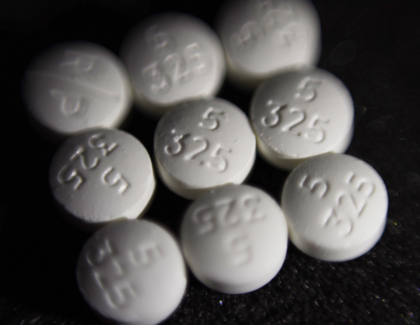
Indeed, both the Journal Sentinel and the AP reporters encountered many people who were surprised that information exposure to everyday chemicals is not more readily available. The AP’s investigative team, which includes Jeff Donn, Martha Mendoza, and Justin Pritchard, interviewed over 230 officials, academics, and scientists, and surveyed sixty-two of major water providers covering fifty of the country’s largest cities. Less than half of those providers had tested for pharmaceuticals (which is not federal government does not require). Low doses of a variety of drugs—including antibiotics, anti-consultants, mood stabilizers, and sex hormones—were detected in twenty-four major metropolitan areas’ drinking water. Public officials insist the water is safe, but getting details can difficult.
“I’ll tell you, getting some cities to disclose what’s in their water – I mean this a test that the people drinking the water paid for – and they will not disclose what they find in it,” Mendoza said. “New York City was one of the hardest. Some places told us that they couldn’t tell us if they’d tested their water because of terrorism and 9/11.”
Even once the AP reporters knew who had tested and what had been found, evaluating and explaining the public health risk was a daunting exercise. Data was mostly limited to animal studies. Furthermore, most research has focused on high, acute doses of pharmaceuticals. Much less is known about low, chronic doses, but scientists are beginning to realize they, too, can be dangerous. Now, they’re starting to challenge the old idea that “the dose makes the poison.”
“I was hoping at the beginning that I’d stumble upon this body of epidemiological research that would show a correlation between pharmaceuticals in the drinking water and people. There was nothing like that,” said Donn, “and there may be nothing like that for years. But it turned out that there was a small body of research, much of it unpublished, on the impact of pharmaceuticals at very low environmental concentrations on human cells. Only a very narrow group of scientists was aware of this research. So, part of the challenge was persuading scientists to share unpublished research – and as the science reporters here know, that’s not so easy because scientific publications frown on it.”
Many of the AP’s member newspapers ran the series—but, having received the stories in advance, often added their own articles attesting to the safety of local water. The investigative team’s hard work paid off, however.
“If anybody in this room is wondering about the impact of environmental journalism and whether it should be supported, within hours of our story there were callings for a Senate hearing [which occurred in April 2008],” Mendoza said. “And within week of our story we had Barbara Boxer saying to the EPA, the Associated Press did your work. Why are telling us what’s in our water? Why aren’t you telling us what’s in our water?”
The Journal Sentinel’s series about lax chemical oversight is also having an effect, albeit less directly. In February, Kissinger reported that House of Representatives held the first of several hearings “intended to overhaul the nation’s laws overseeing toxic chemicals.”
This year, the Oakes Award received a record ninety-five applicants from about eighty news newspapers and magazines, according to Arlene Morgan, the prize’s director and a dean at Columbia’s Graduate School of Journalism.
“We really look at this project as recognizing uniqueness in the field,” she said. “The ‘Chemical Fallout’ series really broke new ground and brought us to deeper level of understanding, and so did the ‘PharmaWater.’”
The Oakes judges did not award a prize in the magazine category, however—a first since the prize moved to Columbia from the Natural Resources Defense Council in 2005. Next year, Morgan said, the school will begin accepting entries from online-only publications.
Has America ever needed a media defender more than now? Help us by joining CJR today.