Sign up for the daily CJR newsletter.
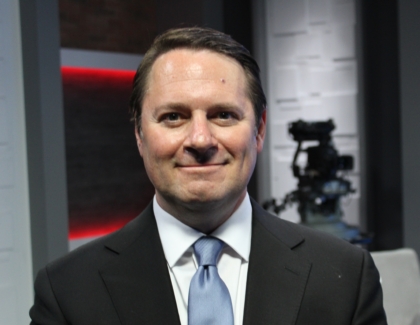
The crisis at the Fukushima Daiichi nuclear power plant in Japan has underscored the importance of specialized energy reporters. Unfortunately, there weren’t many American journalists on the beat when disaster struck on March 11. The New York Times‘s veteran energy and environment reporter Matthew L. Wald was one of the few, and it has shown in the paper’s outstanding coverage of the unfolding disaster. A Times reporter for nearly thirty-five years, Wald has covered nuclear power since 1979 and been in the paper’s Washington bureau since 1995. As part of the Times’s large global team, Wald jumped on the Japan story from the start, writing or contributing to more than twenty-eight stories or blog posts to date and providing technical expertise on countless others. CJR contributing editor Cristine Russell interviewed Wald recently about media coverage of the Fukushima Daiichi nuclear accident.
How was the Times’s team put together after word came of Japan’s nuclear power plant accident following the earthquake and tsunami?
I got a phone call on Friday, March 11, from the foreign editor. We had Keith Bradsher in China, who writes a lot about energy and is in a nearby time zone, and we had various people in Japan. I spent a lot time gathering information, but also a lot of time interpreting what we had and proofreading what others had filed to make sure that it made sense, trying to keep straight distinctions like the difference between radioactivity and materials that emit radioactivity, trying to make sense of the dose units, and trying to explain why a reactor that’s shut down can still melt down.
For you, what were the biggest challenges in covering this crisis from afar?
Interestingly, we were all covering it from afar because early on the paper decided not to send anybody within fifty miles of the plant. One of the challenges has been that sometimes Tokyo Electric Power Company [TEPCO] has put out a lot of information, and some of it has been wrong. I don’t think it’s evil. I think it’s the sort of fog-of-war phenomenon. And sometimes when TEPCO puts out information, it’s not wrong, it’s just raw, and you have to figure out what it means. This is a field where the reader and most of the editors start from near zero, so you have to explain decay heat, which is the phenomenon that’s causing the reactor cores to melt. You have to explain the importance of spent fuel. You have to explain the boiling water reactor design and its peculiarities. I’ve spent a lot of time working with our graphics people, putting together images that explain what we think is happening.
Where have you been getting your information?
Mostly from [the New York Times] team in Tokyo, but the International Atomic Energy Agency and TEPCO have been issuing documents on the Web. This would have been a harder accident to cover before the Web. You can also find experts who may not know much about what’s happening at Fukushima specifically, but who work at similar reactors in this country or have done engineering work on that kind of reactor, who can provide context.
You were writing for the website and for the daily paper. How did you balance the need to get information out quickly and the need to get more perspective or verification?
I will give an example. The International Atomic Energy Agency [IAEA] released some information about cesium deposition levels at a point far distant from the plant, and American physicists calculated that the levels were much higher than the levels the Soviets used in 1986 to decide what areas of land should be permanently quarantined around Chernobyl. I came across this information late in the afternoon and when the deadline came, I was not completely convinced that the math was correct, so we held it out of the first edition and got it into the second edition after we had satisfied ourselves that calculation was proper. The data were clear, but the IAEA did not make the comparison to Chernobyl. That’s something that a physicist here, who is largely a nuclear opponent, came up with. And just because he said it, I didn’t want to put it in the paper until I was convinced that it was true. The bottom line was that he was right, that the peak level of cesium contamination, measured about twenty-five miles from Fukushima, was about two-and-a-half times higher than the criteria used by the Soviets to declare that Chernobyl ought to be quarantined for the long term.
You cover plane crashes. How does this compare?
At this point, usually with a plane crash you know the basic outlines of what happened. You may have had some bad information in the first few hours or the following day that gets straightened out, but usually you have a pretty good grip on what happened after more than three weeks. Here, the facts on the ground are still changing. And by changing, I don’t mean just physically changing, but rather that the understanding of the situation on the ground keeps changing. Moreover, the initiating event isn’t over yet.
At this point, what don’t you know—or what don’t we know—that is crucial to this story?
The extent of damage to the cores and the spent fuel pools is uncertain. The extent of damage to the plant that contains those materials is uncertain. The ability to remove those materials and seal them up, or even seal them up in place, is not clear. And the extent of contamination heavy enough where we’ve got areas that will not be safe to live in for appreciable periods of time is also not clear. We don’t all of the facts about how Japanese regulators and TEPCO determined the maximum natural catastrophe that they thought they were going to have to deal with, and whether their reasoning was reproduced anywhere else, including in the United States. We also don’t quite know what changes you have to make to reactors elsewhere to make sure they could withstand a class of accidents that come from physical challenges larger than the designers assumed possible.
How do you find experts and others to get perspective on the story and make sure you’re not getting the added spin of their pro- or anti-nuclear views?
You’re always getting added spin. Basically, I break people down into two categories: people who think that all nuclear engineering problems are solvable and people who think that nuclear power is an inherently bad idea and that Japan is just another example of why. People in both of those groups can make good arguments and have expertise that I don’t have, and can contribute to a meaningful debate. But it’s my job to sort them out. I guess I have some advantage because a lot of the people I’ve been talking to lately are the same people I’ve been talking to for the last twenty years.
How prepared do you think the American news media were to cover a nuclear power accident and crisis? There’s been a decline in the number of specialty energy reporters.
Let me shift gears slightly. First of all, when the Nuclear Regulatory Commission built its current headquarters they put in a press room with lots of space because they figured newspaper, radio, and TV reporters would be coming in there to cover their every debate and meeting. But at most of the sessions I go to, I’m the only reporter from general interest media. They get lots of newsletters and the occasional stray TV camera. But usually I’m the only general interest media person there. This isn’t unique to nuclear. The last big plane crash I covered, I was surprised at how few reporters were present. The media industry doesn’t send reporters out into the field the way it used to.
But even with so much information on the Web, it didn’t seem like there were very many reporters who understood how a nuclear reactor works and what a potential meltdown was.
That’s absolutely true, but again, that doesn’t differ all that much from other kinds of stories. I can tell you hideous stories about plane crashes where the local reporter who reaches the scene first completely misinterpreted what was going on. So, I do believe there’s a benefit to being a beat reporter. I also believe that beat reporters are an endangered species.
One of the issues going forward is that every American nuclear power plant already operating is going to be looked at more closely. How prepared are local journalists to evaluate safety, given different plant designs and locations?
I have been on tours of a lot of different plants, often with reporters for local or regional papers, and very often it’s the first time they’ve been through something like that. They often know more about the company that built or operates the plant than I do because it’s in their backyard. But often they don’t have a broader perspective. There’s a local reporter in Westchester [New York] who covers the Indian Point reactors a whole lot more carefully than I do, but I have a broader view. I’ve met reporters in Florida and Tennessee who keep up more closely with reactor proposals in those places than I do, but again, they have—I don’t mean to sound critical—it’s not quite tunnel vision, it’s more hyper-local understanding in a way that doesn’t benefit from a broader perspective.
Local coverage often devolves into pro- and anti-nuclear dueling experts rather than more straightforward coverage of technical issues.
Let me add something to that – this idea that you’ve done a good job if you’ve quoted experts pro and anti. There’s something to that, but you’ve really done a better job if you understand what each side is saying and can ask probing questions from the pro person and the anti person.
What’s your sense of how well the news media have put nuclear power into context with other forms of energy? It seems like we’ve had more heat and less light on that issue.
We don’t exactly tailor our coverage to actual risk values. We tailor it to what looks newsy. The number of people who die on our highways far exceeds the number who die in plane crashes. Yet what we’re focused on is the plane crashes. The week after the Fukushima accident began, I saw reports that forty-eight coal miners had been killed in Pakistan. There is no form of energy extraction, conversion, and delivery that doesn’t kill people.
If you want to get cold and analytical about it, we need electricity so we can have clean drinking water, sewage processing, fresh food in the refrigerator, sixty-eight degrees on a cold winter night, and seventy-two degrees on a hot August afternoon. All of those things have benefits, and all of them are going to have a cost somewhere. One of them is risk and sometimes death. Look at the people who died in San Bruno [California] when the natural gas pipeline there ruptured. These are the costs of extracting, converting, and delivering energy, but we don’t really look at it statistically. We don’t think in terms of deaths per megawatt hour. Nuclear power accidents are simply sexier than coal mine accidents.
It’s worth remembering, if you look at our coverage three weeks out of this event, that Japanese authorities have counted approximately 12,000 bodies, and I regret to say that number will likely be significantly higher by the time they are done. These bodies are not from the nuclear accident. They’re from the earthquake and tsunami, but the bulk of our coverage is on the nuclear accident.
What about this story has surprised you?
I never thought I’d be covering multiple meltdowns simultaneously or that I would be covering essentially fratricide, where problems at one reactor caused problems at an adjacent reactor. But news is the unpredictable. I admit that at times I get the sense that we’re living in a science fiction movie. At times I get the sense that all of those computer projections—all of those engineering studies about worst cases—are just projections, and now we’re getting a real world data point that is going to mean a lot more going forward.
And I’ve got one other idea to throw in, which is that this could turn out to be a Rorschach test. You look at this inkblot of the Fukushima accident, and we’re going to have people who say, “This shows it’s folly, we should never have split the atom.” We’re going to have people who say, “Look, if this is the worst that can happen, it’s not nearly as bad as some earlier projections.” And we’re going to have people who say, “Yeah, this is bad, there are things they could’ve been done better, but we can learn from this and move on.” The lessons learned will be all across the spectrum.
Did you sleep during the first few days of coverage?
Well, when the explosion of the first reactor happened, it was four in the morning here and our Web editor woke me up, and it’s hard to go back to sleep after something like that. The Web has changed things. The normal operation of the Times is that if you have a good story, it tends to go up on the Web when you have it, and a refined, better-reported, better-edited story tends to appear in the paper the next morning. In this case, there have been times when the newspaper was a snapshot of whatever the Web had at some certain hour in the evening.
Because there wasn’t time to step back and recast it?
Because it was going to keep changing all night anyway.
Editor’s Note: Matt Wald participated in a recent Harvard Kennedy School seminar on “The Seesaw Media Coverage of Japan’s Nuclear Crisis” organized by CJR contributing editor Russell (audio can be found here). The Times also has an excellent backgrounder on the Japan nuclear crisis as well as a searchable archive on its nuclear coverage.
Has America ever needed a media defender more than now? Help us by joining CJR today.