Sign up for the daily CJR newsletter.
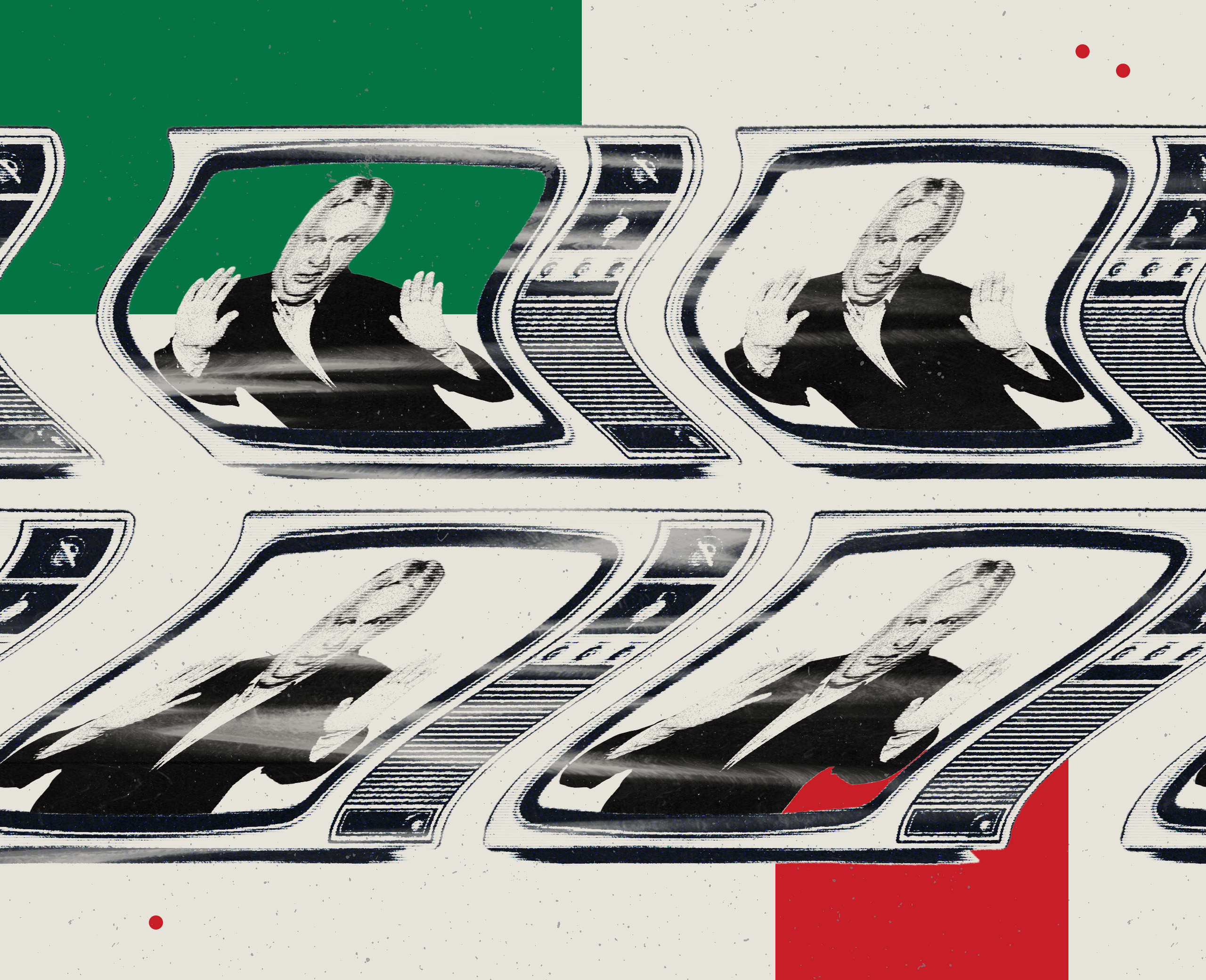
Three days after defeating Viktor Orbán in Hungary’s national elections, Péter Magyar, the prime minister–elect, paid a visit to the headquarters of MTVA, the country’s public media conglomerate. During the campaign, state media ran wall-to-wall pro-Orbán coverage: hit pieces on Magyar’s family, accusations that he conspired with Ukraine to drag Hungary into war with Russia, and reports on his plans for austerity that later proved to be false. Now Magyar had been extended an invitation. This was something of a last-ditch attempt to catch him off guard: MTVA reporters had a knack for interrupting, provoking, and insulting Magyar, in an apparent effort to extract a compelling soundbite. But following the biggest electoral victory in the history of modern Hungary, Magyar came prepared. “What you did here would’ve made Goebbels smack his lips,” he said, lambasting his interviewers. “This factory of lies will shut down. We’ll suspend this deceitful news service, and we’ll create an independent, objective, and neutral public media.” When he left the studio, state media employees applauded him. “Thank you for not giving up,” he told them. “I know that a lot of you didn’t do all of this for fun.”
Following the election, state propaganda in Hungary began to collapse immediately. Employees at MTI, the state newswire, revolted against their right-wing news director and demanded editorial impartiality. Presenters on Petőfi TV, the cultural channel of the state media conglomerate, said they hoped to bring on popular artists known for opposing Orbán. TV2, the top private channel, a staunchly pro-Orbán outlet, fired its news director and took its two most prominent faces off air. In an interview with a right-wing YouTube channel—his only media appearance post-defeat—Orbán shut down the reporter’s cloying, sympathetic questions, took responsibility for the loss, and wished Magyar’s voters well. “It’s hard to even begin this interview as a journalist,” the reporter said. “I’m sure you’ll manage,” Orbán responded, letting out a condescending laugh.
Under Orbán, the Hungarian media landscape was divided into three realms. MTVA’s broadcasters, such as M1, the main national news channel, covered the relatively offline, rural parts of the country, known to be Orbán strongholds. Private media owned by Orbán loyalists dominated the rest of the terrain, with pro-government print dailies, magazines, online news sites, and television stations making up 80 percent of the industry. The independent press—digital outlets, YouTube channels, and magazines, funded through donations, subscriptions, and advertisements—made up a final, smaller portion. Despite political persecution and countless barriers to access, outlets such as Telex, Partizán, 444.hu, and HVG worked to hold the government to account.
Now Hungary’s journalism environment is poised for transformation. Magyar’s promise to restructure public media was no hasty threat, but a key plank of his Tisza party’s platform. Actually delivering change will be an enormous challenge, Gábor Polyák, a professor of media law and policy at Eötvös Lóránd University in Budapest, told me. Magyar would have to “replace everyone on screen, behind the microphone, and at the editorial desk and find journalists who are willing to be the new faces of an institution distrusted by the public,” he said. “He’ll need to assure them that this is a secure workplace where they can say no to political pressure and create internal checks and balances. And when the local elections come, in three years’ time, then we’ll see how well it’s working.” MTVA did not respond to a request for comment.
As Orbán’s political empire collapses, the oligarchs who funded private propaganda networks may be reluctant to keep them alive, especially since Magyar has also promised to halt and restructure state advertising in media, which has provided a key revenue source for these outlets. Polyák said that KESMA, a pro-Orbán conglomerate that runs hundreds of national and regional daily newspapers, is on “death row.” He estimates that in a competitive market, only about half a dozen right-wing news outlets could break even. Mediaworks, a company housed within KESMA, did not respond to a request for comment.
For independent newsrooms, the task in a post-Orbán world will be to cover a country undergoing seismic change while excavating the wreckage of sixteen years of authoritarian rule. “There’s a whole generation of my colleagues who never saw communication as a two-way street between the government and the press,” Balázs Kaufmann, a veteran independent journalist with 444.hu, told me. Some who voted for Magyar will have to accept that the free press was never an opposition to Orbán, but a check on the government, he said. “Readers who expect us to be cheerleaders for Péter Magyar will be disappointed.” Magyar’s press office did not respond to a request for comment.
The day after the election, Magyar kicked off a three-hour international press conference in which he called on Hungarian outlets first. “Let’s hear from those who survived the past sixteen years and filled the role of public service media,” his press chief said, handing the microphone to Partizán, the YouTube channel where Magyar launched his political career with an explosive interview calling out the Orbán regime’s political greed. Up next was Kaufmann. In 2024, Kaufmann had been the first journalist to write about President Katalin Novák, an Orbán cabinet minister turned head of state, pardoning a man who had helped hide sexual abuse at a children’s home, a story that spurred Magyar’s break with Orbán. “You’ve just heard from the journalist thanks to whom we’re standing here today,” Magyar said. Then he answered his questions.
I asked Kaufmann about the callout. “I thought: ‘Here’s the head of government with the largest-ever mandate, and on his first day, he’s trying to domesticize the free press.’ It was uneasy. I felt sixteen years of self-defense mechanisms kicking in,” he said. “Only when I thought back later did I realize that it was meant to be nothing more than a nice gesture toward our embattled industry.”
Be that as it may, journalists are relieved to see Orbán go. “It feels easier to breathe,” Kaufmann told me. “We’re letting go of anxieties we didn’t even know we had. It’s a healing process.”
Has America ever needed a media defender more than now? Help us by joining CJR today.