Sign up for the daily CJR newsletter.
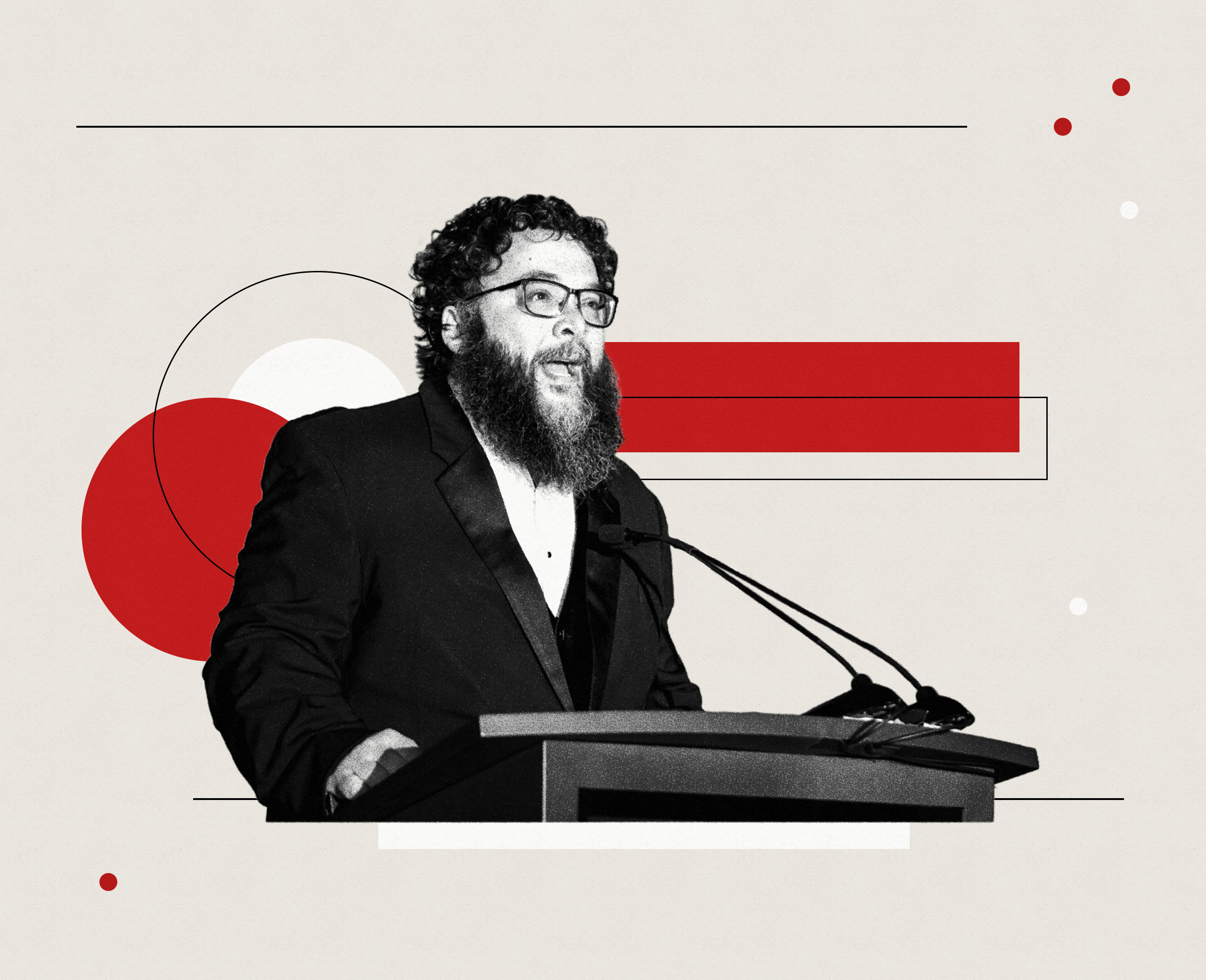
For the better part of a decade, Jim Rodenbush was the adviser to the Indiana Daily Student, at Indiana University in Bloomington, which has a staff of about two hundred. Then, one afternoon last October, the dean told him that he was fired, effective immediately. A human resources representative collected his ID and keys, asked for his laptop, and escorted him from the building. His apparent transgression: resisting a directive from the administration to stop the students from printing hard news.
In recent weeks, the Daily Student had been working on ambitious stories, including one on how Indiana’s data center boom was at odds with the state’s climate goals. Administrators pushed back, telling Rodenbush to have students print only special sections, like a homecoming guide—which they said was a cost-saving measure. Rodenbush viewed the reaction as censorship. “I’m a full-time employee of a public university, which makes me an actor of the government, and any type of attempt on my end to censor or manipulate any content from a student media outlet is literally against the law,” he told administrators during a meeting, according to a recording that was shared with me. “This is First Amendment stuff.”
As soon as Rodenbush was fired, Indiana cut the print run of the Daily Student. Rodenbush filed a federal lawsuit against the university, claiming that it had violated his First Amendment rights. He hired a team of civil rights attorneys at Saeed & Little, based in Indianapolis, who framed his case within the context of recent attacks on press freedom by Donald Trump and quoted Ben Franklin, Thomas Jefferson, and James Madison extolling the virtues of free speech and press liberty. Jon Little, one of the attorneys, told me that the case is “for the soul of our country.”
Indiana University’s attorneys have framed the case as a simple workplace dispute, and asked a judge to strike from Rodenbush’s complaint mentions of what they described as “national political commentary, federal executive actions, media disputes, and historical discussion.” The lawyers argued in filings that the case is “not a referendum on the state of press freedom in the United States.” Mark Bode, a campus spokesperson, said that the university does not comment on litigation.
Rodenbush became something of a cause célèbre in the insular world of campus media advising, with which he’s been involved for more than fifteen years. At the College Media Association’s convention, in October, he received a standing ovation for putting up a fight. The Student Press Law Center and the Reporters Committee for Freedom of the Press condemned IU—backing up Rodenbush’s view that he’d been subjected to censorship. Mark Cuban, one of the school’s most famous alums, said on social media that he was not happy about the situation. Other alums canceled more than a million dollars in planned donations to the university. FIRE, the national free speech group, put up a billboard near campus that read “Indiana University censored its student newspaper.” The group later flew an airplane over the Big Ten Football Championship Game in Indianapolis with a banner proclaiming “INDIANA UNIVERSITY HATES FREE SPEECH.” Last month, the Radio Television Digital News Association gave Rodenbush one of its annual First Amendment awards.
In a statement, the editors of the Daily Student said that the events of last fall had sent “shock waves” through their school. But some positive changes have come since. IU reversed course on cutting the print publication and has promised not to weigh in on coverage. The chancellor wrote a letter to the editor denying that the university ever tried to censor the paper, though he acknowledged that the campus had not handled decisions as well as it could have. The school established a task force focused on student outlets. “We see this as encouraging,” the editors wrote to me, “and look forward to IU and the Bloomington campus finding ways to strengthen protections for student journalists.”
Six months on, Rodenbush’s fight is entering a new, quieter era. He has moved two hundred miles away to Du Quoin, Illinois, to be closer to family. “These kinds of things always happen, but they always happen to someone else,” he told me. “Having them happen to you—I don’t know if that’s something I’ll ever settle into.” The lawsuit that he filed against IU turned into a clash of procedural disagreements: in response to a jurisdictional question, Rodenbush’s attorneys asked the judge to dismiss the case, which he did, so they can refile it in state court. They will pursue the same claims, in a different venue.
Marie McMullan, the student press counsel at FIRE, anxiously awaits the outcome of the lawsuit, which she called the most significant case for student media advisers in the nation. “I think this case is integral for protecting student press freedoms broadly at this moment,” she said. Rodenbush is prepared to see it through, though the prolonged fight has taken a toll. At IU, he was making over six figures and had a child attending on a tuition discount. “It very clearly has uprooted my life,” he told me, of the ordeal. “A financial compensation that recognizes that would be a best-case scenario for me.” As for work, he has just accepted an offer from Western Kentucky University, where he’ll be focused more on teaching than advising student media. He’ll be moving to Bowling Green, where he’ll begin as an associate professor of journalism in the fall. In the meantime, the awards have kept coming—yesterday, his former IU students were honored with the Fred Brown Ethics in Journalism Award from the Society of Professional Journalists.
Initially, Rodenbush said, he had worried that he might be seen as a troublemaker in a university setting after getting so publicly fired. “The exact opposite happened,” he said. “At the end of the day, what I learned was that universities, for the betterment of their students, were in fact very interested in someone who was willing to take such a principled stand on this kind of issue.”
Has America ever needed a media defender more than now? Help us by joining CJR today.