Sign up for the daily CJR newsletter.
Yesterday, President Trump attended the final of the Club World Cup, a soccer tournament featuring (as the name suggests) a selection of the best club teams in the world that doubled as a warmup event for the bigger, national-team version of the World Cup that the US will host with Mexico and Canada next summer. According to reports, Trump was joined in his suite by Rupert Murdoch, Pam Bondi, Sean Duffy, Kristi Noem, Gianni Infantino, and Tom Brady. As a cast of characters, it was exquisitely revealing of the impulses guiding Trump’s second term. It was also, in some ways, a dramatis personae for the current news cycle.
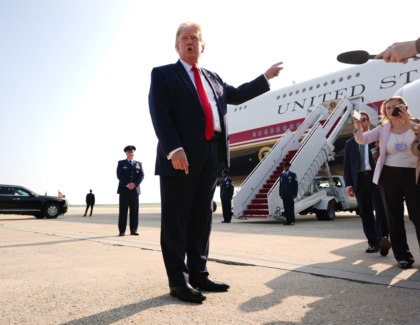
The latter is not so much true of Brady (unless you count a recent Daily Mail story, denied to People by a Brady representative, that he thinks the actress Sofia Vergara, with whom he has been romantically linked of late, is too old for him). But his presence—and, indeed, Trump’s very attendance at the final—was reflective of a pronounced trend of Trump attempting to co-opt the world of sports, and that world’s media: while running for office last year, he toured podcasts in the so-called “manosphere,” which is strongly sports-adjacent, and picked up support from young men in the process; since returning to office, he has made sure to be pictured at major sporting events—a visual assertion of dominance over not only the political world, but the ostensibly apolitical, as well as being a statement of cultural unavoidability. Infantino represents something similar. His presence in Trump’s suite yesterday was not at all surprising—he is the president of FIFA, world soccer’s governing body. But his relationship with Trump is anything but normal: the pair have struck up an unusually close bond, to the point where Infantino has been pictured by Trump’s side so frequently—more often, the Washington Post noted yesterday, “than any president or prime minister”—that he has become a recurring motif in news coverage, even as many Americans surely have no idea who he is. (When I caught a glimpse of him at the inauguration in January I did a double take.) Infantino is a window not only into the story of Trump’s engagement with the sports world but, as I wrote elsewhere recently, the story of Trump’s emerging second-term foreign-policy doctrine, with its personalist stance toward multinational institutions and almost explicitly amoral approach to wealth and power.
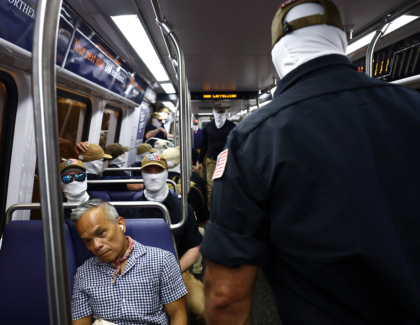
As I noted in that piece, Trump and Infantino have both cozied up to Gulf states with poor human-rights records—not least on press freedom; late last year, Saudi Arabia, whose state assassins murdered the Post columnist Jamal Khashoggi during Trump’s first term, was confirmed as host of the 2034 soccer World Cup, a prestigious capstone on the country’s readmission to global good graces following the Khashoggi disgrace—and spoken in strikingly similar, judge-not-lest-ye-be-judged terms about doing so. But in other ways, Trump’s and Infantino’s rhetoric is dissonant; the latter has talked in terms of welcoming the world to the World Cup, and while Trump’s administration has paid lip service to this idea, it is, of course, totally at odds with its overall orientation. One key avatar of this orientation has been Noem, the homeland security secretary, who has repeatedly performed harshness toward migrants—donning tactical gear on the streets of New York; talking to camera in front of half-naked deportees in a Salvadoran mega-prison—in made-for-TV (and/or for-social-media) ways. Ahead of attending the Club World Cup yesterday, Noem was on TV again, appearing on Meet the Press on NBC. Kristen Welker, the host, pressed her diligently on the reportedly inhumane conditions at the new Florida-run immigration detention center known as “Alligator Alcatraz” (“We will take cameras in there and show people what these facilities look like,” Noem said), as well as a fresh New York Times story claiming that understaffing at call centers run by the Federal Emergency Management Agency, which is under the aegis of DHS, hampered the response to the devastating recent flooding in Texas. Noem called this “fake news”; then, after Welker rattled off the low call-response rates, suggested that she wasn’t “certain” those details were accurate, and that they need to be “validified.”
Duffy, until this week Trump’s transportation secretary, also bashed the Times recently, decrying its decision to “dispatch a former abortion correspondent (cosplaying now as a ‘family’ expert) for a hit piece on me and the Trump administration.” (“Let the NYT goof off,” Duffy added. “I’m laser focused on making transportation great again.”) The story that irked him was a report, last month, by Caroline Kitchener, who contrasted his current image as a devoutly Catholic family man and enthusiastic pro-natalist with his days as a star on MTV’s The Real World, on which he was filmed “gyrating with a woman on a pool table” and “wanted people to know that he liked to have a lot of sex.” The throughline in this evolution, Kitchener suggested, has been a consistent media savvy. (The former House Speaker Paul Ryan, who recruited Duffy to run for Congress as part of the Tea Party wave and praised him to the Times, said that he and his wife are “just media people,” and have “always been that way.”) Anyway, I said that Duffy was Trump’s transportation secretary until this week not because he isn’t anymore, but because he is now Trump’s transportation secretary and interim NASA administrator, an appointment that raised eyebrows among the press (and furthered a trend of Trump cabinet members wearing seemingly unsustainable numbers of hats). Politico headlined a story “The Real World: NASA Edition.” (Maybe a spin-off show could be called The Real Pale Blue Dot?) The Atlantic’s Alexandra Petri wrote that “there might be some benefits associated with bringing Real World sensibilities to NASA. Previous administrators would have wasted money trying to actually get to space, instead of entertaining cost-saving ideas such as faking it on a soundstage and giving a press conference where you belligerently insist that you have already landed on Mars but the Fake-News Media just didn’t see it.” (Petri, if you didn’t guess, is a humor writer.)
Among these other identities, Duffy once worked as a host on Fox Business, because of course he did. (His wife, Rachel Campos-Duffy, is still a cohost on the weekend edition of Fox & Friends, where she worked alongside Pete Hegseth until Trump made him defense secretary, because of course he did.) Fox, of course, is owned by Murdoch, whose true allegiance to Trump is still a matter of media debate—often fueled by pundits’ Talmudic reading of the Wall Street Journal editorial pages—even as he continues to do things like appearing in Trump’s Club World Cup suite, appearing in the Oval Office and being showered with praise by Trump, and, as of this weekend, owning a network on which the president’s daughter-in-law is allowed to “interview” the president. (“Some people have called you the bodyguard of Western civilization. How do you feel about that title?”)
At this point, the revolving door between Trumpworld and Fox is well-established—Duffy and Hegseth are just two of nearly two dozen officials with close ties to that network or Fox Business—and has often been invoked as shorthand for the broader fealty of right-wing media to Trump and his project. But recently, cracks have started to show in this edifice—see: Tucker Carlson (formerly of Fox) warring with Mark Levin (still of Fox) over Trump’s strikes on Iran—and last week, further stress was applied after it emerged that the Justice Department and FBI had essentially moved on from the case of the late pedophile Jeffrey Epstein without concluding that he was murdered in prison by figures linked to a supposed list of high-profile “clients” in his possession, as many Trump supporters fervently believe. The full details of the fallout are too baroque—not to mention mind-blowingly stupid—to recap here in full, but we’re now at the point where large portions of the MAGA base are livid, and Bondi, the attorney general (a onetime Fox guest host), appears to have fallen out with Dan Bongino, the deputy FBI director (a former Fox host), over her handling of the matter to such an extent that the latter reportedly didn’t show up for work on Friday and is now considering quitting. (As a right-wing media figure, Bongino himself had questioned the official narrative around Epstein and his suicide, but since joining the administration, he has distanced himself from such ideas.) Over the weekend, Trump backed Bondi on social media, then gave her a literal thumbs-up in his Club World Cup suite. Later, he expressed confidence in Bongino, too. Still, there was a whiff of the gladiatorial about it.
Trump himself, of course, is still the ultimate driver of news cycles, even if he seems to be trying unsuccessfully to make the Epstein one go away. (Let’s “not waste Time and Energy on Jeffrey Epstein, somebody that nobody cares about,” he wrote on Truth Social on Saturday.) Yesterday, a flurry of coverage marked the anniversary of the attempt on his life onstage at a rally in Pennsylvania, which spawned the instantly—and enduringly—iconic images of Trump raising a defiant fist with blood spattered on his face. The anniversary got me thinking about that day and the impact that it ultimately had, or didn’t. The coverage at the time had the tenor of a truly world-historic event—a turning point, even—but amid a flurry of crazy news, it quickly seemed to be, if not forgotten, then relegated in importance in the news cycle. Today, establishing its meaning remains difficult; the anniversary coverage suggested, among other things, that it gave us a new strain of messianism among Trump’s fans, and may even have changed Trump personally. And yet if, the day before the shooting, you’d shown me a preview of Trump’s victory and first months back in power, I’d have found it entirely consistent and predictable based on what had gone before. In their own way, each of the cast of characters in Trump’s suite last night speaks to the fact that Trump is, still, the same character he has always been. His story is ultimately one of continuity, and longevity.
At the end of the final—which the London-based club Chelsea won 3-0, defeating Paris Saint-Germain—Trump left the suite to take part in the awards ceremony. As he bumped his fists, the crowd booed. He handed over the trophy, then lingered onstage, to the visible confusion of Chelsea’s players. One could be seen asking, “Wait, wait, what’s he doing?” Another asked Trump, “Are you going to leave?” The answer, of course, was no.
Other notable stories
By Jem Bartholomew
- This week the Senate is set to vote on President Donald Trump’s rescissions bill, requesting spending cuts of $8.3 billion to foreign aid and $1.1 billion to public broadcasting. The package—a proposal to slash funding previously approved by Congress—was passed by the House last month. Chuck Schumer, the Senate Democratic leader, said the bill could make it more difficult to negotiate future spending bills to avoid a government shutdown. Meanwhile, Trump has threatened to withhold endorsements for GOP senators who oppose it, calling the cuts to PBS and NPR “very important.” But, looking at a broadcaster in remote Alaska, the BBC World Service reports on what the actual fallout could be: 70 percent of federal funding goes to local media stations and 45 percent went to rural areas as of 2023.
- Linda Yaccarino, the chief executive of X, announced last week that she was leaving the media company, two years after her appointment by owner Elon Musk. No reason was given for the departure. After Musk bought Twitter in 2022—utilizing the platform as a political tool, getting rid of three-quarters of staff, and allowing banned accounts back on, which provoked advertisers to flee—Yaccarino led efforts to persuade advertisers to return to X. Also last week, xAI’s Grok chatbot made a series of far-right outbursts again, this time praising Adolf Hitler, abusing people with Jewish surnames, and referring to itself as “MechaHitler.” xAI apologized for the posts.
- The Dallas Morning News will see an era of family control stretching back to 1885 end, after news on Thursday that Hearst is buying the paper in a deal worth $75 million. The paper, which has 157 newsroom employees, will be added to Hearst’s portfolio of twenty-eight dailies, fifty weeklies, thirty-five TV stations, and over two hundred magazines. Meanwhile, a new report from Rebuild Local News and Muck Rack highlighted “severe shortages” in US local news—with the average number of journalists per 100,000 residents collapsing from 40 in 2002 to 8.2 today, researchers found.
- The Guardian’s anonymous Gaza diarist talks about documenting the war, writing amid falling Israeli bombs, the life he lost, and his journey to exile. “I had a home, an apartment, a career, friends, normal things that no one thinks about, like the pharmacist in my street handing me my medicine, knowing I’d pay on my next visit,” he says. Israel has faced criticism for blocking international journalists from entering Gaza, and the Committee to Protect Journalists says at least 186 journalists and media workers have been killed in the conflict—nineteen of which “CJP classifies as murders,” with people directly targeted by Israeli forces for their work.
- In the UK, photo agencies are collectively boycotting the Oasis reunion tour after the band’s management imposed restrictions on image ownership rights. The industry norm is for image rights deals to be struck in perpetuity, but Oasis have stipulated that ownership of photos from the band’s concerts will expire after a year. Leading the boycott is the News Media Coalition, which represents Reuters, the AP, Getty, AFP, and Shutterstock, as well as major British newspapers. It called the restrictions “highly unusual.”
- And tributes were paid after David Gergen, an adviser to four presidents and a longtime CNN political analyst, died on Thursday from Lewy body dementia. He was eighty-three. Gergen worked in the administrations of Republican presidents Richard Nixon, Gerald Ford, and Ronald Reagan, as well as the Democratic president Bill Clinton. He was “so skillful at bypassing the politics of an issue to focus on what really mattered to the American people,” said Al Gore, Clinton’s vice president.
Has America ever needed a media defender more than now? Help us by joining CJR today.