Sign up for the daily CJR newsletter.
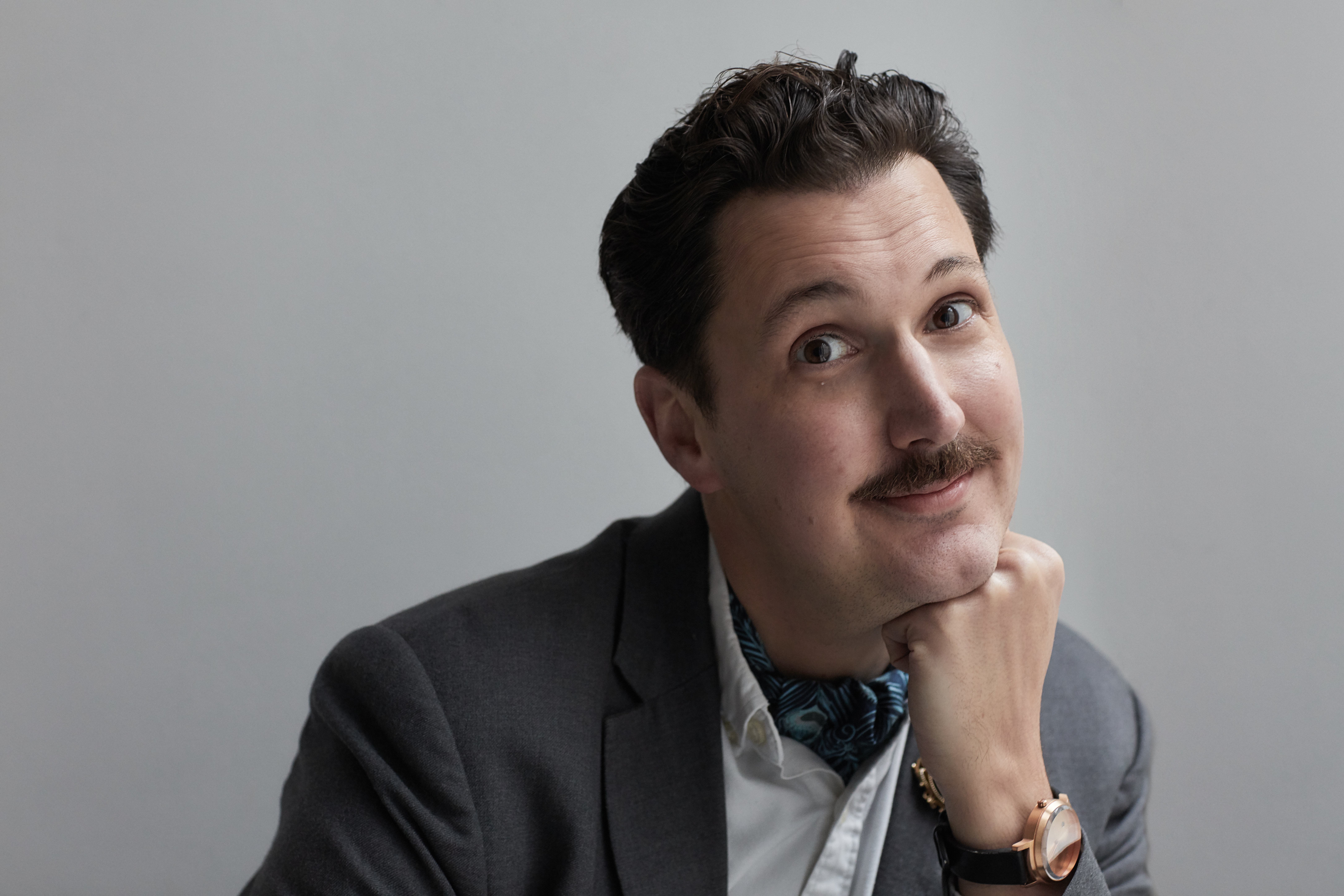
When Brian Moylan graduated from college, in 2000, he landed a job as an editorial assistant at the Washington Blade, the biggest gay newspaper in Washington, DC, and started covering reality television. It was the early days of the boom: Survivor, which debuts its fiftieth season tonight, had just premiered. “I started paying attention to reality television because that’s where the gay people were,” Moylan told me.
Over the years, he has made his way through a crumbling media industry (the Blade is the only publication he worked at full-time that still exists) to become an expert on Bravo’s Real Housewives franchise—and on Bravo itself—at a time when reality TV has come to dominate and define much of American culture. Donald Trump, who burnished his reputation as the star of NBC’s The Apprentice—created by Survivor’s Mark Burnett, and which appeared from 2004 to 2017—was fired from the show the same year he started his campaign for president. (In a statement at the time, NBC said that it would cut all business ties with Trump because of his derogatory statements about immigrants.) Now Trump, in his second term as president, has just delivered the State of the Union. “Politics used to be boring, and now Trump brought the ‘drama,’” Moylan observed. “But any reality TV producer will tell you that if you had as much mess, as many storylines, as many fights, as much conflict as Trump and his cronies are pumping out on a daily basis, everyone would be exhausted by the show and it would be canceled.”
Moylan has written for the New York Times and The Guardian; most often, he can be found at New York magazine’s Vulture, where he recaps shows from the Bravo universe. In 2022, he published The Housewives: The Real Story of the Real Housewives; he also coauthored Pretty Mess, a best-selling memoir by Erika Jayne, a stalwart of The Real Housewives of Beverly Hills. Moylan has become such a part of the overall ecosystem that at BravoCon, Bravo’s annual multiday festival, he gets approached for selfies from fans. Our conversation has been edited for length and clarity.
AB: What was the scene like back in the early days of reality TV coverage?
BM: A lot of traditional critics, especially at mainstream publications, never wanted to write about it, or never took it seriously. When you read the reviews of Housewives when they were first coming out, they were wildly dismissive and a little bit misogynistic. I was one of the few people who was really taking it seriously. I have always been a booster for writing about it. Like with any journalist, it helps if you have a beat, an expertise, and contacts. My beat just happens to be the least serious beat in the entire universe, which I’m happy about. You probably don’t want me talking about world politics, but I’m happy to have my little corner of the world.
Actually, on that note: Donald Trump is often referred to as the first “reality TV president.” What do you make of that idea?
This really irks me. Usually the people saying it are also trying to vilify reality TV. I do think that reality TV taught Trump some important skills about manipulating reality, crafting narrative, and image rehabilitation, but I think that what got him to be president has to do with so many other things, like income inequality, that have nothing to do with reality TV at all.
Also, politics used to be boring, and now Trump brought the “drama,” as it were. But any reality TV producer will tell you that if you had as much mess, as many storylines, as many fights, as much conflict as Trump and his cronies are pumping out on a daily basis, everyone would be exhausted by the show and it would be canceled. The best reality TV is also fun and lighthearted—and that is something we never see in the Trump era.
Does Trump actually communicate like a reality TV star?
We have seen his style plenty of times on Housewives: Deny the truth, present your own version of events, whether true or not, and then shout over the other person until they submit. If they don’t, make fun of them. If that still doesn’t work, deny, deny, deny. So yes, there are plenty of Trumpian reality stars. But I often find them to be the worst ones. The best are funny, can take accountability, and will resolve a conflict so that they can move on to other issues. That’s not something we see a lot from Trump.
Okay, on to an equally important, somewhat related matter: the truth versus contrived tale. Before this season of the Bravo show Summer House, two married cast members—Kyle Cooke and Amanda Batula—announced they were separating. We’re now watching that breakup, episode by episode. As a viewer, I can’t help but obsess over what’s “real” and what’s possibly being ginned up to make for juicy TV. As a reporter, how do you handle this blurring of fiction and nonfiction?
There’s always gonna be fans that say “Kyle and Amanda are faking it, and then they’ll get back together.” In my experience, that is rarely the case. What we’re seeing is their real life. We’ve seen enough reality stars who’ve tried to be actors to know none of them can act. I do think that they know what is good TV and what is required of them by being these people living these very public lives. They very consciously planned their announcement before this season was coming up. They’re definitely thinking about the timing. I do think that’s just being a good practitioner of reality TV arts and sciences.
And that’s part of what makes it fun as opposed to scripted drama. Why did Tony Soprano kill that person? Because a writer decided they should. Why did Brandi Glanville [from The Real Housewives of Beverly Hills] throw that wineglass? Who fucking knows! Are Kyle and Amanda doing it for a storyline? That is a question that you get to ask yourself. I do think those gray areas are part of what makes it fun and intriguing for audiences.
Do you think that your deep, yearslong commitment to reality television has changed you?
When I was researching my book, I talked to a reality TV editor who said his husband hates when he edits Housewives because it makes him more argumentative at home. I don’t think that’s true with me. I always joke, I’m one of those people who find women fighting on television soothing and relaxing.
What’s your relationship like with Bravo?
When I was working on my book, it was contentious. The network banned me from the first BravoCon. So I bought a ticket and disguised myself by shaving my mustache and went anyway. Bravo is very controlling of its narrative. If you’re talking about the ladies and what you see on TV, that’s fine, but once you start digging into things about production, into how the sausage is made, the network gets very protective. I get it—their job is to protect their brand. It’s my job to report.
With any institution, there’s access questions. There’s not wanting to make Bravo upset but also balancing what is servicing the fans. I think they were afraid of the unknown. The book ended up being more positive than they thought. I’m a big fan of the network. I’m a fan of the genre. I want it to be successful. Since it came out, Bravo and I have a much better relationship.
It kind of sounds like covering the White House.
And we have our own president: Andy Cohen. You don’t want to run afoul of Andy, but also maybe sometimes you need to tell Andy some things.
What about your relationship with cast members? Any scrapes over the years?
Lisa Vanderpump yelled at me for saying she lies about her age, which she claims not to. I interviewed Katie Maloney, who was on Vanderpump Rules, and she was like, “Oh my God, I’m so excited to be talking to you, I always read your recaps, you’re so fun.” And I said, “I was so mean to you, I called you so many names!” And she was like, “Oh, it’s just work.”
When you were ghostwriting Erika Jayne’s book, you appeared on Housewives. What was that like?
I filmed a couple of scenes, one working with Erika in LA and one meeting with her editor in New York. People saw me as a ghostwriter, which was good for professional opportunities. However, everything I write now about Erika Jayne, people in the comments are like, “Brian’s on Erika’s payroll! How is he able to write these recaps!” Girl, you’re worried about journalistic integrity on a television recap?!
As far as the wider world of reality television coverage, how have things changed since you first started doing this?
There are fans of it now at the highest echelons of media and culture. The fandom has just grown so much that it’s kind of undeniable. I remember looking at the New York Times homepage a couple summers ago, and there was a story about Scandoval, an interview with West [Wilson] from Summer House, a story about Jenna Lyons’s stoop sale. I was like, “Why is the New York Times coming for my job?” But I’m of the opinion that this getting covered is great for all of us. It is getting the respect it deserves. We have come a long way. People have to take it seriously.
Has America ever needed a media defender more than now? Help us by joining CJR today.