Sign up for the daily CJR newsletter.
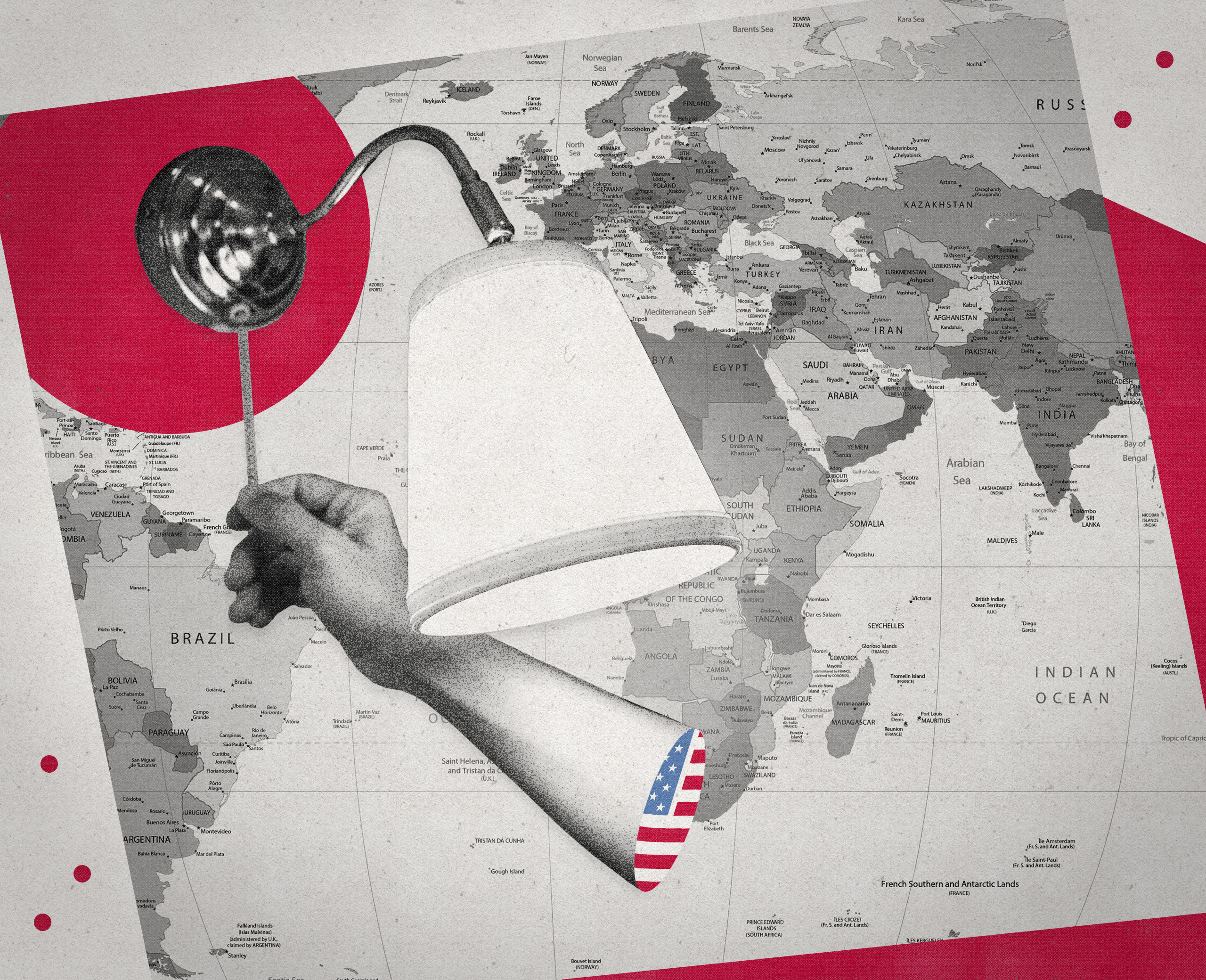
Thirty years ago, following the collapse of the Soviet Union, a new field took shape, financed in good measure by American tax dollars. It was called media development. Its animating principle was that support for free and independent journalism was not only an expression of United States values but also a strategic investment that expanded soft power and enhanced national security. Its proponents pointed to the Soviet Union as an example that autocratic governments may crumble when people are armed with good information. Over decades, the US Agency for International Development spent billions to nurture and sustain a network of independent media outlets in every corner of the globe.
Then, with a tweet, it was gone. Last February, Elon Musk called USAID a “criminal organization” and said it was “time for it to die.” One surprising vector of attack was an obscure media development organization called Internews, which helped support and train journalists and media organizations around the world. After WikiLeaks “exposed” the organization, falsely accusing it of backing online censorship, Internews faced sustained fury from supporters of the Trump administration. Its leaders were doxed. A few months later, in July of 2025, the last vestiges of USAID were subsumed into the State Department. The impact on hunger and global health has been well documented; the impact on independent media has not received a full review. Until now.
A report to be published later this month by the Carnegie Endowment for International Peace, “Good Night and Good Luck: The Impact of Ending US Foreign Assistance to Independent Media,” chronicles the devastation. From Libya to Zambia, El Salvador to Ukraine, independent media organizations have been thrown into turmoil by the cutoff in US funding. Many are on the brink of collapse. The report is based on dozens of interviews and a survey of 168 media outlets in forty-one countries. Daniel Sabet and Susan Abbott, its authors, shared an advance copy with me.
Sabet and Abbott, both of whom worked in media development for decades, offer an unsparing assessment of a valuable effort troubled by inefficiency. They find that, in 2024, the United States spent as much as 258 million dollars on media development, allocated via both USAID and the State Department. “But the percentage of these programs that went to media organizations directly was oftentimes quite small,” Sabet told me. About two-thirds of the funding was used for media training, infrastructure (such as broadcasting equipment), and overhead for organizations responsible for distributing funds. Still, the report concludes, it was money well spent: “While support for independent media was perhaps primarily driven by American values of a free press and democracy, investments in the sector supported US interests in other concrete ways, including challenging Russian disinformation in Libya and Eastern Europe, undermining Al-Shabaab in Mozambique and countering ISIS in the Middle East.”
Perhaps the most interesting finding was that, for many grantees, “the loss of political support was more important than a loss of funds.” In the battle for press freedom, “the US switched sides,” the report notes, backing dictators and autocrats who were cracking down on the rights of journalists worldwide. The report also found that European leaders and private foundations have not increased support to meet the shortfall and in many cases have stepped back, a point confirmed to me by Mira Milosevic, the executive director of the Global Fund for Media Development, an umbrella organization based in Europe. Because many media organizations are muddling through on bridge funding and one-time emergency grants, circumstances are likely to get worse in the year ahead. “I’m hearing that from everyone,” Milosevic told me.
In my conversations with researchers, funders, and media organizations, people repeatedly expressed dismay, too, about the fact that Open Society Foundations drastically reduced support. Up until a few years ago, OSF—which was established by the financier George Soros and today is managed by his son Alex—spent upwards of twelve million dollars a year on media, according to María Teresa Ronderos, who led OSF’s independent journalism program from 2014 to 2018. (Today Ronderos runs a leading investigative journalism organization, the Centro Latinoamericano de Investigación Periodística, on whose board I serve.)
The OSF investment in media was relatively small, but it was highly strategic, targeting the most cutting-edge and consequential news organizations around the world, many of which refused to accept any government funding as a matter of principle. One of them is IDL Reporteros, a leading investigative organization in Peru, led by Gustavo Gorriti. “Regarding OSF, the decision to abandon support for independent journalism was very serious, because it overlapped not only with what happened with USAID, but also the attacks on independent journalism,” Gorriti told me. (OSF disputed this characterization and said the organization has continued to support independent media around the world at a significant level.)
The two have been linked on more than a few occasions. When the USAID cutoff felled independent media in El Salvador, Nayib Bukele, the country’s authoritarian president, celebrated. “The vast majority of ‘independent’ journalists and media outlets are in reality part of a global money-laundering operation whose objective is to promote a globalist agenda, alongside the NGOs financed under the same scheme,” he tweeted.
There are some bright spots amid the devastation. The National Endowment for Democracy, which is funded by the US Congress but operates independently, fended off an effort by the Trump administration to claw back funding, and continues to function. It provides upwards of thirty million dollars in media development funding each year, most of it direct support to media organizations facing war or authoritarian crisis. Europe-based organizations, among them the International Fund for Public Interest Media, BBC Media Action, and International Media Support, remain deeply engaged in media development, as is Internews Europe, the sister to Internews. Ukrainska Pravda, a leading independent outlet based in Kyiv, recently announced that a European impact investment fund has taken a minority stake. And media organizations everywhere are surviving on pure gumption—trimming staff and cutting costs. Some journalists who have left traditional news organizations and now operate independently on YouTube are reaching significant new audiences.
Even so, the sentiment expressed in my conversations with journalists was overall one of betrayal. Many told me that the pullback of US government funding for independent media also undermines US strategic interests—though Donald Trump’s open disdain for journalists suggests that bureaucracy is, in fact, aligned with policy here. In Venezuela, where independent journalism hollowed out under the repressive administration of Nicolás Maduro, an editor—who asked not to be named for fear of his safety amid ongoing crackdowns on the press—told me that around 80 percent of his news organization’s budget came from US government sources. Without the support of the US, independent outlets like his will wither and die. For the Trump administration, that is, as we’ve come to see, not something to lament.
Editor’s note: This article has been updated with comment from OSF.
Has America ever needed a media defender more than now? Help us by joining CJR today.