Sign up for the daily CJR newsletter.
Early in the evening on June 24, two earthquakes forty seconds apart—one measuring 7.2, the other 7.5 on the Richter scale, the strongest in Venezuela in more than a hundred years—shook the country. The quakes devastated the northernmost region, hitting La Guaira and the capital, Caracas, the hardest. The earthquakes damaged or destroyed nearly sixty thousand buildings, injured more than eleven thousand people, and killed at least two thousand. Tens of thousands are still missing.
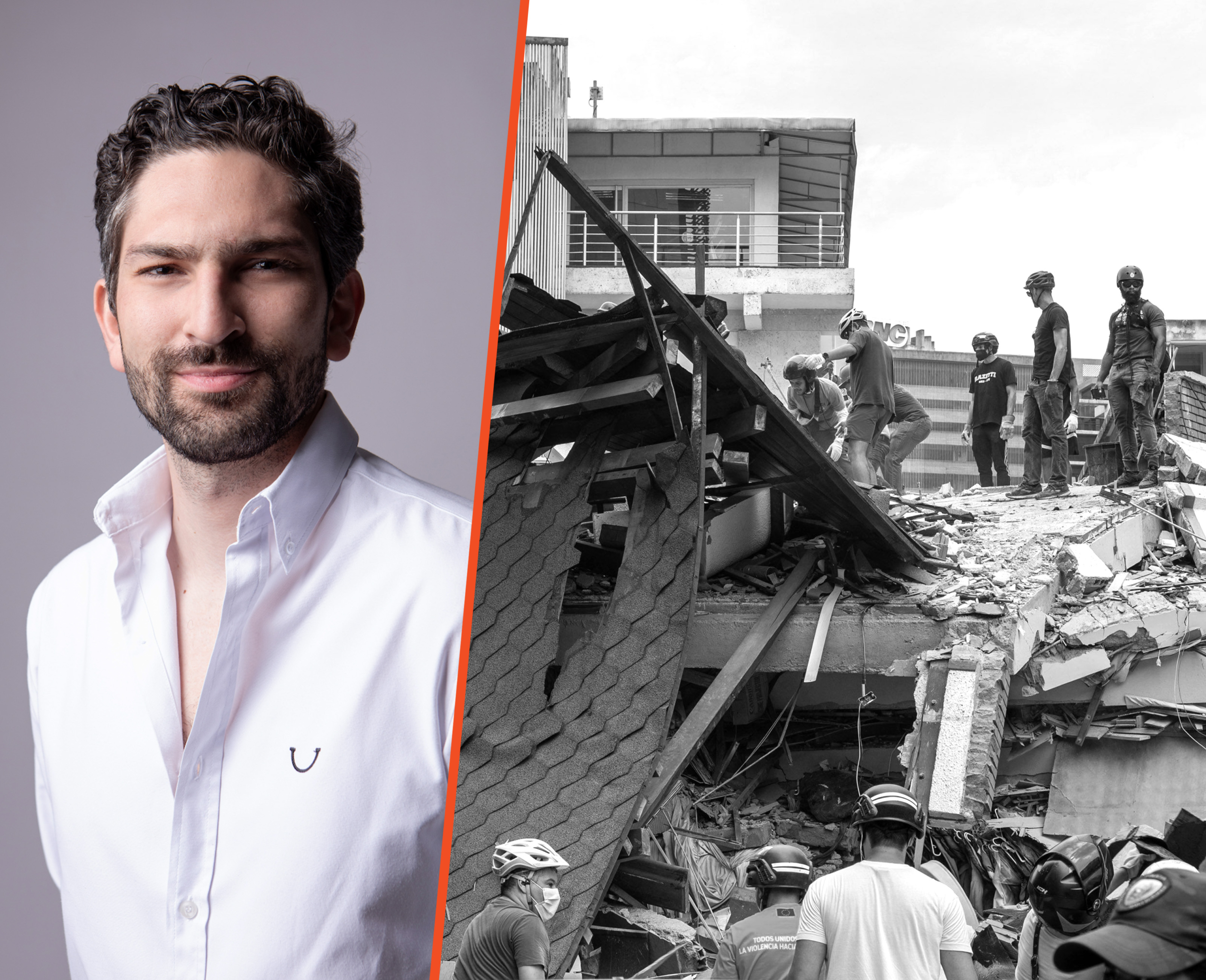
When the trembling started, Tony Frangie Mawad, who founded a digital magazine called Ecosistema and writes for Foreign Policy, The Economist, and Politico, had been enjoying a day off with family and friends. He was in an elevator, heading out to watch a World Cup game. Once he got to safety and made sure his loved ones were okay, he joined the ranks of Venezuelan journalists who rushed to document the disaster and inform the public about rescue efforts. The sheer scale of the tragedy made that a difficult task; in Venezuela, where the United States has seized control and journalists face severe restrictions, Frangie Mawad searched for official information and found none. He and his colleagues soon became both sources of news and coordinators of relief. His account has been edited for length and clarity.
June 24 was a holiday in Venezuela—we celebrated the 1821 Battle of Carabobo and our independence from Spain. There was no school, no work. My friends and I decided to meet at a bar to watch a World Cup match, Brazil versus Scotland. I was leaving my apartment with a friend when I faintly heard my mom calling me, but my friend thought she was just taking a phone call. It turned out that she had already received the earthquake alert on her phone, and she was trying to tell us about it.
So we got into the elevator, and as the doors closed, it started to move side to side violently. We figured out that it was an earthquake and got extremely scared. I tried to press the stop button, but it kept going all the way down. We started to pray. Luckily, it stopped and opened the door in the basement, from where we could run outside. When we got to the garden, that’s when the quake stopped.
Everyone from the building came down and tried to call their friends and family, but telecommunications collapsed. I was the first to get a signal, and I started to see videos of collapsed buildings from the Chacao area, a northern district of Caracas. I thought, “I hope this is fake news, because if it was true, it was the worst earthquake since 1967.” In fact, it was the worst since 1900.
Since mass media is censored, we had to use WhatsApp to find out more, and we soon started seeing footage of La Guaira looking like a war zone. I turned on the TV and also started scanning the websites of the municipalities, but the government was not sharing any information. So whatever information I had, I started sharing it on Twitter and other social media, because that’s where people were looking for it. Us journalists transformed our accounts into platforms to connect people in need to those who could help them. NGOs and even embassies started reaching out and communicating through us. I also started receiving requests from TV channels like ABC and the BBC from abroad, because we had to tell the world about what was going on here.
We reporters were just part of a larger movement from civil society—schools, universities, NGOs, churches—to fill the vacuum that the state was leaving. There was no coordination, no central registry, no relief centers. It took the government days to even build a volunteer center in La Guaira. They claim that about two thousand people died, but they only found nineteen thousand out of the thirty thousand at La Guaira, so we don’t know what happened to the rest. The only registries we have are open-source, vibe-coded platforms by civilians.
Even worse, we’ve seen reports in the past few days of security forces from the state trying to take over relief centers or obstruct relief efforts from civil society. It is a mega-disaster in an already hollowed-out state that only has the capacity to be predatory.
Eventually, our response had to move beyond immediate disaster relief. At the digital magazine I work for, Ecosistema, we created a platform called Manos a la Mesa, which roughly translates to “all hands on deck,” where restaurants can volunteer to help people in need, and the thousands of refugees who fled the disaster zone can find places to eat.
In the following months—because it’s going to take months, not weeks—it will continue to be our duty as journalists to mobilize and connect people in the relief efforts. We must continue to remind people that those in need still require donations, and we’re going to need help from civil society, private companies, and the state itself.
In the end I think that the press—and Venezuela as a whole—is in uncharted territory now. Everything that had been planned for the country since the military intervention in January has changed. We were supposed to be on a three-phase transition plan, according to the United States, and although Washington insists that the plan is still on, it’s hard to believe that those plans will hold up now. We all need to figure out where we’re headed now, because this was a threshold moment for the entire Venezuelan society.
Has America ever needed a media defender more than now? Help us by joining CJR today.