Sign up for the daily CJR newsletter.
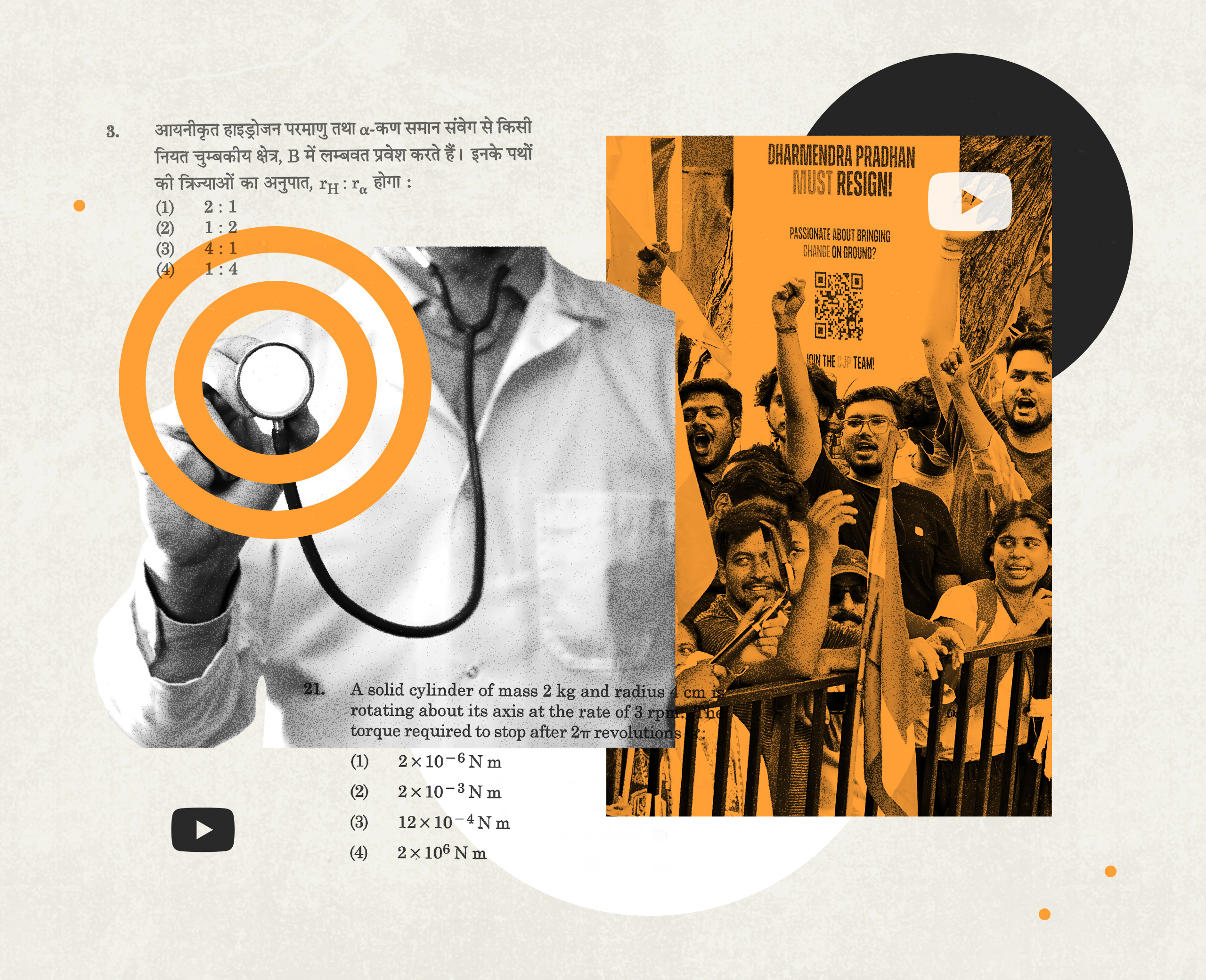
It began with a leak. On May 12, the government of India announced that, before a national medical-school exam was administered, some of the questions had found their way onto WhatsApp and Telegram—meaning that roughly two million students would have to retake it. The students, understandably, were livid. Many had subjected themselves to grueling, expensive preparation courses for the exam, one of the only real vehicles for social mobility in India amid rising youth unemployment and a spiking cost of living. Throughout the summer, thousands of Indians fanned out in Delhi, demanding an overhaul of the country’s education system with irreverent memes and satirical reels. They called themselves the “Cockroach Janata Party,” or CJP, a mocking reference to an attempted insult by a Supreme Court justice.
Over the ensuing weeks, mainstream media outlets known for their deference to Narendra Modi, the prime minister, and his Bharatiya Janata Party occasionally cast doubt and disfavor upon the CJP, but largely kept mum about the protests. Then, on July 20, the Delhi police cracked down on a planned march to the Indian Parliament building. Videos of police using batons and tear gas quickly spread on Instagram and YouTube, further stoking the students’ fury. Suddenly, the godi, or “lapdog,” media, as it’s known, snapped into action. Arnab Goswami, the editor in chief of Republic TV, a major network, alleged that the CJP had received foreign assistance. Times Now, another broadcaster, aired reports of “anarchy” and alleged that the students had attacked police. One of the exam’s top scorers appeared on NDTV, another legacy media house, where he argued the retest was a good thing: students would now have the chance to improve their scores. For the godi media—so named by a veteran NDTV anchor turned YouTube journalist, Ravish Kumar—dismissing political dissent and alleging separatist, Islamist, or foreign influence has been a matter of habit. “In the last twelve years, the mainstream media was completely unreliable,” Neha Dixit, an independent journalist in India, told me. “The news they were reporting was not aligned with what was happening on the ground.”
Millions of Indians turned instead to an increasingly prominent class of adversarial citizen journalists, content creators, and YouTubers. Using local dialects and terms accessible to Gen Z viewers, these independent journalists interviewed protesters about their reasons for joining the movement, investigated claims of police violence, and explored the sobering economic realities the students faced. Srishti Jaswal, an independent journalist in this cohort, reported on the police’s use of facial-recognition technology to identify journalists reporting from the scene. Kaushik Raj, another independent journalist, was among the first to report on the police’s use of pellet guns to disperse protesters. Shyam Meera Singh, a YouTuber, revealed that the government had employed federal armed police to curb the protests in Delhi. “For the first time we saw a news story become a national issue even in the absence of national media,” Singh told me. “They have now seen,” he said, referring to legacy media houses, “that news can be covered just as well by independent journalists.”
The ratings were impressive. Kavya Karnatac, a content creator and documentarian, was at the site of a protest where police started shelling with tear gas. From July 20 through July 26, the final week of the protests, she pulled in nearly twenty million viewers. According to ComScore, the media analysis company, her YouTube channel was among the most watched across social platforms that week. NewsPinch, another YouTube news channel, surpassed Aaj Tak, one of India’s biggest Hindi TV news channels, with more than forty-three million views. “Celebrity anchors are being replaced by celebrity YouTubers,” Raj told me.
The godi media still draws a sizable audience—and the government is the biggest ad buyer on major networks. Mukesh Ambani and Gautam Adani, titans of industry closely allied with Modi, own a majority of the country’s media outlets. Yet Indian viewers increasingly say they trust news influencers, and younger people are more likely to turn to independent sources for news. According to this year’s digital-news report from the Reuters Institute, Indians who said they trusted news creators exceeded those who did not trust news influencers by 41 percentage points. Roughly 58 percent of Indians said they depend on YouTube for their news, versus 44 percent for legacy TV, according to the report, with younger Indians leading the charge. “If you left TV for entertainment, you left TV for everything,” Raj said, pointing to the rise of Netflix, Amazon Prime, and other streaming services in India. Of the young protesters, he added: “Many of them have never watched TV”—and so have little reason to respect or fear the godi media.
As the police crackdown intensified, and major outlets began sending reporters to the scene, they were met with resistance, including protesters who refused to answer their questions. Some directed their ire at Dev Kotak, a Times Now journalist, snatching his phone, watch, and glasses. According to Kotak, they chased him, sending him crashing to the ground, where they punched and kicked him. Other journalists, as well as leaders of the CJP, condemned the attack. (“He is a fantastic reporter,” Saurav Dass, a CJP leader, said on X. “No one should be resorting to such violence, no matter how much the Police instigates them.”) Over the next few days, the number of protesters grew and spread to other cities. More influencers and independent journalists joined people on the ground. Social media teemed with memes mocking the police, videos advising protesters on how to dress to protect themselves against batons and tear gas shells, even get-ready-with-me reels. Days later, the government acceded to one of the students’ core demands: Dharmenda Pradhan, the education minister, was forced to step down, and officials agreed to compensate families of students who died by suicide in the wake of the exam’s cancellation.
Major media houses could adjust their coverage and take a more critical view of Modi, Singh suggested. But that’s unlikely to happen. In the aftermath, as viewers continue to embrace independent media, these journalists find themselves in a position to crowdfund future on-the-ground reporting. “For the first time, independent journalists are able to think beyond their regular coverage,” Singh said. “They can now plan shows like mainstream media.”
Has America ever needed a media defender more than now? Help us by joining CJR today.