Sign up for the daily CJR newsletter.
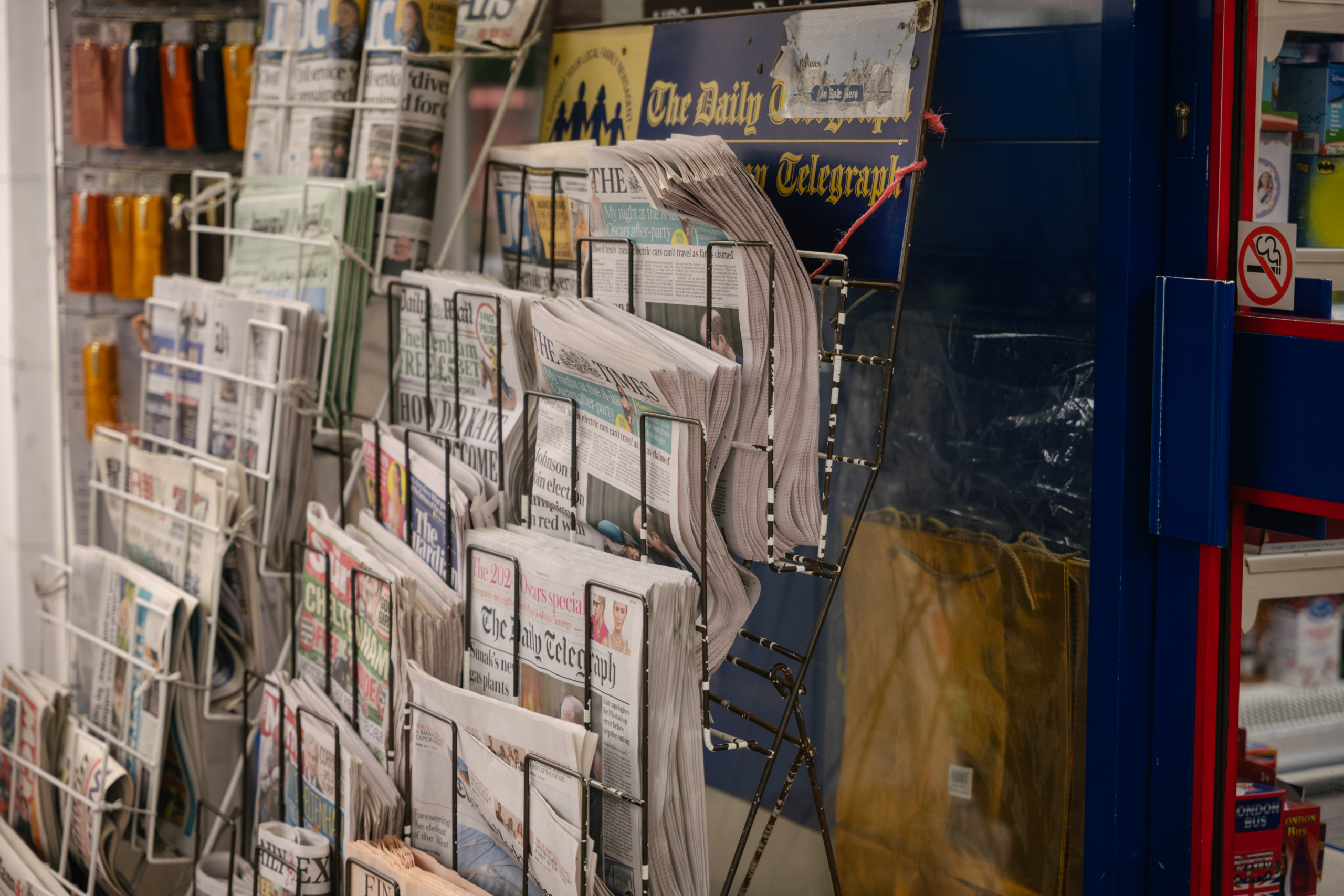
It should be clear by now to anyone paying attention that the media coverage of Jason Arday—a forty-one-year-old Black British former professorial chair at the University of Cambridge, who died this month—was racist (fueled by an academic who espouses pseudoscientific anti-Black views), disproportionate (more than two hundred articles were published in the span of a few weeks), and utterly tragic. The frenzy took place during what is described in the United Kingdom as “silly season”: at the height of summer, when Parliament is in recess, the prime minister often goes on vacation, and reporters are in need of a story. But more profoundly, the Arday coverage surfaced an ugly strain of sensationalism that has long been present within the British press—and reflected a MAGA-fication that recently has taken over elements of Britain’s media ecosystem.
There is a long legacy here, starting with the British tabloids. “We delight in destruction. We build people up to tear them down,” as Jeffrey Archer once described the ethos. Archer, who was the deputy chairman of the Conservative Party in the eighties, became the subject of tabloid allegations about payments to a sex worker, which forced his resignation; he was later found to have lied and perverted justice during a libel case against the Daily Star, and spent time in jail. Several years later, in 2011, Rupert Murdoch’s News International admitted that the practice of illegally intercepting voicemails was rife at the News of the World. The phone-hacking scandal, as it came to be known, eventually revealed that, through the aughts, British tabloid papers had engaged in unethical reporting practices at scale. This included illegally hacking the voicemails of murder victims, covert surveillance of reporting subjects, and deception without any clear public-interest justification.
The phone-hacking scandal caused a political reckoning: In July of 2011, Murdoch was summoned to testify before a House of Commons select committee; later that year, he was forced to shut down the News of the World. Perhaps the most significant result was a government-commissioned public inquiry that culminated with Lord Justice Brian Leveson’s publication, in November 2012, of a report on the “culture, practices, and ethics of the press.” The Leveson Inquiry, as it was called, led, in 2014, to the establishment of the Independent Press Standards Organisation, or IPSO, a voluntary “self-regulator” for the press that monitors editorial standards.
Leveson still casts a long shadow over the British media. In 2012, he concluded that there was a culture of “recklessness in prioritising sensational stories, almost irrespective of the harm the stories may cause.” Fourteen years later, that description resonates. Arday’s death has led to calls from the Good Law Project, an advocacy group that had been supporting him, for a new public inquiry that would analyze the media’s responsibility. “Self-regulation of the press has comprehensively failed,” reads a petition from the group, which has more than a hundred and forty thousand signatures.
The Arday coverage has also driven calls for press regulation—and discourse in opposition. “I agree that people need to exercise better judgment, but regulation of what people can and cannot write is not a good solution; it’s not compatible with being a democracy,” Stephen Bush, an associate editor and columnist at the Financial Times, told the BBC’s The Media Show last week. The concern over heightened press regulation is about more than defensiveness among the British media. The public outcry has collided with the rise of Nigel Farage and his right-wing Reform UK party, which has been accused of “nasty tactics” and “Trumpian” legal threats against the press. A number of Reform politicians and donors, like some MAGA Republicans across the Atlantic, have made a habit of criticizing, threatening, intimidating, and even allegedly surveilling journalists who seek to hold them to account. Press regulation in their hands would put independent reporting at serious risk.
And yet there are some news outlets within the British media that appear to have internalized the MAGA spirit. Several British newspapers have long slanted rightward, but I’ve noticed that many now seem to thread their coverage with nativism, ethnocentrism, and, when the facts don’t fit the narrative, conspiratorial thinking. Last year, IPSO found that the Telegraph—a right-wing broadsheet that was recently purchased by Axel Springer—had breached its Editors’ Code more often than any other outlet in 2025. IPSO reprimanded the Telegraph, for instance, for “lack of care” with a headline about the number of immigrants who are sex criminals, and for a separate front-page story on how many “illegal migrants” live in London. The Telegraph has also been criticized by journalists at The Guardian for an extreme example of what is known among the British press as a “spoiler”: In April, The Guardian approached Farage about a five-million-pound donation he did not declare to parliamentary authorities; Farage asked for more time, then “used that time to drop the story in the friendly lap of the Telegraph, telling them he needed the money for his security,” as Kath Viner, editor in chief of The Guardian, put it. Some right-wing newspapers seem to function as shields for politicians who share their grievances about race, immigration, and “wokeness”—in other words, they serve increasingly as political propagandists.
This new media reality led to Arday being castigated as “a poster boy for Cambridge’s DEI policies,” as Jacob Rees-Mogg, the Conservative politician, put it on the Telegraph’s podcast. That refers, of course, to diversity, equity, and inclusion practices. But what’s weird is that they’re not actually called DEI initiatives in the UK, where such programs are usually referred to as equality, diversity, and inclusion (EDI). The American, or Trumpian, influence is evident. Outlets including the Telegraph, Express, the Times of London, and GB News—a Fox News clone that started in 2021 and has since lost tens of millions of pounds, but survives because it’s bankrolled by Paul Marshall, a right-wing billionaire—at times seem drunk on MAGA talking points.
The British press has long been due for a deeper reckoning. The questions now roiling the media—whether the actions of the press contributed to Arday’s death, how editorial decisions could have been different, whether more care should have been taken to consider his mental health—point to a need for accountability on the part of news organizations. That should not detract from the coverage that did make effective attempts to address his story with nuance and fairness. There were legitimate questions to be answered about Arday’s professional record, and some outlets addressed these responsibly. But what is certain is that the toxic practices of British media run deep. In their exhilaration at Arday’s fall from grace, right-wing media outlets seem to have forgotten that he was human.
Other Notable Stories …
By Jem Bartholomew
- On Friday, the Pentagon fired Erik Slavin, the editor in chief of Stars and Stripes—a military newspaper partly funded by, but long editorially independent of, the Pentagon—alongside Lara Korte, a top reporter, and Max D. Lederer Jr., the outgoing publisher, for insubordination, Slavin told the Associated Press. Slavin and Korte were let go after speaking publicly against editorial interference from the Defense Department, Slavin said. Earlier that day, CJR’s Susie Banikarim had awarded a laurel to Stars and Stripes for showing “the value of its independence” for its coverage of “a mounting mental health crisis” aboard a US aircraft carrier. Reporting by Alison Bath for Stripes documented how food and water shortages, disrupted mail service, and limited time off were compounding the strain felt by the roughly five thousand sailors and Marines aboard the USS Abraham Lincoln.
- ABC sued the Federal Communications Commission (FCC) last week over the regulator’s early review of the company’s broadcast licenses, accusing the FCC of violating the First Amendment and trying to punish the network for its coverage. Brendan Carr, the FCC chairman, is investigating Disney’s diversity, equity, and inclusion (DEI) practices and, in April of this year, ordered a review of the licenses of eight local ABC TV stations owned by Disney. (Banikarim wrote for CJR at the time that this was all part of a pattern of Carr targeting “broadcasters that conservatives deem insufficiently loyal to the Trump administration.”) ABC said in the suit that it had faced onerous demands from the FCC, per the Times, supplying thirteen thousand pages of documents in response to about six hundred requests. “The process is itself the punishment,” the network said.
- Last Monday, a group of journalists and two military escorts accompanying them to an event at a military base in Southern California were briefly held at gunpoint, USA Today reported. Journalists for KEYT, Noozhawk, KSBY, and the Santa Maria Times arrived for a groundbreaking event at Vandenberg Space Force Base “but were stopped and ordered out of their vehicles at gunpoint with their hands up,” according to a report from KEYT. The journalists were eventually cleared and released, but they missed the event they intended to cover. KEYT said its reporter had received an apology from base personnel after the incident. A Space Launch Delta 30 spokesperson told USA Today that a “coordination gap” caused the media convoy to proceed “before the credentialing process was fully completed,” and that a review of the process had been ordered.
- Ross Barkan, a freelance writer for New York magazine and other publications who has been accused of plagiarism and not properly crediting the work of other journalists, issued an apology on Wednesday, saying that he did not cite or paraphrase well enough in his columns. “Now that I’ve taken a breath, I am going to self-reflect on my conduct and hopefully be a better person,” he told the Times’ Benjamin Mullin. On Wednesday, Penguin Random House suspended sales of Barkan’s forthcoming book, The Revolutionary: Zohran Mamdani and the Remaking of American Politics, which was slated for release in October, the Washington Post’s Scott Nover reported.
- And Prince Harry, the singer Elton John, the actor Liz Hurley, and four other claimants have been ordered by Judge Matthew Nicklin, of the UK’s High Court, to pay 9.54 million pounds (thirteen million dollars) to the publisher of the Daily Mail after they lost a court case over allegations that the tabloid hacked phones and intruded into their private lives. Associated Newspapers, publisher of the Mail, said in a statement that it welcomed the “overwhelming victory.” In July, Prince Harry called the dismissal of the lawsuit “a complete and obvious whitewash.” According to Reuters, the claimants have not yet decided whether to appeal.
Has America ever needed a media defender more than now? Help us by joining CJR today.