Sign up for the daily CJR newsletter.
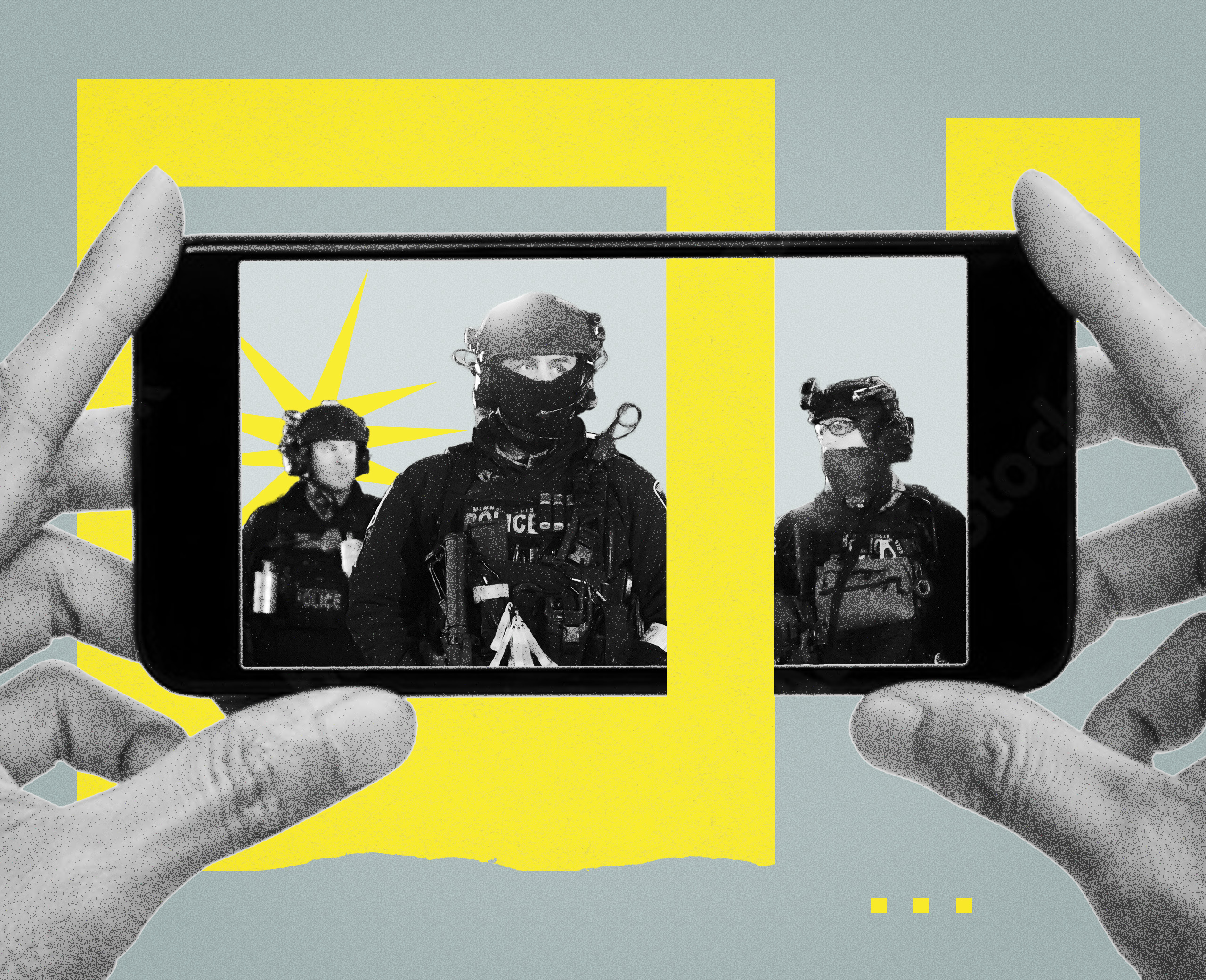
The past few weeks in Minnesota have demonstrated the importance of citizen journalism and the power of video, particularly the footage of the deaths of Alex Pretti and Renee Good at the hands of federal agents. And yet the wave of content creators, solo journalists, and national correspondents descending on Minneapolis has broken hard. Most recently, the arrests of Georgia Fort, an Emmy-winning journalist who runs her own media outlet, and Don Lemon, the former CNN anchor who now hosts his own YouTube show, made clear the risks involved in documenting the news—especially for those reporting independently. “Every independent journalist is kind of every person for themselves,” Fort said in an interview last week. She and Lemon have since been released from custody, but they still face federal charges.
“In Minnesota I think we’re seeing the Trump administration kind of testing the waters, especially with independent journalists, because they’re perceived as easier prey,” Liz Kelly Nelson, the founder of Project C, a coalition for creator journalism, said. “They are seen as easier to target because there’s not a big legal defense to instantly swing into action and have a big budget to support them.”
David Bralow, general counsel to The Intercept, said that regardless of categorization, everyone should be entitled to First Amendment protections. “If you’re really talking about someone publishing commentary or recording, I’m not sure it really matters whether or not it’s ‘a journalist’ or a ‘streamer’ or ‘Joe Citizen,’” he noted. “The Constitution and the First Amendment protects our interests in reporting and discussing what the government has done, regardless of whether we’re called a journalist or anything else.”
Even so, for independent journalists and creators, the question of who should be allowed to work under the banner of the press has consequences on the ground. “We have a lot of streamers who are just driving around town in their vans, and they write ‘press’ on them, and it’s just like, they think they’re in a war zone,” Taylor Dahlin, a Minneapolis-based citizen journalist who primarily posts on X and Bluesky, said. “A lot of them will be in rapid-response chats to try to find leads. And so it’s just like they’re treating these community defense things as like their sources.” Dahlin—who started posting about what was happening in Minneapolis after a police officer murdered George Floyd, and protests erupted—has eighty-five hundred followers on Bluesky and more than seven thousand on X. Last week, in response to a photo of people gathered to document an arrest by Immigration and Customs Enforcement (ICE) agents, she posted, “GO.HOME.STREAMERS.”
“I think there’s kind of a universal consensus here in Minneapolis that we really would like the streamers to leave,” said Will Stancil, a Minneapolis-based activist who has been part of the rapid-response efforts to track and film what ICE is doing. Recently, Stancil was removed from his neighborhood’s rapid-response group, which communicates via Signal. He believes this was because he allowed several reporters to ride along with him while keeping watch for ICE. There has been a lot of paranoia among those in the group, Stancil said. (The FBI recently announced a criminal investigation prompted by Cam Higby, a correspondent for Turning Point USA, on the use of Signal chats to track ICE agents in Minnesota.) “There’s kind of an ongoing debate, as my situation demonstrates, about how much you can trust the press,” he said. “So having people run around, not always behaving super well, is a challenge because there’s these independent journalists or streamers, and they will be very rude—they won’t give real names; they’re just sketchy people, frankly—and then that makes it so much harder to get people on my side of things to trust legitimate press.”
As Amanda Moore—a freelance journalist who has been contracted to report on Border Patrol for Mother Jones and has had her footage of Minnesota aired on CNN, Fox, and CBS—told me, “You’ve got people who have a hundred fucking followers, and they’re blocking the shot of people who are on contract with Getty, and that’s very frustrating.”
Some independent journalists have had to explain their presence in the city, both on the street and online. In early January, Zack Roberts, a Virginia-based freelance photojournalist reporting in Minneapolis for Status Coup, an independent investigative outlet, had his car come up in a conflict on X, mistaken for an ICE vehicle. In an exchange on X about the confusion, Roberts said, “That car is NOT ICE now. It’s a rented vehicle with media in it—I was riding in it to the action tonight.” Dahlin wrote in response: “That’s someone’s neighborhood you’re calling ‘the action’ as you run around pretending Minneapolis is your war zone assignment and get to leave at the end and we all have to pick up the pieces.”
When I asked Roberts about Dahlin’s reply, he said he understood. “As journalists who come in from out of town, we always have the parachute-journalism problem, and that’s just always going to be a thing,” he told me. “When there’s a national story, I understand: everybody coming in and converging—it’s not a great look. And as journalists, it’s tough to kind of fight that. And maybe I used bad language when I said ‘action.’ But unfortunately, it’s kind of part of journalism.”
“It’s a very interesting moment,” Nelson said, “where a lot of the work that would happen within an editorial team in a newsroom is happening in a distributed way across an ecosystem.” Independent journalists often build source relationships with streamers and witnesses so they know who to talk to and where to go, acting as “the editors, the curators of what needs to be carried forward,” she observed. These independent journalists, in turn, garner attention from major outlets.
To Fort, the arrival of outsiders with varying degrees of journalism experience has had mixed results. “On one hand, I think that it has helped raise more awareness,” she said. “On the other hand, when you have everyday people who are just calling themselves independent journalists, I think it is posing a threat to those folks who do have the research chops and have worked in the industry, and who are working with trusted sources, and who are doing their due diligence to uphold the ethics of journalism.”
Has America ever needed a media defender more than now? Help us by joining CJR today.