

Sign up for the daily CJR newsletter.
This might be a first for this column: a laurel and a dart, both for the same news organization. We’ll start with the dart.

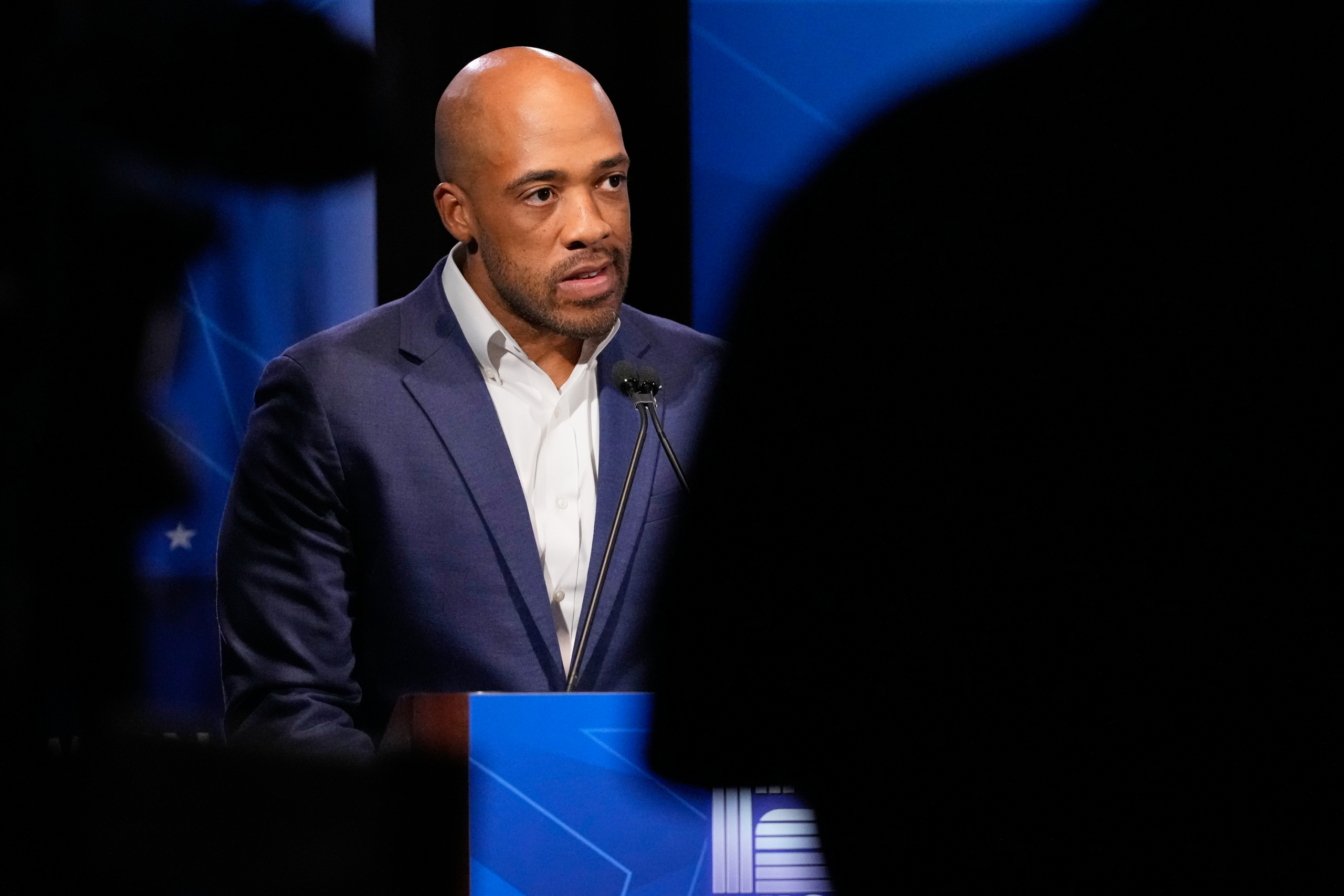
On July 30, less than two weeks before a divisive gubernatorial primary election, the Milwaukee Journal Sentinel ran a gossamer-thin, slightly salacious story about one of the top candidates, Mandela Barnes, who had served as the state’s first Black lieutenant governor. The story said that the Democratic Party had, based on an anonymous, widely circulated letter, reviewed “allegations of inappropriate behavior” by Barnes toward women. According to its sources, the Journal Sentinel stated, Barnes “has repeatedly taken advantage of his status within the party to seek sexual encounters with young adult women.” And, the paper added, “concerns about Barnes’s relationships reached a fever pitch in recent weeks.”
Then the story included these caveats:
- that anonymous letter “did not include specific allegations nor any names”;
- the Democrats’ review “did not turn up anything the party could take action on because of its lack of details”;
- “Barnes is not accused of any crimes”;
- “no one has alleged they were abused by Barnes”; and
- there “were no complaints filed” while Barnes was a legislator or lieutenant governor.
The story cited three anonymous sources. One was an unnamed woman who told the Journal Sentinel that, in 2018, at the age of twenty-one, she met Barnes at a party after a political event, was “smitten,” and had sex with him while intoxicated. The woman “continued having sexual encounters for months afterward” with Barnes, who is ten years older, the Journal Sentinel reported. But she expressed regret, telling the paper that Barnes “did not stop to consider how naive and impressionable I was.”
The other two sources were said to have “firsthand knowledge of the behavior,” but precisely what that behavior was, or how they knew about it, was never explained in the story. Those sources “provided copies of texts and other messages” to corroborate “discussions about their concerns,” but the story doesn’t reveal what was written in those messages. The Journal Sentinel’s references to Barnes’s sexual behavior went on to appear in national publications such as the Washington Post and Politico.
For his part, Barnes denied that he had done anything wrong, and he dropped out of the race the day the story ran, attributing the decision to his weak standing in the polls. That might have been that.
But he sued the Journal Sentinel last week for defamation in Milwaukee County Circuit Court, saying the paper had made a “decision to manufacture the appearance of sexual misconduct from facts that established no sexual misconduct at all.”
And into the complaint, which runs twenty-two pages, Barnes’s lawyer, Michael J. Cerjak, dropped this grenade: an unnamed Journal Sentinel reporter who worked on the story (who was not one of the two whose bylines appeared on the piece) had been in an “intermittent sexual relationship” with Barnes—one that spanned several years, beginning in 2018.
When the Barnes campaign alerted the newspaper about this, the suit states, “the Journal Sentinel acknowledged the conflict, removed the reporter from the matter, and represented that other reporters would ‘re-report’ portions of the story.” If other reporters re-reported it, they must have done so awfully quickly, because the story ran “later the same day.” And nowhere in the published story are readers informed of this alleged conflict.
After the lawsuit was filed, on November 10, the Journal Sentinel provided a cryptic response, one that requires some careful parsing. First, Greg Borowski, the executive editor, defended their work: “The Journal Sentinel stands by our reporting. The story went through our standard editing and legal review, and Mr. Barnes was given the opportunity to respond before publication.” A few paragraphs down, the Journal Sentinel mentions the lawsuit’s claim about a reporter’s relationship with Barnes. Borowski doesn’t confirm or deny it, and instead, the story states that “that reporter was not involved in reporting or writing the published story.”
Note the use of the word “published.” It leaves open the possibility that this staffer did have an intimate relationship with Barnes and that the person did do reporting on a story about his sexual past, even if it wasn’t the final, “published” version.
I emailed Borowski for comment; he referred me to USA Today’s corporate communications department, which sent me an unsigned email repeating the statement from the November 10 story. A few days ago, I also asked him and the anonymous spokesperson about the allegations regarding the unbylined reporter; I have received no response to that query.
Whatever the weaknesses of the original story, or the possibility that a conflicted reporter was part of the reporting, this lawsuit may be a long shot. Barnes is undeniably a public figure, so the standard for defamation is high. And it appears likely that there was some kind of probe by Democratic officials into the allegations. Moreover, Barnes’s lawyer acknowledges that the story didn’t harm his gubernatorial bid. “The way that the political winds were blowing at the time made it very difficult for Mr. Barnes, and he was intending on withdrawing completely separate and apart from anything that they were investigating,” Cerjak told me. Instead, Barnes is seeking damages for “reputational and other injuries resulting from publication.” But it’s unclear what that amounts to or what dollar figure could be attached to it.
Of course, it’s possible that there is more to these allegations, or that the reporters knew more than they were allowed to include in their article. But that doesn’t mean you run a piece like this when you don’t have the evidence and can’t state it clearly and convincingly to your readers, especially in the days before an election. “This is simply not a story and never should have been published,” wrote Urban Milwaukee’s Bruce Murphy, a few days after it ran. He has a point.

When it comes to crime coverage, journalists tend to focus on high-profile victims or perpetrators.
But over the past week, Ashley Luthern, a reporter at the Journal Sentinel, took a much-needed step in the other direction, with a three-part series, “Silent City,” about how local law enforcement and judges had been slow to recognize the danger posed by three different men, and how Wisconsin women had suffered from that laxity.
The investigation started with a 2024 tip about women who were being murdered in vacant houses in Milwaukee. “After some digging,” Daphne Chen, the investigations editor, wrote, “Luthern realized that law enforcement officials had missed key opportunities to save women’s lives.” Luthern would go on to detail the systemic flaws, and the devastation that followed—six women murdered, six others sexually assaulted.
In one terrifying case, a woman with a drug addiction was sexually assaulted in a basement but managed to break free and call 911. Police arrested the suspect, but prosecutors didn’t follow through because they saw a “lack of evidence” around whether the woman had consented to sex in exchange for drugs. “The system had seen her as an unreliable narrator, an imperfect victim and an addict,” Luthern wrote.
Her assailant would eventually face trial, but only after he had murdered a different victim. He was also charged with the woman’s rape, and she took the stand to help convict him. “This has left a mark on my life,” she testified. “I feel like I am more than a victim, like I’m just a filthy person, and it’s hard for me to sit in front of these people and tell this story.”
The people who live in the eastern part of the Democratic Republic of the Congo face twin threats to their lives and well-being: an intensifying spread of Ebola, and an arm of the Islamic State that abducts, mutilates, rapes, and beheads innocent victims.
Into that terrifying maelstrom ventured New York Times reporter Declan Walsh and photographer Daniel Berehulak, who together produced this riveting description of the hellish conditions that have beset this part of the world. Among those they interviewed was Espérance Kombi, a mother of seven, who had been confined to an Ebola ward for two weeks, witnessing endless suffering. “I need a second heart to endure what I’ve seen in there,” she told the Times, pointing to a door to the ward. As she tapped her chest, she said, “This one is not enough.”
The risks that the Times team faced were not limited to the virus, as Walsh notes when he and his photographer attend the funeral for Moïse Kalindera, age twenty-seven, who has just died of Ebola:
Yards away, another group began digging the next grave. A third group arrived, bearing a coffin for burial.
One mourner turned toward us.
“This is the fault of the white people,” she said loudly. “You brought Ebola here.”
Jeering erupted, led by the gravediggers.
“You killed him! I hope you are happy!”
“Let’s attack them!”
Two men beside us debated whether we were really journalists. Another walked up, holding out a hoe. “Take it, white man,” he said to me. “Help us dig.”
One of the gravediggers waved a toy wooden rifle, then pointed it at me.
As we slipped away, handfuls of soil fell on our heads, thrown from the direction of Mr. Kalindera’s grave.
While he was a reporter at the Washington Post, Michael Brice-Saddler spent a good deal of time interviewing Matt Lambert, who paid 1.1 million dollars a decade ago for a penthouse apartment that became riddled with leaks and mold. Lambert told Brice-Saddler that he had endured months of health problems and legal stonewalling while running up nearly two hundred thousand dollars in attorneys’ and engineers’ fees.
Brice-Saddler was still working on the story when the Post laid him off, amid the cost-cutting spree this year that led to a purge of the local-news staff. Brice-Saddler then landed a job at the Washington Sun, which positioned him to write the most compelling story about Lambert’s shooting spree—one that killed the building manager, injured four other people, and ended in a suicide. The piece, “What the Logan Circle Shooter Told Me,” manages to tell Lambert’s story without lionizing or demonizing him.
Editor’s Note: This piece has been updated to correct the name of the Washington Sun.
If you have a suggestion for this column, please send it to laurelsanddarts@cjr.org. We can’t acknowledge all submissions, but we will mention you if we use your idea. For more on Laurels and Darts, please click here. To receive this and other CJR newsletters in your inbox, please click here.
Has America ever needed a media defender more than now? Help us by joining CJR today.