Sign up for the daily CJR newsletter.
In the month after Mollie Tibbetts disappeared, reporters from national media outlets descended on the tiny town of Brooklyn, 70 miles east of Des Moines, Iowa. Wire services fed investigation updates to major newspapers, whose coverage amped up on August 21. That day, remains were found, authorities announced charges against Cristhian Bahena Rivera, and President Donald Trump seized upon Rivera’s immigration status, prompting a debate about border control.
As national news outlets became preoccupied with Tibbetts, who was a 20-year-old student at the University of Iowa, most coverage provided few details about her life. But before that, her disappearance was a local story. The Des Moines Register, which resisted a typical sensationalist narrative, won the trust of her friends and family to produce the deepest portrayal of her life of any outlet.
ICYMI: A major Trump scoop from CNN is now being called into question
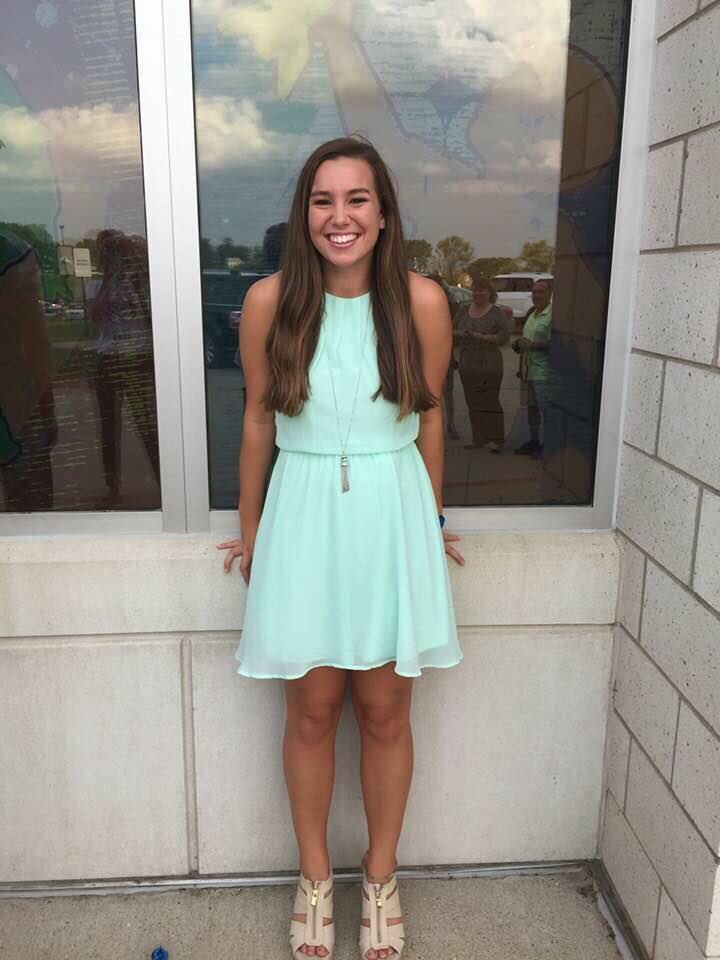
The day before her remains were discovered, the Register published a profile of Tibbetts, shaped by interviews with more than a dozen family members and friends, and given further life by photographs they provided. The piece, written by Luke Nozicka, a breaking news reporter who joined the paper in November, describes her grade school theatrical rise “from Oompa Loompa to a lead role,” her aspirations of becoming a psychologist, her “super average” way of being. An elementary school principal has her first-grade school picture on display in her office; in the image, which Register readers can see, Tibbetts wears a pink bow. A high school speech coach says she wrote orations about “the need for others to understand their self-worth.” Her parents recall nearly naming her “Grace” before they decided their daughter was “more of a Mollie.”

Des Moines Register breaking news reporter Luke Nozicka (Des Moines Register file photo)
Nozicka, who is 23, says that he earned access by “focusing more on who Mollie is.” Tibbetts’s father, Rob, recently told Nozicka that the Register’s reporting “has been sensitive to our family and accurate.” Building that credibility was a sustained effort: the Register’s coverage of Tibbetts has partly involved pushing back against potentially misleading and harmful speculation. An August 6 story scrutinized viral social media posts in which white women in Iowa alleged being stalked by black men; one was shared 14,000 times in a matter of days. The incidents detailed had not been reported to law enforcement—though, as the Register noted, that didn’t stop people from calling police and recounting them.
The Register has also tried to offer a counter to alarmist news reports that might cause confusion and distress in Iowa. In July, a New York Post headline proclaimed, “Missing college student is one of dozens to disappear this month.” That story includes a few quick, sensational social media comments (“How is this possible?” “WTH is going on here?”) before noting—in the seventh paragraph—that “the number isn’t unusual.” To spare Register readers such alarm, editors reused a few lines in multiple stories by way of disclaimer:
Despite concerns spurred by Tibbetts’s disappearance, state investigators have said the number of missing juveniles reported in Iowa in recent weeks was in line with historical trends. The vast majority are found or returned home within 24 hours.
“Readers will look at related content,” Paige Windsor, the paper’s news director, says. “And related by topic in the digital sphere is very different from related by circumstance.”
The paper also addressed accusations of bias in media coverage, a charge that implicates the Register itself. The story of Tibbetts—a young, white female—received local and national attention while another missing-person case in Iowa—that of Jake Wilson, a 16-year-old boy with autism—flew mostly under the media radar. On social media, some wondered why Wilson, who disappeared while he was out for a walk in April, received relatively little coverage while Tibbetts received so much. Mike Kilen, a Register senior reporter, wrote a story addressing this discrepancy; he consulted law enforcement and criminal justice scholars as well as family members of missing people. When he asked Iesha Husted, whose brother Sebastian had gone missing in January, why she thought his disappearance hadn’t received coverage, she told the Register, “I think it is because our family is poor. We don’t have the funds to get his face out there. We don’t have a tight-knit community to rally around.”
Lucas Grundmeier, Nozicka’s editor, says the Register responded to public interest in the Tibbetts case. But on accusations of bias, he adds, “It was and remains an absolutely fair criticism of media in general, and us in particular, because even for having acknowledged that there were many undercovered disappearances, our commitment of resources remains highly disproportionate.”
The Register doesn’t have a Brooklyn bureau, so to cover the Tibbetts story, reporters had to develop new relationships with members of that community. “Getting to know the family, getting them to feel comfortable with us, it was more than a journalistic task for us,” Windsor says. “They’re a part of our community of Iowans, and the sensitivity with which reporting needed to be handled was very important.” Some 65 people work in the newsroom, and nearly 70 percent of them contributed to Tibbetts coverage in one way or another—in every section from breaking news to features to sports. The paper’s music reporter wrote the first story about her disappearance, on July 22, because he was working a weekend shift as a general assignment reporter.
Nozicka’s profile has been among the Register’s top 20 most-viewed stories this year. (It had 160,000 page views as of August 27.) “Each day that we look at our traffic online, Mollie Tibbetts stories do tend to dominate, they do tend to endure,” Windsor says. “Some of these deeper pieces, like Luke’s piece, are the kind that people have returned to, to get a better view of who she was.”
Has America ever needed a media defender more than now? Help us by joining CJR today.