Sign up for the daily CJR newsletter.
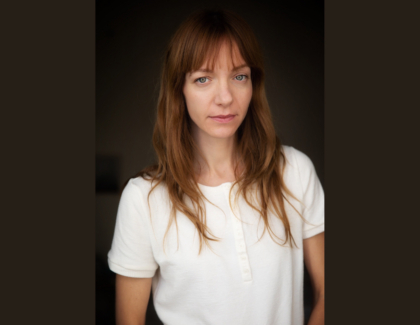
Halfway through American Canto, the new book by Olivia Nuzzi, the political reporter, an unnamed editor at an unnamed magazine suggests to her, “You could write your way out of it.” The “it” refers to the scandalous revelation that Nuzzi had been engaged in a “digital relationship” for months with Robert F. Kennedy Jr., whom she profiled for New York magazine in 2023. The affair spanned the height of election season and, in October of last year, Nuzzi left her position as Washington correspondent after she was found to have violated the magazine’s conflict-of-interest standards. Since then, it seems that Nuzzi has taken her old boss’s advice seriously.
American Canto, which publishes tomorrow, recasts the Kennedy scandal on Nuzzi’s terms. Cobbling together memoir and her own Trump-era political reportage, the book is billed as a comeback of sorts. In the sense that it puts Nuzzi back in the conversation, it hasn’t failed.
In September, Nuzzi was named the West Coast editor of Vanity Fair. In November, the New York Times published a glitzy profile, proclaiming, “Olivia Nuzzi did it all for love.” Journalists and media commentators noted its flattering, glamorizing tone: “The Times profile appears to be a gauzy, even romantic rehabilitation of her image,” Melody Schreiber wrote in the New Republic. Responding to a request for comment, a spokesperson for The Times wrote in an email, “Any fair reading of this article would conclude that it was thorough, revealing, and challenging to both her and her version of events, including probing the questions of journalistic ethics at play.”
But a series of events in the lead-up to American Canto’s debut gave Nuzzi a different kind of attention, complicating the redemption narrative she puts forward in the book. On November 17, Nuzzi’s former fiancé, Ryan Lizza, a political writer who has served as a Washington correspondent for The New Yorker and Politico, published a piece on his Substack, Telos, alleging that she had slept with another politician she profiled: Mark Sanford, the former South Carolina governor and onetime presidential candidate. (Sanford did not respond to requests for comment.) Nuzzi’s lawyer Ari Wilkenfeld has since put out a statement. “In American Canto,” he said, “Ms. Nuzzi discusses the only instance in her long career as a journalist in which she had an improper relationship with someone she was covering.”
In his most recent Telos piece, published last Wednesday, Lizza alleged that Nuzzi’s liaison with Kennedy went far beyond sexual texts. In Lizza’s telling, Nuzzi acted as a “private political operative” for Kennedy, feeding him information she obtained from confidential sources to help Kennedy’s campaign. “In other words, what you have been reading about here is not really a scandal about sex, but a scandal about journalistic ethics,” he wrote. (Another installment of Lizza’s series is expected soon. Neither he nor Nuzzi responded to requests for comment.)
Nuzzi and Lizza are not entirely reliable narrators. In her book, Nuzzi admits to lying about her relationship with “the politician”—widely known to be Kennedy, though he has repeatedly denied romantic involvement with Nuzzi. (“Reflexively and repeatedly I denied the allegation. Yet I could see on his red face that the man for whom I worked did not believe me,” she writes. “Still I lied.”) After her breakup with Lizza, she requested, then withdrew, a civil protective order against him, alleging that he had hacked her personal devices and stolen information in order to blackmail her. In her book, she also claims Lizza confessed to sleeping with a Democratic aide, an accusation Lizza denies. Whatever the truth on this particular matter, Lizza was fired from The New Yorker in 2017 following allegations of “improper sexual conduct.” It’s the kind of story where there are “no winners—only losers,” as Marisa Kabas wrote in her newsletter, The Handbasket.
Nuzzi started her career in 2013 at the age of twenty, as an intern for Anthony Weiner, a former Democratic congressman and mayoral candidate who was later sentenced to twenty-one months in prison for sexting with a minor. She wrote a piece about the experience for the New York Daily News. Since then, she has stayed close to scandal and power. “She loved crazy people,” Lizza writes in his Substack post.
Nuzzi prefers to put it this way: “I was interested in characters,” she writes in American Canto, “and as it happened there were lots of them in politics.”
By twenty-two, Nuzzi was covering Donald Trump’s unprecedented presidential campaign for the Daily Beast. “She’s brilliant—she’s preternaturally talented,” John Avlon, the former editor in chief of the Daily Beast, told me. “That’s why I hired her.” He continued: “It’s important for people to speak up for her talent and her craft, because that shouldn’t be lost in all of this.”
As her career went on, Nuzzi showed an enviable skill for securing access to high-profile figures. She reported on Chris Christie, Rand Paul, and Alex Jones. For the Daily Beast, she got an exclusive interview with Trump’s ex-wife Marla Maples. For GQ, she profiled Hope Hicks, the former White House press secretary, who did not agree to be interviewed for the piece but did agree to sit next to Trump while he spoke to Nuzzi about her. At New York, Nuzzi continued to cover Trump and other Trump-adjacent figures: Kellyanne Conway, Rudy Giuliani, Megyn Kelly. In July 2024, she published a damning piece on the decline of Joe Biden’s cognitive condition. In the offices of New York, people talked: because Nuzzi took such an interest in right-wingers, some staff members wondered whether she was a “closet Republican,” a writer at the magazine told me.
“The thing about Olivia is she was a seductress. That was her power as a reporter,” the New York writer said. “She looked like a Fox News blonde, so of course those people wanted to talk to her.… That in itself I don’t think is wrong. I think we all use our identities in different ways to get the information that we need and want when we’re reporting.”
In a piece for Mediaite, Colby Hall argued that the Nuzzi controversy is a symptom of a bigger problem: what “happens when an industry spends fifteen years telling talented young journalists that personal brand is currency, that access is the game, that being a character in the story makes better content—and then acts shocked when someone takes that logic a few degrees too far.” Hall has a point, but Nuzzi also represents a type of journalism that feels decidedly old-school. In American Canto, she has no problem getting in a room with powerful people. She wears stilettos and dresses in black. She seldom mentions the mundane realities common to working journalists: dealing with health insurance, chasing down freelance payments, getting laid off. Hers is the glossy, carefree world Graydon Carter writes about in his memoir When the Going Was Good: An Editor’s Adventures During the Last Golden Age of Magazines, the kind of scene Michael Grynbaum reports on in his book Empire of the Elite: Inside Condé Nast, the Media Dynasty That Reshaped America—both of which came out this year. Nuzzi’s sense of nostalgia imbues her book with the glamour of bygone days, even if she’s only thirty-two.
The trope of the woman reporter who falls for her source, or nefariously sleeps with him, is widespread in film and television: House of Cards’ Zoe Barnes, Sharp Objects’ Camille Preaker. Nuzzi herself once shared a New York piece that criticized the stereotype on social media. “Why does Hollywood think female reporters sleep with their sources?” she wrote on X. In reality, affairs between journalists and their sources are nearly unheard of. The last time a journalist’s love life became a widespread conversation topic was in 2017, when Ali Watkins, a Washington-based reporter, was revealed to have had a relationship with James Wolfe, a senior aide to the Senate Intelligence Committee with access to top-secret information.
Unfortunately for the credibility of members of the political press everywhere, the Nuzzi discourse joins recent news of other serious ethical lapses by prominent journalists. In November, the release of emails to and from Jeffrey Epstein revealed that two journalists—Landon Thomas Jr., who was fired from the Times in 2019 upon revealing that he had solicited a thirty-thousand-dollar donation from Epstein, and Michael Wolff, the political journalist—were found to have given Epstein advice on how to spin his story.
At Vanity Fair, in light of Lizza’s allegations, a review is underway, as management is still figuring out the best course of action for Nuzzi. According to a senior staffer at the magazine, Mark Guiducci, the global editorial director, addressed the situation with his employees twice, telling them that it wouldn’t be appropriate to take immediate action on the word of an aggrieved party. (Guiducci declined to comment.) In Semafor, Max Tani wrote that “two Condé Nast insiders said the publication and Condé Nast execs have been disturbed by the allegations in their totality, and are likely to let her temporary contract expire.”
Asked if Nuzzi would continue in her role at Vanity Fair, a spokesperson for the magazine told the Times, “We were taken by surprise, and we are looking at all the facts.”
“It may well be that there is a transgression that means we can’t continue,” the Vanity Fair staffer told me, referring to Lizza’s accusation that Nuzzi slept with Sanford. “But we won’t necessarily know before other people do.” Nuzzi, for her part, does not have any reporting for the magazine underway, according to the staffer. An excerpt from her book appears in the new Hollywood issue alongside an abstract nude portrait of her by the artist Isabelle Brourman.
The story is also bound to unravel in new ways over the coming weeks. Lizza, who has already published more details about Nuzzi’s relationship with Kennedy, has written that his pieces are part of a series. Nuzzi has yet to comment publicly on any of the allegations he made. Both of them might find that writing one’s way out of the story is trickier than it seems.
Has America ever needed a media defender more than now? Help us by joining CJR today.