Sign up for the daily CJR newsletter.
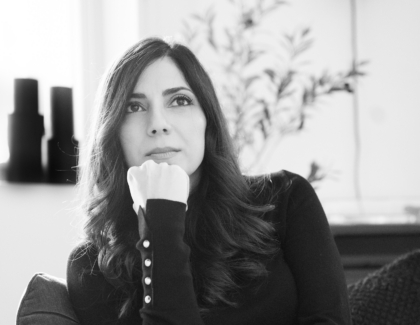
Last fall, Karen Attiah was fired from her job as a columnist at the Washington Post over social media posts about Charlie Kirk, the conservative activist, who had just been killed. “I knew immediately that I was going to fight back,” she told me, “because it was so absurd.” Attiah, a member of the Washington-Baltimore News Guild, embarked on an arbitration process with the Post—which has now ended in her favor. In firing Attiah, the arbitrator ruled, the Post had violated its agreement with the union. “It doesn’t bring back the last year of my life,” Attiah said. “But it’s just proof that with solidarity, with unions, with a bit of grit and a bit of patience, that these fights are worth having.”
Prior to her dismissal, Attiah had worked at the Post for eleven years. Hired in 2014 as a digital producer in the Opinions section, she was the founding editor of Global Opinions before becoming a columnist. She is willing to go back, she told me, though much remains up in the air, including the nature of her role and whether she will be able to continue her Substack, where she has written regularly since her dismissal. She has not heard from the Post, she said; a spokesperson told me that the Post plans to “respect the arbitration process.” If she does return to the office, things could get awkward. But as Attiah put it: “If there’s anybody that should feel awkward, it’s going to be the people involved in making this decision. I’m very much looking forward to what walking in through those doors is going to feel like.” And if things turn sour, she told me, she may become a martial-arts influencer or a “warrior priestess of some kind for the digital age.” Our conversation has been edited for length and clarity.
RS: It’s been almost a year since you were fired from the Post. What did you feel at the time, and what made you want to fight the decision?
KA: I was actually home, in Dallas, because my father was quite sick. I was in town for his birthday, so it was already a stressful time. I was doing drills in kickboxing when I saw a missed call from a DC number. Not too long after that, I saw a notice-of-termination email on my phone over my Bluesky post from the previous day, in the aftermath of Charlie Kirk’s murder. I was a little bewildered. What I had said about America, about political violence, was not anywhere close, in my opinion, to controversial. They were just accurate statements about how America discusses political violence. So when I saw that the Washington Post didn’t even make a good-faith effort to have a conversation, I was in shock and bewilderment.
I knew immediately that I was going to fight back, because it was so absurd. I knew it was going to be tough. I knew it was going to be a process. But I also knew I was a part of a union, and the union kicked in pretty quickly. But in the moment, I was like, “Wow! All right, I guess I gotta glove up.”
Can you walk me though the arbitration process and what the last year has been like?
A few days after the firing, the guild asked if I wanted to file a grievance. Even at the very beginning, they said that they thought this would be a strong case. The last year has involved filing that grievance, an initial meeting with the Post in which they rejected the grievance, and then moving to arbitration. This seems like a long time. But I was also aware that going to court could possibly be even longer. We all saw this as a way to, first of all, exercise my remedies as a longtime Post guild member. And we saw this as the quickest way—as crazy as that sounds, almost a year later—to get to what we thought would be the appropriate outcome: reinstatement and vindication that my job should never have been taken in that way.
We went to the hearing, on June 4, where we presented this as if it was a court case without being in an actual court—questions, cross-examinations. The Post actually declined to cross-examine me.
Have you heard from Adam O’Neal, the Post’s former Opinions editor? What do you make of his recent departure from the Post?
I have not heard from him since we had our July 25, 2025, meeting, in which the whole Opinions section was being offered buyouts, and in which he told me that my social media was not collegial, and that my work was not consistent with his vision—a vision that he refused to articulate. He refused to tell me anything specific about what he found so objectionable. July 25 and arbitration on June 4 of this year were the only two times that I’ve been in the same room with Adam. We’ve spoken directly once so he could tell me I would no longer be continuing as a columnist.
You’ve said that the Washington Post cited security concerns arising from your posts while firing you. But they weren’t talking about security concerns for you—they were talking about other writers. Is that right?
Right. First of all, to this point of security: I’ve been on social media for thirteen to fourteen years. I was the editor who hired Jamal Khashoggi, who wrote for the Global Opinions section for a year until he was murdered, in 2018. I’ve worked with journalists who have died for expressing themselves and expressing themselves in places like the Washington Post, or with writers who’ve been jailed after writing for the Washington Post Opinions section.
The Washington Post covered itself in glory as a newspaper, as a model for how journalism outlets should behave and protect their journalists even after death. The Washington Post’s leaders at the time of the Charlie Kirk situation were being absolute cowards. At the very worst they were feeding their own journalist—me—to the wolves.
I know the Post legally has to reinstate you. Do you plan to go back?
I’ve indicated I’m willing to go back to the work that I was doing. The question for the Post is: Are they going to follow the arbitration decision? They’ve said that they respect the process, but that’s a very different question than: Are they going to comply with the outcome?
What’s happening with leadership or what’s going to happen with the Opinions section, I don’t know. What I do know is that there were people who were guild members who were fighting, who were protesting for me the whole time I was gone. And so when I think about return, I’m also thinking, Okay, I’m returning to a lot of people who fought for me.
Following the mass layoffs, I spoke with Black reporters at the Post who felt there had been a lack of commitment in the newsroom to Black journalists and to diverse coverage. Your firing was one of the things that was brought up as a concern. How are you approaching this?
This is a really heavy time for Black journalists, industry-wide. Even at the Opinions section, the fact that for a good amount of time I was the only Black woman staff writer—I always used to say that was never something I was proud of. I can probably count on one hand how many Black women staff opinion columnists there are at mainstream publications. So it is sobering to see that things have, frankly, gone quite downhill.
It’s precisely for that reason that I wanted to not go away quietly, and precisely for that reason that—as publicly humiliating as this has been—that this gave me more ability to fight back through the union process. It made me more determined to keep going, because I know that this is bigger than just me.
How much do you think the Post has changed since you worked there?
It’s very different. I came in during a time in 2014 when, gosh, it was exciting. We were doing work that was beating the New York Times in terms of traffic and subscriptions. I was helping to build this exciting new venture, Global Opinions, where we were featuring voices and journalists from all over the world. I won’t say it was perfect. We were still fighting for diverse viewpoints. We were still having to contend with challenges from people who would rather have journalists silenced. But at least it felt like we were challenging power. What has changed is, it seems, Jeff Bezos’s commitment to journalistic freedom and to wide ranges of opinions.
Seeing my colleagues who I’ve respected for a long time resigning in protest—I can’t say that that’s easy. But I think what matters is that readers out there, people care. People care so much even about what’s happening to me because they see the Washington Post to an extent as a proxy, maybe, for where America is going.
Will you still carry on with your Substack if you go back? Do you envision a post–Washington Post phase of your career?
I built an audience of fifty-six thousand subscribers, and they’ve carried me through all of this. I can’t imagine having to give up. I don’t know what the Post policies would be on that. It’s not something I’m going to give up easily. Being on Substack, being able to have a direct relationship with audiences, has been really rewarding.
When I think of my post-Post career, anyone who follows me knows that I’m an avid martial artist, and there’s a part of me that still has dreams of becoming an amateur fighter. So, if anything, my post-Post career would be being a warrior philosopher or warrior priestess of some kind for the digital age. I have a sword collection in my apartment, and I’ve been studying various forms of martial arts in my time off. I’m sure with these special skills and knowledge and weaponry that I’ve acquired in my time in exile from the Post, I can put that to an interesting use. So maybe a martial-arts influencer voice, something like that.
Has America ever needed a media defender more than now? Help us by joining CJR today.