Sign up for the daily CJR newsletter.
On Monday, NPR joined the vast majority of its colleagues in refusing to sign a new policy, ordered up by Secretary of Defense Pete Hegseth, seeking control over how news organizations cover the Pentagon. “NPR will never be party to limitations on the independence of the press and the objective, fact-based reporting of our journalists,” Thomas Evans, the network’s editor in chief, said in a statement. “We will not sign the Administration’s restrictive policy that asks reporters to undermine their commitment of providing trustworthy, independent journalism to the American public.”
Evans assumed the role only last month, amid what has already been a cataclysmic year for public radio. In July, Congress voted to strip public broadcasting of all federal funding, after years of partisan complaints about NPR’s supposed liberal bias. The move devastated the financial base for hundreds of local and tribal radio stations, which rely heavily on federal funds, and it forced the national network—which draws on programming fees from those stations for about a third of its revenue—to plan millions in budget cuts.
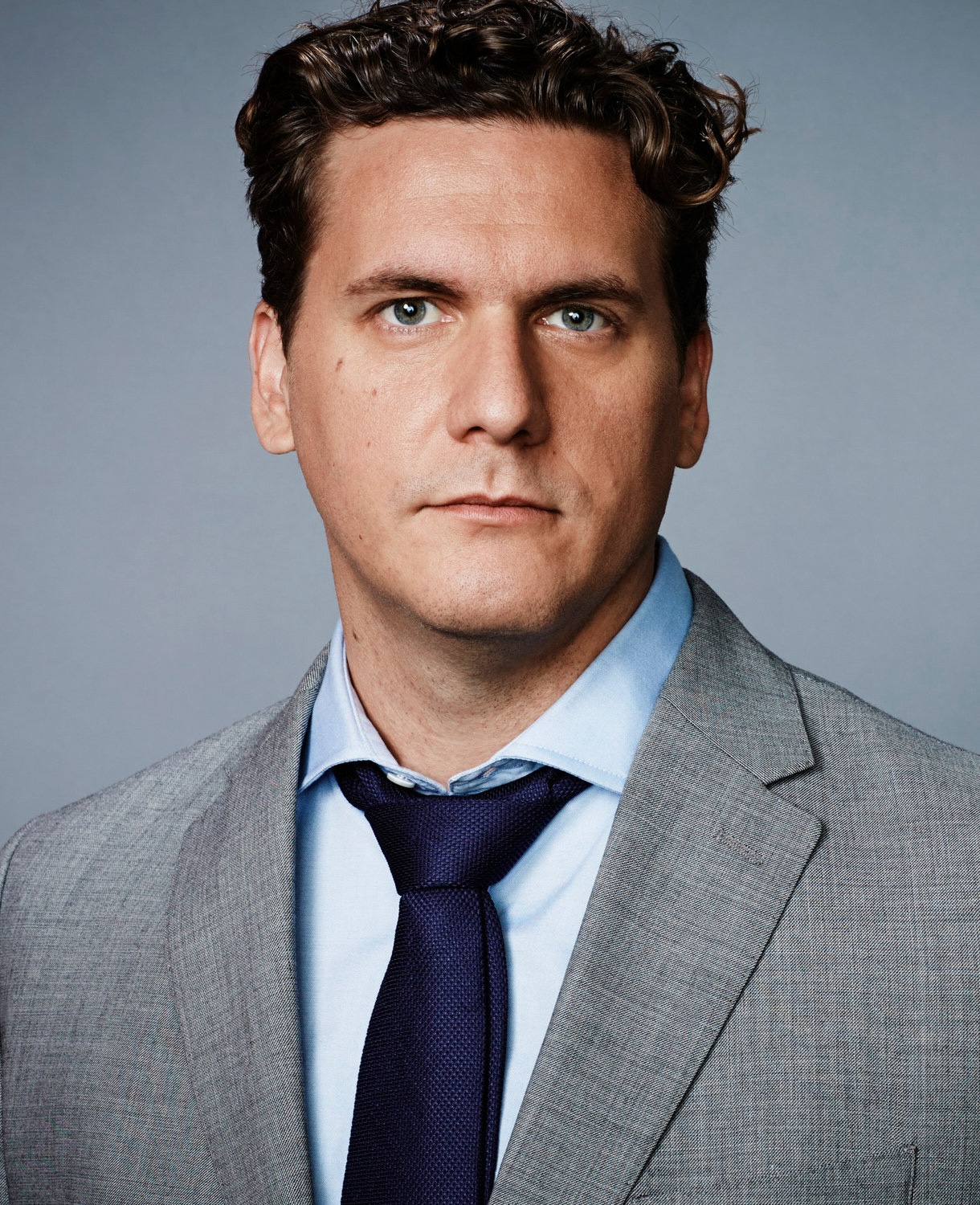
Evans was previously a vice president and London bureau chief at CNN. He initially came to NPR last September to helm the “Backstop,” a new team that would review stories prior to publication—part of NPR’s effort to prove its bipartisan bona fides and preserve federal funding. Now, with the funding battle lost, NPR might seem to be freed from that balancing act. But Evans says listeners should not expect it to become the new face of the resistance. Our conversation has been edited for length and clarity.
CAG: You’ve certainly started at a tumultuous time. How are you making sense of the task you’re facing?
TE: It’s a really challenging time, not just for NPR, but for all of the media. It’s politically challenging, it’s economically challenging. The message I’ve been saying to the newsroom—and, you know, I’m not really even a month in—is that there’s lots of things that are completely out of our control: economics, and politics, and public media is going through a reset. As journalists, though, the only thing we can control is the journalism. If we focus on doing good journalism, that’s really what’s going to be the boat that gets us through the storm.
Let me play devil’s advocate here for a second. Everyone already thinks you’re a liberal organization; the funding is gone. Why not just double down and be the “voice of the opposition”?
Because I don’t think that’s a winning proposition. The funding might be gone, but our mission isn’t, and our mission is to serve the American audience. And America isn’t red or blue, but purple, and we have to serve that purple audience. We need to not pull punches, but I want to make sure that our punches land. The way they land is to make sure we’re completely buttoned up, that our work is established in fact, that it has multiple opinions, that it has multiple viewpoints.
In our current media ecosystem, we have news organizations that are very clearly on the right, or clearly on the left. As a news consumer, I personally don’t find that very interesting. Echo chambers are boring, and while they’re having a moment now because of the political environment, that’s not a good, lasting, impactful strategy.
We’re going through a very challenging time with the funding gone, and trying to rethink how a fifty-year-old news organization is structured and functions. Taking that sugar high of just becoming partisan is not a long-term strategy. Personally, as a journalist, I also find it an uninteresting strategy. I like complexity of argument; I like hearing people have different viewpoints; I like figuring out how to tell a story in the most humane way possible. And I think taking a partisan stance is none of those things.
You joined NPR as part of an editorial review team, which was founded in part to counter allegations that the organization had a “liberal bias.” Among the group of people making these allegations was Uri Berliner, who was formerly a business editor at NPR. Last year, he wrote in the Free Press that NPR offers a “distilled worldview of a very small segment of the US population” today. Do you agree with anything he wrote?
I wasn’t here when Uri Berliner was here, and the organization is in a very different place. That said—and this might be flippant of me to say—but I think that if that essay had been submitted to editorial review, it would have been punted back, because there are a lot of factual errors in it. So I take Uri’s essay with a grain of salt, frankly. Because once the factually correct things fall apart, you call into question what his intent in writing the essay was. And I don’t know the man, so I can’t speak to it.
Look, telling complex stories in a balanced and fair way is hard. Do I think NPR has always done it perfectly? I’m not sure. But I think this is one of the best news organizations I have ever come across or worked with that is doing premium journalism. In my year here—and I say this coming in at editorial review, where my job was to look at and read all this content—that essay hasn’t rung true. I just fundamentally don’t think he’s right.
What are some of the things you think he got wrong?
I think that his premise, that there are eighty-some-odd registered Democrats [working in editorial positions in the DC bureau, and zero registered Republicans], is just not true. He thinks it’s a one-point-of-view newsroom. I go to two editorial meetings a day, and I can tell you that’s also not true. He makes it sound like there’s groupthink on sensitive subjects. I’ve been involved, especially in my last job, in very heated debates on how to frame stories. I don’t think that’s true, either.
The editorial review team faced criticism within the organization. When it was created, many employees saw it as unnecessary and worried it would slow down NPR’s journalism. How did you address these concerns, and did you think they were valid?
That team was created during a really tough time for the organization. I get that. I came in very clear-eyed that this was something that was good to do, but it came from a dark, deep place.
I would have been much more hesitant to take the job if people weren’t reluctant about it. I think that it showed people were passionate about the journalism and that they really cared about NPR. What we did was actually not that radically different to what other news organizations do. And I think, especially in this climate, where nobody has margin for error anymore, it just makes sense to have one last senior editor look before things go out.
I’ll be honest, it was tough to set up. The newsroom wasn’t convinced. Now, I think that’s changed radically, because people have seen that it’s not a group that came to police and that rather it’s here to support and add value to the journalism. I’m actually very proud of that, because the perception of the newsroom, for the most part, did a one-eighty.
You mention that becoming a partisan news organization wouldn’t be a good long-term strategy. What is your long-term vision for NPR?
We really have to think of shaking things up—how we get our content to people and where they’re consuming our content and thinking, you know, what’s the best way of doing it? We have to stay authentic to our voice and our storytelling. If you try to put stuff on TikTok and make things hip, people see through that instantly and you come off as inauthentic. So we need to make sure we’re still NPR, and still have the NPR voice, but we should also go where our audience lives and where they’re consuming things. So that means experimenting with video, podcasting, and different social media platforms. I think we could be much more creative with the power of digital. Radio is important, and audio is our strength because it’s amazing and intimate. But let’s figure out how to make it amazing and intimate on other platforms too.
Has America ever needed a media defender more than now? Help us by joining CJR today.