Sign up for the daily CJR newsletter.
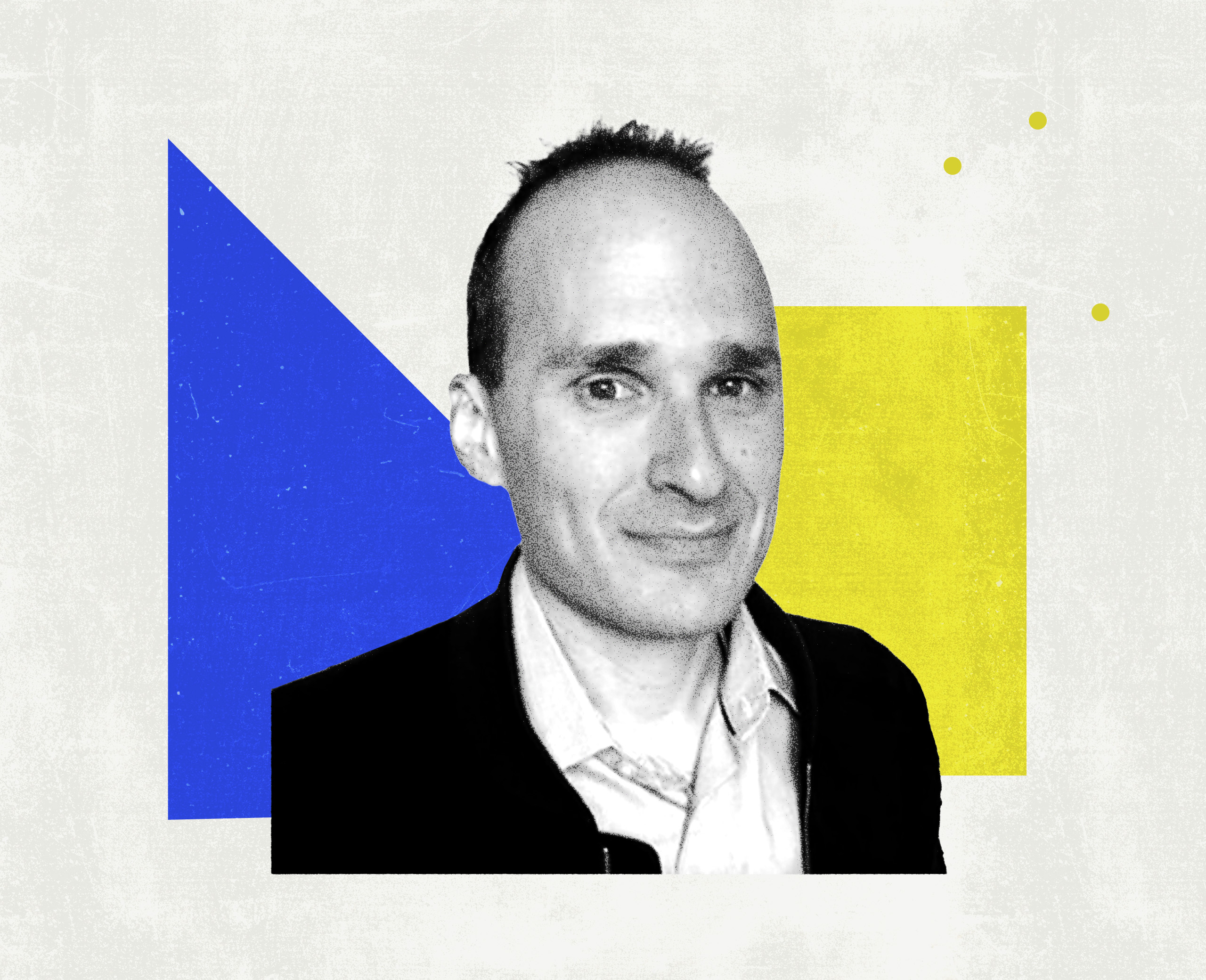
If Isaac Chotiner comes calling for an interview, is it best to just hang up? His Q&As for The New Yorker have been known to spark their own media-news cycles, often for reasons that aren’t flattering to the interview subject. That was the case on Monday, when Chotiner’s latest Q&A dropped—a lengthy interview with Karine Jean-Pierre, the White House press secretary under President Joe Biden, about her new book, Independent. The interview shows Chotiner at the height of his powers, relentlessly pressing Jean-Pierre on inconsistencies such as why she didn’t think Kamala Harris could win the 2024 election but was also mad at Democrats who called for an open convention.
The interview quickly became fodder for social media. “Congress must establish a hotline for people thinking about being interviewed by Isaac Chotiner so they can get the help they need before they are subjected to such mortification,” one person joked. Semafor’s Max Tani wrote: “i can partially understand when some kind of clueless public person walks into an isaac chotiner interview unprepared, but the individual stumbling through this interview was until very recently one of the highest-ranking government communications officials in the country.”
Since joining The New Yorker, in 2019, the forty-three-year-old Chotiner has conducted hundreds of Q&As with politicians, celebrities, academics, and others. He allows that some, like his latest with Jean-Pierre, make a splash online, but he says those are the minority. “Eighty-five percent of my Q&As are not at all combative,” Chotiner told me. But it is the combative ones that have earned Chotiner his reputation as an “interview assassin,” as one social media user put it following a 2019 interview with the author Bret Easton Ellis. Chotiner says he’s not too concerned about his reputation; he’s more focused on publishing good interviews. Yesterday I caught up with Chotiner, who is based in Oakland. Our conversation has been edited for length and clarity.
LS: The Q&As that gain the most traction on social media often involve the subject making themselves look not great. Why do you think people still talk to you?
IC: Most people don’t read bylines, and the vast majority of people I interview have no idea who I am. That’s the most basic answer. Journalists read bylines and have strong opinions about other journalists, and I know this because the first thing I do when I read a New York Times story is to look at who wrote it, because it’s interesting to me. But I don’t think that’s the way most people read.
The second thing is that people have different opinions about how people come across in interviews, or how interviewers come across. Especially in contentious political interviews, you’re likely to think that the person who was expressing the political preference that you share made the other person look bad or silly.
What are the drawbacks and benefits of the Q&A format?
It’s very hard to do this with people who do not speak good English. If I were doing a reported story with someone who doesn’t speak good English, you can get two sentences to use in your news story in English, and that’s fine. But it’s really hard to make the medium work with people who don’t speak good English, and I feel bad about that. I’ve had this with both Palestinians and Israelis. I wasn’t able to make it work because their English just wasn’t good enough for a Q&A.
But you asked very directly about the format. I think it’s a great format. I’ve always loved it. I love the visuals, the bolded text and the non-bolded text. And I think it’s really interesting to hear from people at length. I like talking to people, and I like doing the research. I’m not the most amazing reporter. I can do it, but there are people I work with who are just incredible reporters. I also don’t want to be giving op-ed opinions all the time. Interviews are a great medium for bringing in some amount of reporting and some amount of opinion and allowing me to engage on a lot of different topics and talk to a lot of different people.
How do you approach the interview itself?
I usually have written out a bunch of questions, usually in some version of the wording that I want to use. Sometimes you follow it pretty exactly. It always goes off in directions you don’t expect. But you follow it more or less, based on how things go. I like to have some sort of rubric.
The other thing I like to try and think of is: an interview should have the form of a story with a beginning, middle, and end. So I try to think about how to shape that narrative structure. And then you have to make decisions, like if you’re going to ask questions that the person’s not going to like, sometimes you don’t want to ask them up front. Is this a person who will just jump off the phone if they don’t like the questions? You have to think about these things as you’re planning it out.
Has someone ever jumped off in the middle?
Michael Oren, Israel’s former ambassador to the United States, hung up on me.
How do you go about creating that story arc in the interview?
These things tend to have a built-in form, often the way a news article will. And I understand why people may get bored of the same form, but I don’t have a great solution for how to do it differently, especially because you have to assume people reading the article have different levels of knowledge about what’s going on.
In terms of a much longer interview with a celebrity or a writer or something, then yes, I do try to hit on certain themes that you can come back to later. I know people think it’s bad to do “gotcha” interviews, but I don’t find that label insulting. But you do have to set up the gotcha, right? Because you have to signal to the reader why you think this is important. Not in a way like, “Oh, I want to embarrass this person.” I think logical contradictions or double standards are interesting intellectually. If you’re asking questions that are meant to highlight contradictions, you have to set it up early in the interview.
Why don’t you think the “gotcha interview” label is insulting?
The concept of a gotcha interview, it seems to me, is that it’s somehow unfair to bring up something someone has said in the past, or point out hypocrisy or contradiction. I’m interviewing public figures. They should have to answer for things. The worst thing that happens is they can always say, “I don’t want to answer that.” But I don’t think it’s rude to ask them.
What makes a good Q&A?
The main thing is research. Most of the interviews that I feel good about were ones where I had a lot of time to research. And I think you can tell that with all the best interviews. If you read a great interview in the past from the Paris Review or Playboy or something David Marchese might be doing today at the New York Times Magazine, the person has spent a lot of time researching the subject matter.
Not everyone is a good interview subject. How do you decide who’s going to make an interesting Q&A?
I divide Q&As into two broad baskets. Obviously, it’s not exact, but the first is, you’re interviewing someone because of who they are. You’re interviewing Zadie Smith or John Roberts or Henry Kissinger because of who they are, what they’ve done in their life. The second is, if there’s a coup in Pakistan and I call up an expert on Pakistani politics and history and talk to them—I care because I’m a nerd about South Asian politics, but the vast majority of readers do not care who the person I’m talking to is. They are interested in reading this the way they’d be interested in reading a New York Times story on a coup in Pakistan. They just want information, and so in that case, I’m just searching for someone who’s interesting or has an interesting take.
If your interviews aren’t in person, where do you do them?
I do them either at home or there’s a coffee shop that I go to. It has an area in the back where you can walk, and I stand up there and do it. I’m pacing around. Sometimes I know that I have to be staring at my computer the whole time, just because there’s so many notes that I’ve taken or whatever else. But I like to be moving.
What are the most memorable interviews you’ve done?
I think probably the most memorable ones would be subjects that I’m very personally interested in. I used to write more about South Asia, so I’ve done a fair amount of interviews about politics in India. I did a long interview with Amartya Sen, who’s someone I’ve been reading for a long time, and went to spend time with him. Imran Khan, the former Pakistani leader who’s now in prison, is another figure who I spent a lot of time thinking about and then got to actually talk to.
Is there anyone who always declines your interview requests? Or someone who’s your dream interview?
Kissinger always declined, but now he’s dead. And [Indian prime minister Narendra] Modi. Kissinger and Modi were my two dream interviews. Modi doesn’t really do interviews, so I think that’s unlikely. Kissinger seems even more unlikely at this point. I wanted to interview Sean Connery for a while, because I like James Bond, but he’s dead, too. I can think of people who I would love, in theory, to talk to, but I know it would be a boring interview. I think John Roberts is actually really interesting in a variety of different ways. But Supreme Court justices don’t say anything interesting in interviews.
What have you learned about the art of the interview?
I always try to make jokes. The reason is that either the person you’re interviewing will think they’re funny, or more likely, they will not think they’re funny, but they will see you expressing some sort of vulnerability or openness. And I think that opens people up. I mean, not too many jokes, but I think joking and being light when you first start talking to someone is good.
If you’re talking about the civil war in Syria or Gaza or Ukraine, it’s not like I’m making jokes about what’s going on. But when you’re talking to the person, before you hit record or whatever else, just make clear that you’re hoping for a real interaction where both of us are trying to be honest and upfront. And I think showing a certain vulnerability can be crucial to that. What else? People love to talk. They like to hear the sound of their own voice. They like to have their opinions heard and go out into the world.
Has America ever needed a media defender more than now? Help us by joining CJR today.