Sign up for the daily CJR newsletter.
We love to hear when journalists engage with our research, so in October, we set up an LLM agent to sort through Google Alerts for Tow Center’s work and notify us when our research is cited in news. The bot began to diligently filter alerts for new mentions of the Tow Center and sent us Slack notifications with references to our work. We celebrated the small wins.
But not even a week in, Elon Musk launched Grokipedia—his own AI-generated misinformation-peddling version of Wikipedia—and we began receiving notifications about sites we had never heard of quoting our director, Professor Emily Bell, talking about the launch.
A site called Berawang News cites “Dr. Emily Bell” (although absolutely brilliant, our fearless leader doesn’t have a PhD—at least as far as she is aware) saying “The introduction of AI in information sharing could be transformative, but it also raises questions about accountability and ethics. How Musk addresses these issues will determine Grokipedia’s success.”
She never said these words.
The article is allegedly authored by John M. Anderson, who the site says previously worked with the Washington Post and Politico. The actual John Anderson, who did work at these publications, has no connection with Berawang News. “If they want to create a site that uses AI to generate news stories, why not just do it transparently?” Anderson said over email. “Why swipe someone’s identity, thinking it will lend you an air of credibility, when it will eventually be discovered and totally undercut your credibility?”
Other websites like Leravi and Indian Defense Review also cite a “Dr. Emily Bell,” naming her as the director of the Tow Center for Digital Journalism but also attributing quotes to her that the real Emily Bell has never said about Grokipedia. We found that the Indian Defense Review, formerly a peer-reviewed academic-journal website dedicated to the Indian military, now pumps out content on scientists finding signs of Atlantis and how to clean your windows. It shares characteristics with many sites traced to an Algerian SEO organization called the SS Tech Agency. Many of the company’s editors come from a specific Algerian University, where the CEO of several of these content farms teaches.
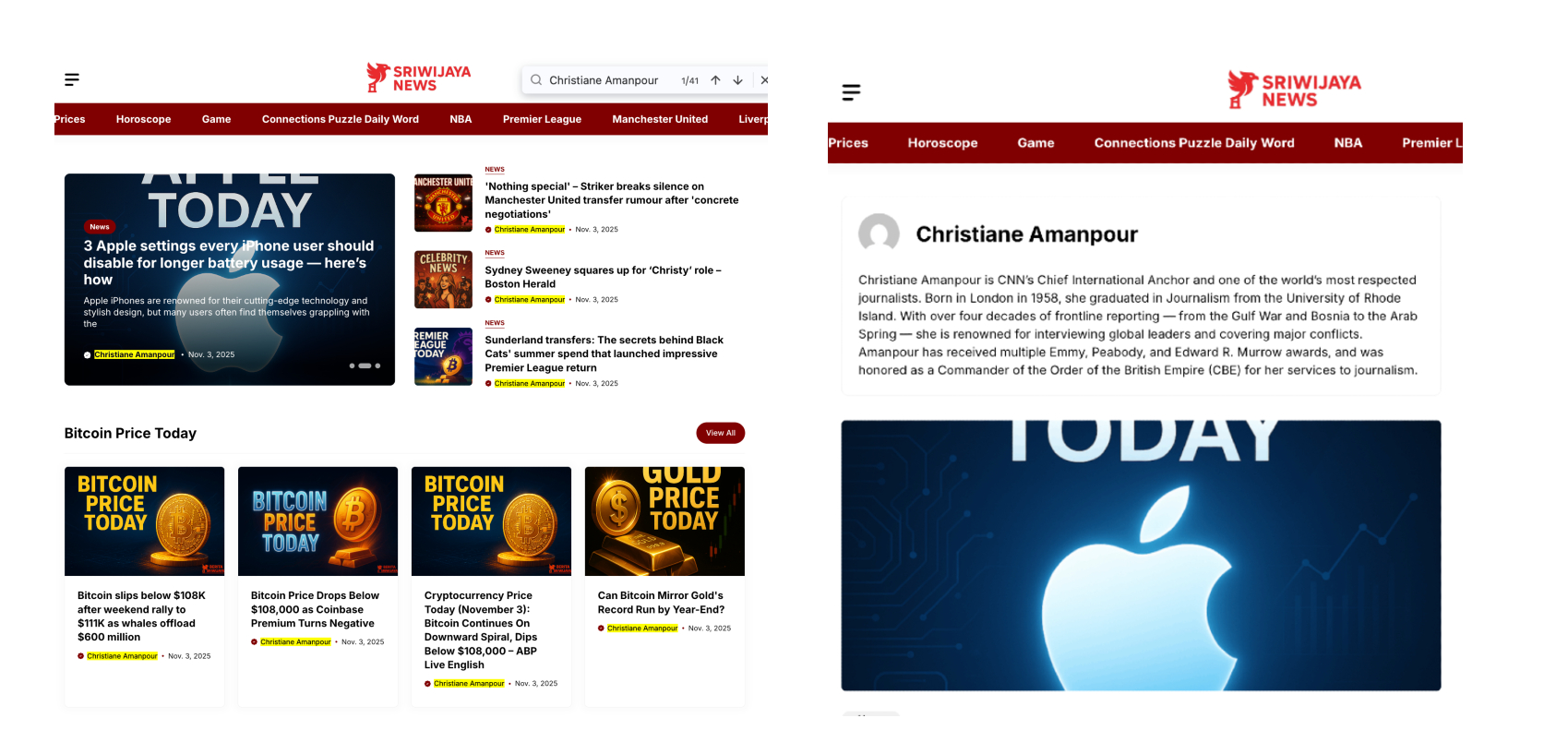
A website called Sriwijaya News attributes made-up quotes in an article about American public opinion on Israel and anti-Semitism that it claims was written by none other than Christiane Amanpour. The famed journalist must be quite busy, as she is supposedly churning out dozens of articles each day for the site, about everything from soccer and celebrities to daily Bitcoin prices.
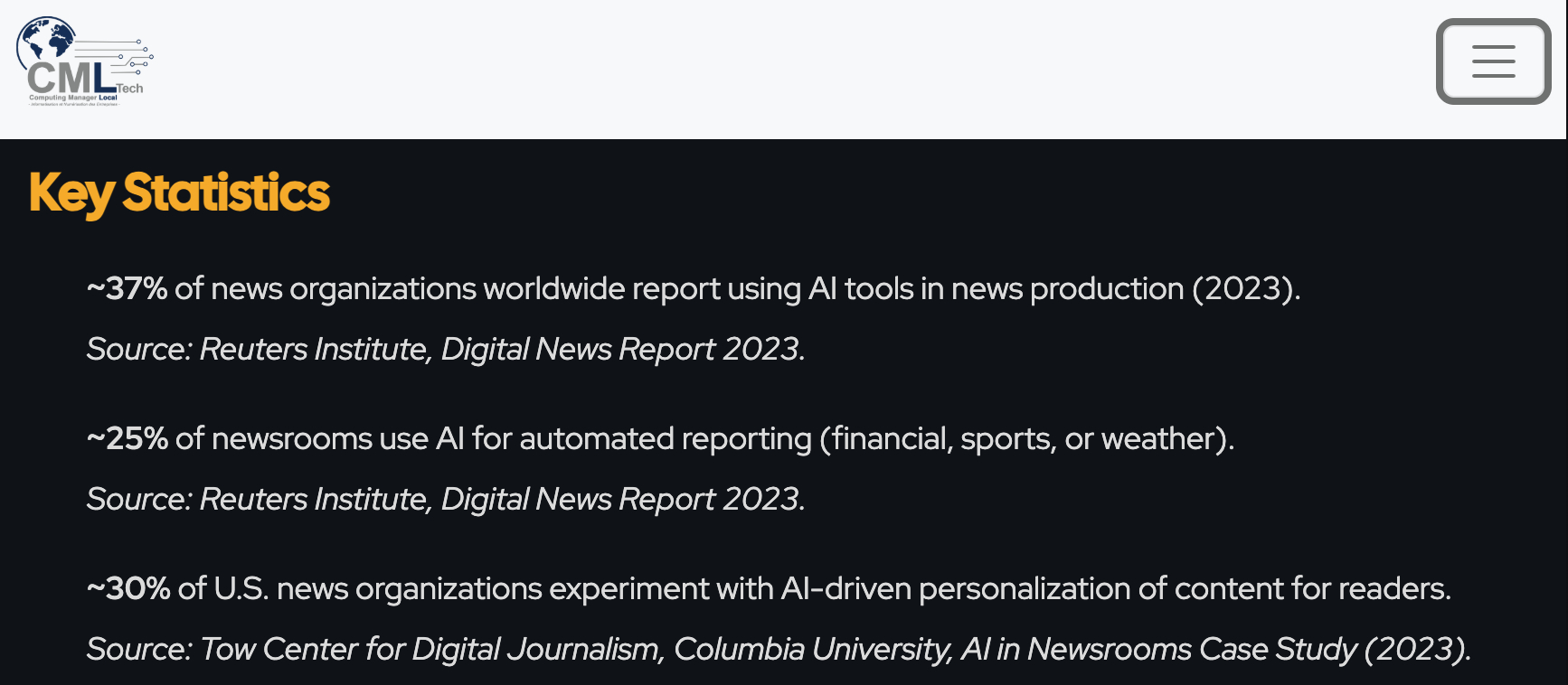
We also found fake statistics, like the one below on the website of “CML Technology,” supposedly a Canadian tech firm, attributed to reports that the Tow Center has never published. CML Technology is the creator of a website dedicated to the Democratic Republic of the Congo in Canada.
While we had a good laugh at these websites, and will continue to follow the exploits of the fictitious Dr. Emily Bell, we are deeply troubled by ways in which AI tools peddle misinformation in the name of our hard-earned credibility. We don’t have reason to believe any of these websites get large volumes of traffic, but the thought of one such article going viral makes us shudder. The collective reputational damage done to an institution or a person through the spread of fake quotes attributed to them could be significant.
As our good doctor supposedly said in an article titled “Can We Trust AI Blindly?” posted on Facebook by “Way to Jannah Academy,” an account with 740 followers that peddles lessons in spoken English to people in Bangladesh, “Generative AI can be used to create higher-quality misinformation…leading to increased potential [for harm].”
Has America ever needed a media defender more than now? Help us by joining CJR today.