Sign up for the daily CJR newsletter.
On January 8, Marc Ambinder, the widely-read political reporter and blogger for The Atlantic, found a copy of Game Change, the gossipy insider’s account of the 2008 presidential election by John Heilemann and Mark Halperin, for sale days before its official release. Knowing a scoop when he saw one, Ambinder took to his blog to highlight some of the book’s choicest tidbits. At the end of his first post, after excerpts about Harry Reid’s “Negro dialect” comment and a secretive Clinton campaign “war room” to deal with questions about Bill’s libido, Ambinder offered this apparent non sequitur:
Political scientists aren’t going to like this book, because it portrays politics as it is actually lived by the candidates, their staff and the press, which is to say—a messy, sweaty, ugly, arduous competition between flawed human beings—a universe away from numbers and probabilities and theories.
It was a throwaway line. But to the small but growing contingent of poli-sci bloggers, the remark—coming from a journalist they respected and who had seemed, at times, to be interested in their work—it sounded like a challenge. A flurry of responses ensued, their tone captured in the title of a post on the group blog The Monkey Cage: “Is Marc Ambinder a Hater?”
As blog wars go, this was barely a skirmish. Ambinder made some conciliatory remarks on his Twitter feed and everybody moved on. Still, the episode offered a window into the complex relationship between political scientists and the political press—a relationship that, while marked by mutual wariness, holds great promise for a new breed of Washington journalist.
The unease with which much of the press regards the academy has often been amplified when it comes to the study of American politics. In some journalistic complaints, the problem with political science is that it has gone astray. More than ten years ago, a long article by Jonathan Cohn for The New Republic faulted academics for abandoning the search for knowledge with real-world implications in favor of elegant but obscure models; the tagline asked, “When did political science forget about politics?” More frequently, the argument is a dispute about where political expertise comes from, with political scientists cast as ivory-tower elites to the shoe-leather-grinding reporter. Matt Bai, in a book review for the Spring 2009 issue of Democracy, put it more acerbically than Ambinder had. “My dinnertime conversation with three Iowans may not add up to a reliable portrait of the national consensus,” Bai wrote, “but it’s often more illuminating than the dissertations of academics whose idea of seeing America is a trip to the local Bed, Bath & Beyond.”
While Bai’s tone verged on the scornful, most journalists aren’t looking to start a fight with political science. But they’re not often looking to it for inspiration, either. Diligent reporters may turn to political scientists for a useful primer on a new beat; lazy ones know how to use the field’s “quote machines” to pad a story. But when it comes to daily coverage of the core subjects of political life—elections and campaigns, public opinion and voter behavior, legislative deal-making and money-grubbing—the relevance of a field in which an idea might gestate for two years before seeing print to a news cycle that turns over three times a day is not always obvious. As journalists go, Jeff Zeleny of The New York Times is hardly averse to political science—he studied it as an undergraduate, and can list the names of academics he’s relied on. But for most of what he writes, he says, “The reality is, it’s a newspaper story or a Web story. You can’t go into abstract theories.”
In recent years, though, there have been signs that views are shifting. In June 2007, Ezra Klein, then an associate editor for the liberal journal The American Prospect, put out a request for links to bloggers “who aggregate and keep track of political science research.” The call yielded almost no response—evidence that, while economists had colonized the wonkier regions of the blogosphere in the same way they’d taken over many D.C. policy shops, political scientists had largely ceded the terrain. But Klein’s item caught the eye of Henry Farrell, a professor of political science at George Washington University and a contributor to the early group blog Crooked Timber. The post, Farrell says, made it “very clear that there was a demand out there for political science”—and he encouraged his GW colleague John Sides, who’d been tinkering with the idea of a blog devoted to expanding the field’s audience, to meet it.
In November 2007, The Monkey Cage—the name comes from an H. L. Mencken line about the nature of democracy—was launched. It had two central goals: to publicize political science research, and to provide commentary on current political events—a task, Sides presciently acknowledged in a mission statement, that might involve “testing and perhaps contesting propositions from journalists or commentators.”
The site quickly established credibility among political scientists. And it has attracted a respectable audience as a niche blog, drawing more than 30,000 unique visitors in peak months. But perhaps The Monkey Cage’s greatest influence has been in fostering a nascent poli-sci blogosphere, and in making the field’s insights accessible to a small but influential set of journalists and other commentators who have the inclination—and the opportunity—to approach politics from a different perspective.
That perspective differs from the standard journalistic point of view in emphasizing structural, rather than personality-based, explanations for political outcomes. The rise of partisan polarization in Congress is often explained, in the press, as a consequence of a decline in civility. But there are reasons for it—such as the increasing ideological coherence of the two parties, and procedural changes that create new incentives to band together—that have nothing to do with manners. Or consider the president. In press accounts, he comes across as alternately a tragic or a heroic figure, his stock fluctuating almost daily depending on his ability to “connect” with voters. But political-science research, while not questioning that a president’s effectiveness matters, suggests that the occupant of the Oval Office is, in many ways, a prisoner of circumstance. His approval ratings—and re-election prospects—rise and fall with the economy. His agenda lives or dies on Capitol Hill. And his ability to move Congress, or the public, with a good speech or a savvy messaging strategy is, while not nonexistent, sharply constrained.
These powerful, simple explanations are often married to an almost monastic skepticism of narratives that can’t be substantiated, or that are based in data—like voter’s accounts of their own thinking about politics—that are unreliable. Think about that for a moment, and the challenge to journalists becomes obvious: If much of what’s important about politics is either stable and predictable or unknowable, what’s the value of the sort of news—a hyperactive chronicle of the day’s events, coupled with instant speculation about their meaning—that has become a staple of modern political reporting? Indeed, much of the media criticism on The Monkey Cage is directed at narratives that, from the perspective of political science, are either irrelevant or unverifiable. In the wake of the special election in Massachusetts, Sides wrote numerous posts noting the weakness of the data about voter opinion there and faulting journalistic efforts to divine the meaning of Scott Brown’s victory. “Yes, I know political science is a buzzkill,” he wrote in one. “And no one gets paid to say ‘We don’t and can’t know.’ But that’s what we should be saying.” This is the sort of thing that John Balz—the son of veteran Washington Post political reporter Dan Balz, and a Ph.D. student in political science at the University of Chicago—might be referring to when he says the field produces what are, “from a journalistic perspective, unhelpful answers.”
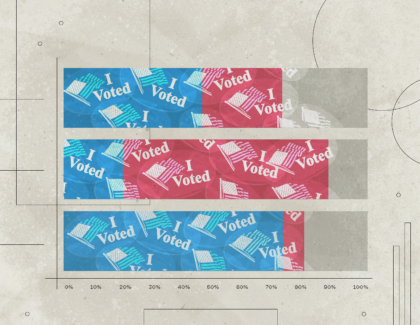
Unhelpful to journalism as it’s traditionally done, at least. But for someone like Ezra Klein, who now fills a hybrid blogger/reporter/columnist role for the Post that didn’t exist even five years ago, political science represents “the most significant untapped resource” for journalists. He and a group of bloggers, reporters, and opinion-shapers increasingly trade links not just with The Monkey Cage but with other poli-sci writers—one of whom, Jonathan Bernstein, landed a plum guest stint at Andrew Sullivan’s The Daily Dish barely six months after he began blogging (and more recently filled in at Klein’s blog). A modest new feature at Salon, meanwhile, suggests another model for how to bring poli-sci insights to a broader audience. The Numerologist uses a chart or graph to make a point that pushes back against accepted political wisdom. (Salon’s News Editor Steve Kornacki said he borrowed the idea from the sports page at The Wall Street Journal, which has been bringing the statistical revolution in sports analysis to a mass audience.)
Beyond a generally center-left perspective, the journalists who have engaged most with political science—including Ambinder, who, six weeks after the Game Change flap, wrote a pair of posts building off evidence, highlighted by Sides, supporting the claim that most “independent” voters aren’t really independent—have something in common: they’re operating under a new model of what it means to be a political reporter, one that allows them to conceive of “news” in a different way. As Anne Kornblut, another Post political reporter, put it, “They’re not aiming for A1 and being asked, ‘What’s new here? How is this going to change the country tomorrow?’ ” Klein is explicit on this point, outlining a role for journalists that sounds as much like teaching as reporting. “I think that we as a profession need to become more comfortable with repetition,” he says. “What is newest is often not what is most helpful for readers.” A case in point: when explaining why legislation is bottled up in Congress, Klein routinely discusses the skyrocketing use of Senate filibusters—a recent and consequential change in the rules of politics that nonetheless doesn’t count as “news” on most days.
That’s not to say that traditional reporting tasks will go by the wayside, nor should they. But even in day-to-day coverage, a poli-sci perspective can have value in helping reporters make choices about which storylines, and which nuggets of information, really matter. For that to happen, political scientists must do more to make their work accessible, reaching beyond the circle of journalists who are inclined to, as Sides says, “embrace the wonk.”
Klein, for one, believes that as academics make more of an effort to put their insights before his colleagues, they’ll find a receptive audience. His colleague Kornblut sounds ready to listen. “We’re on the front lines every day,” she says. “So help us.”
Has America ever needed a media defender more than now? Help us by joining CJR today.