Sign up for the daily CJR newsletter.
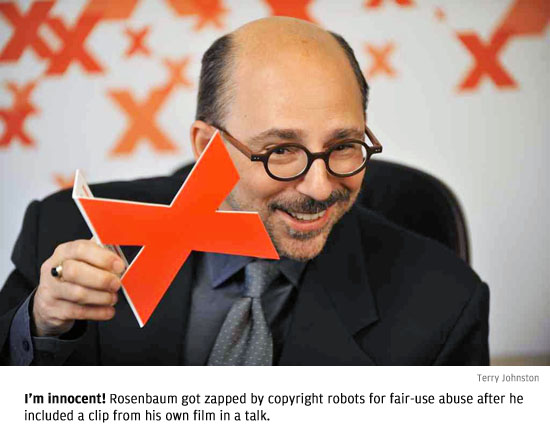
It began with an invitation to present at a TEDX event in Grand Rapids, MI. I wanted to share with the TED audience the complex relationship between “creationism” and “curationism”—or, more simply, the way creators are also organizers of ideas and content. It seemed pretty simple. On stage in Grand Rapids, I told the story of being both a filmmaker and curator. And I showed a short clip from a film, about 30 seconds or so out of a 15-minute presentation. I talked about the perils and complexity of a world of bandwidth and content abundance. A world in which we’re overwhelmed with data, tweets, blogs, check-ins, and media.
I explained that we used to surf the Web. Now the waves are just too big. And I offered a solution. A cure, if you will: curation.
“Curation is the new magic that makes the Web work,” I said, “bringing the Web back to human scale with human filters you trust and love. A powerful mix of passion and context turns noise back into signal.”
The talk was well received, and TEDX posted it to YouTube, where it received almost 2,000 views.
And that was that—until a year later, when the organizers of TEDX contacted me, somewhat concerned. It seems that YouTube had taken down the video of my talk, due to a copyright violation claimed by Starz Media.
Unspoken, but hanging in the air, was the concern that I had somehow presented something that I didn’t have the rights to. Somehow, I must have broken a copyright law. The takedown notice was there in black-and-white. And others had linked to that video, including WNET’s MetroFocus blog. There, too, the video left an ugly hole. I was labeled a copyright crook.
I racked my brain. What could I have included in my talk? A photograph? I’d been very careful only to use Creative Commons images. Music? There was none. Then I remembered that I’d used a clip from a film. Just 30 seconds, and certainly within an editorial context. It should have been fair use. And, as the anger began to rise inside me, more seriously—it was my film.
In 2001, I’d made a film about the days after 9/11 in New York. The film was called 7 Days In September, and to make it I’d reached out to the world of both amateur and professional filmmakers who’d recorded their POV on 9/11 and the days that followed. Hundreds of people responded to an ad I placed in The Village Voice, and from those stories and footage I put together a film from 28 individual perspectives, including mine.
In 2004, I’d licensed the dvd rights to Anchor Bay Entertainment. Almost eight years ago. It was a seven-year deal, and thinking back to where the world was in 2004, there was no mention of “streaming rights” or “Web rights.” But when Anchor Bay sold to Starz, Starz determined that it controlled the rights on Netflix, YouTube, Hulu, and other Web video distributors. Putting aside for a moment the question of whether it did or didn’t have those rights, my contract with Starz had ended more than a year earlier.
So what had happened? I presume that Starz had provided YouTube with a “digital fingerprint” of my film—and all the films they’d previously had the rights to. And since there is no way to make a judgment about fair use in an automated system, Starz had discovered the segment of the film inside my talk and issued a takedown.
To its credit, once I reached out to Starz, it immediately lifted the block, and the video now plays without restriction.
But what if the film clip I used to make my point wasn’t mine? Would Starz have released the ban? What if my talk had brief clips from a number of other distributors? Who would fight for fair use? Just knowing whom to email at Starz was critical to get my film back live on the Web.
And don’t forget, this was an expired copyright. It seems no one made an effort to tell the robot that the distribution rights had reverted to me. So if I hadn’t fought to keep my work published, it would have fallen off the Web forever.
For me, this little run-in with the copyright police was a brief but unsettling reminder of just how easy it is for free speech and editorial voice to be silenced by an automated system that takes content down first, and puts authors, poets, filmmakers, and performers in the uncomfortable position of having to fight to keep their work from being silenced by copyright robots.
Has America ever needed a media defender more than now? Help us by joining CJR today.