Sign up for the daily CJR newsletter.
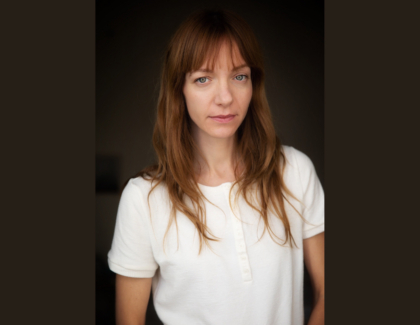
Kristina Obame’s first shoot in Gabon was a disaster. The generator exploded. The crew bus disappeared. For four days, the gorillas she was hoping to film failed to show up. When they finally appeared on the fifth day, Obame, a wildlife filmmaker from Gabon, captured footage that would become her debut film, Ndossi, blending folklore and conservation from a rarely seen perspective: an African woman’s. “Everything went wrong,” Obame recalled. “But it affirmed why I do this work.”
Obame is part of a growing movement of African filmmakers reclaiming wildlife storytelling, replacing outside perspectives with homegrown ones. For a long time, the space has been dominated by Western productions that often arrive, film, and leave, with the featured communities rarely getting a chance to have any input or review the final work. In Western-led productions, local film crews are sometimes hired “to tick a box,” as one African filmmaker put it, but not encouraged to give meaningful input. “I’m not interested in re-creating Sir David Attenborough films. They’re great for what they are, but that’s not my voice,” Obame said. “Our connection to nature isn’t just about animals, it’s about our ancestors and our traditions. That’s the story I wanted to tell.”
Fiona Tande, the founder of the Pridelands Wildlife Film Festival, the first African-led nature-film festival, grew up on the same documentaries that shaped Western views of Africa. In many of them, she noted, animals were depicted as noble protagonists while local people were cast as threats or intruders. “Western films often portray animals as heroes and locals as villains,” she said. This framing ignores a deeper truth, she added: Africans have lived alongside wildlife for generations, guided by traditions that treated nature as sacred. “Conservation isn’t new to us,” Tande said. “It just never had that name.”
When Pridelands launched, in 2022, only two African-made films were submitted. By 2024, that number had risen to twenty, including Living with Lions, a Swahili docudrama on human-wildlife conflict that went on to win three awards. It’s hard to put exact figures on African representation in the global wildlife filmmaking industry, but data from major festivals offer a glimpse into the imbalance. At Wildscreen, a British natural-history festival, over 25 percent of submissions featured African wildlife, yet just 7 percent were made by Africans; only 4 percent of 2022 attendees were from Africa.
“When I began in wildlife filmmaking, in 2016, it was lonely,” said Anthony Ochieng, a Kenyan conservation filmmaker and National Geographic Explorer. “There were almost no Black people in the space and definitely none filming underwater.” Trained in wildlife management and now a certified diver, Ochieng turned to film to explore marine ecosystems, often focusing on the experiences and perspectives of the coastal communities that depend on them for survival and cultural identity. “Among local communities in Kenya, there’s this belief that the ocean ends at the beach,” Ochieng said. “But there’s life beneath. And stories—stories we’ve never told.” His recent short film Matumbawe, set in the coastal town of Diani, follows Dosa, a coral restorer, through the eyes of his daughter, Khadija, as she absorbs the skills of his trade and the challenges of conservation.
Some of this new generation of wildlife storytellers are now building the infrastructure to teach others. Hans Cosmas Ngoteya cofounded the Tanzania Wildlife Media Association, where he helps train emerging storytellers, pushes for policy reforms, and screens films in Swahili via pop-up cinemas and local television. “We’re not just making films for festivals,” he said. “We’re trying to change mindsets, and the industry.” For his recent film Sentinels of Engaruka, a documentary about Maasai-led conservation, his team lived in a village for two months before filming a single frame. “We wanted the community to see us not as outsiders, but as part of their lives,” he said. “That kind of access doesn’t just change what we film, it changes how people speak to us, what they choose to share, and how the whole story comes together.”
Ngoteya said his goal is to “eliminate Western influence” and spotlight local voices on and off camera, not just for the sake of representation, but because he believes authentic stories must come from those who live them. Many Western wildlife productions emphasize spectacle, and focus on the animals alone, he says, while African-told stories are grounded in lived experience and cultural context. “I ask myself, how can my film help someone whose crops were destroyed by elephants last night?” said Ngoteya. “That’s the difference. We understand the problem from the inside.”
Another Tanzanian organization, the African School of Storytelling, or AFRISOS, was founded in 2020 by the Tanzanian filmmaker Jigar Ganatra. Ganatra believes the African perspective on wildlife filmmakers is still unfolding. Too often, he said, African filmmakers mimic Western formats without grounding their work in indigenous perspectives. “They’re regurgitating the same thing they’ve been exposed to by Western media,” he said. “The narration, the style, the lens, the gaze—it’s not an African gaze.” For him, telling an African nature story requires more than just representation. It means spending time with communities, learning from them, and connecting with their histories. “Africa’s natural and cultural heritage is disappearing fast,” he said. “We need to protect these stories before they’re gone.”
Has America ever needed a media defender more than now? Help us by joining CJR today.