Sign up for the daily CJR newsletter.
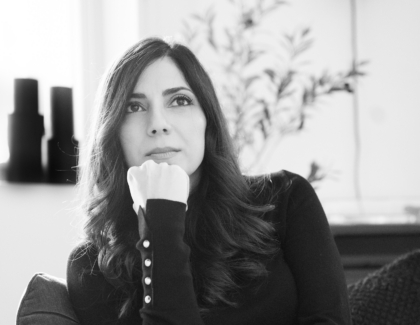
On a recent evening, Anna Gomez, the lone Democrat on the Federal Communications Commission, sat before fifty or so people in a government building outside Washington, DC. It was the latest stop on what she’d been calling her First Amendment tour. “It is foundational to our democracy,” she said. “And yet, today, the greatest threat to that freedom is coming from our own government.”
Gomez—who is fifty-eight, and a lawyer born in Orlando, who spent her childhood in Bogotá, Colombia, and New Jersey—has been touring since April, and found a spotlight late last week, when the FCC announced its approval of a merger between Paramount, which controls CBS, and Skydance, a production company. At the FCC, which regulates public radio and television airwaves, most of the decision-making power lies with its chairman, Brendan Carr, whom President Donald Trump put in that role in January. Under Carr’s watch, the FCC has reopened previously closed complaints against ABC News, for its moderation of the presidential debate between Trump and Kamala Harris, and NBC, over whether Harris’s appearance on Saturday Night Live violated a legal requirement to offer equal time to both candidates. Carr launched investigations into whether NPR and PBS inappropriately accepted advertisements. And he’s paid special attention to CBS News—accusing it of, among other things, unfairly editing a 60 Minutes interview with Harris. (In early July, Paramount agreed to pay sixteen million dollars to settle a separate lawsuit filed by Trump over the interview.)
Gomez has resisted these actions, to the best of her ability. In January, she put out a statement saying the CBS inquiry was “designed to instill fear in broadcast stations.” This month, after Congress voted to defund public media, she declared, “The FCC is playing a dangerous game with its own baseless attacks on public broadcast stations.” She told an interviewer that she never thought she’d see the FCC “so willingly cede its independence to this administration and allow itself to be turned into an instrument of censorship and political retaliation.” Every morning before work, she checks her email to see if she’s been fired.
“Instead of standing on principle, Paramount opted for a payout,” Gomez told the crowd outside Washington, referring to the settlement. “That moment marked a dangerous precedent for the First Amendment, and it should alarm anyone who values a free and independent press.” The audience, mostly made up of locals, clapped politely. Two weeks later, Carr approved the merger, after securing a pledge from Skydance to eliminate diversity, equity, and inclusion programs and to bring more “diverse viewpoints” to news broadcasts. The deal is worth eight billion dollars. I asked Gomez for her take. “I’ve been very concerned about this administration’s weaponization of the FCC licensing authority in order to bully the news outlets into moderating how they report,” she said.
Gomez likes to say she didn’t go looking for this fight—it came to her. As a commissioner under Joe Biden, who appointed her in 2023, she largely focused on net neutrality and broadband access, as well as managing the tedious work of reviewing the thousands of license applications the FCC receives each year. Before assuming the role, she’d held low-profile bureaucratic positions in the government and as a private-practice telecommunications attorney. “Anna is not a person who lives to be confrontational,” Tom Wheeler, who served as FCC chairman during the Obama administration and has known her for more than a decade, said. “I’m not sure this is in Anna’s DNA.”
Once Trump assumed office, however, Gomez found it hard to ignore the political aspects of the job. Within days, Carr announced on Fox News that he was opening an investigation into KCBS, a San Francisco–area radio station, for its reporting on ICE raids. Gomez was dismayed. “We are supposed to be this technical expert body that calls balls and strikes fairly and independently, but instead we are being weaponized for political retribution and ideological purity,” she told me. We were sitting in a meeting room in her office at FCC headquarters, the day after her town hall event. On the wall behind her hung a print of an immigrant woman with her two children that was presented to Gomez when she received an award from the National Hispanic Media Coalition. Carr’s office was just down the hall.
“I was growing increasingly alarmed about what was happening and what that would do to the freedom of the press,” she said. “We discussed What, exactly, am I able to do as a minority commissioner at the FCC? And we realized the most powerful thing that we could do was to use our voice and to get outside of Washington, DC, to reach people, everyday people, to make sure that they saw what was happening, and to encourage them to speak up.”
At a February First Amendment–focused event in Florida, Gomez recalled, a local station manager came up to her to say they were instructing their reporters to be extra careful about how they described the administration, because they couldn’t afford to be dragged before the FCC. “Those were the words—they were afraid they were going to be dragged before the FCC and investigated,” she said. “That is exactly the chilling effect that we worry about.” In June, she traveled to rural Kentucky, where she was struck by how concerned residents were about losing their public broadcasters.
Behind the scenes, Gomez has worked to influence how the FCC reviews major decisions. Shaping outcomes is harder. In May, while Verizon was waiting on FCC approval of its twenty-billion-dollar purchase of Frontier Communications, Verizon sent a letter to the FCC pledging to end its diversity, equity, and inclusion practices—a move widely seen as an attempt to appeal to Carr and Trump’s political preferences. A day later, the FCC approved the purchase through one of its small bureaus, rather than bring it to the whole commission for a vote. On X, Gomez described this kind of maneuver as a “backroom deal.” She largely declined to comment on Carr himself. “I work with him where I can, and where I can’t, I speak out,” she said.
In the end, Gomez voted against the Paramount merger. In a statement, she called it a case of “capitulation over courage.” Still, she acknowledges that there isn’t much satisfaction in purely principled stances. “Being a minority commissioner, the power that you have, really, is your ability to dissent,” she told me. “She is doing what is within her power,” Kim Zarkin, a professor at Utah’s Westminster University who researches the FCC, said. “I fear that it won’t be enough.”
Even so, Gomez intends to keep making noise. “It is disappointing to watch how this agency has ceded its independence to this administration,” she said. “If I get fired, it won’t be because I refused to do my job. It’s because I insisted on doing it.”
Has America ever needed a media defender more than now? Help us by joining CJR today.