Sign up for the daily CJR newsletter.
“How did you find out over the weekend that you were dead?” It was Tuesday afternoon, and Fox News correspondent Peter Doocy was asking Donald Trump about the viral rumors that spread late last week, fueled by an uncharacteristic span of days without any public events, that the president was gravely ill.
“It’s fake news,” Trump replied, as he appeared, upright and very much not dead, for an announcement at the White House about the future of the US Space Command. “It’s just so—it’s so fake. That’s why the media has so little credibility.”
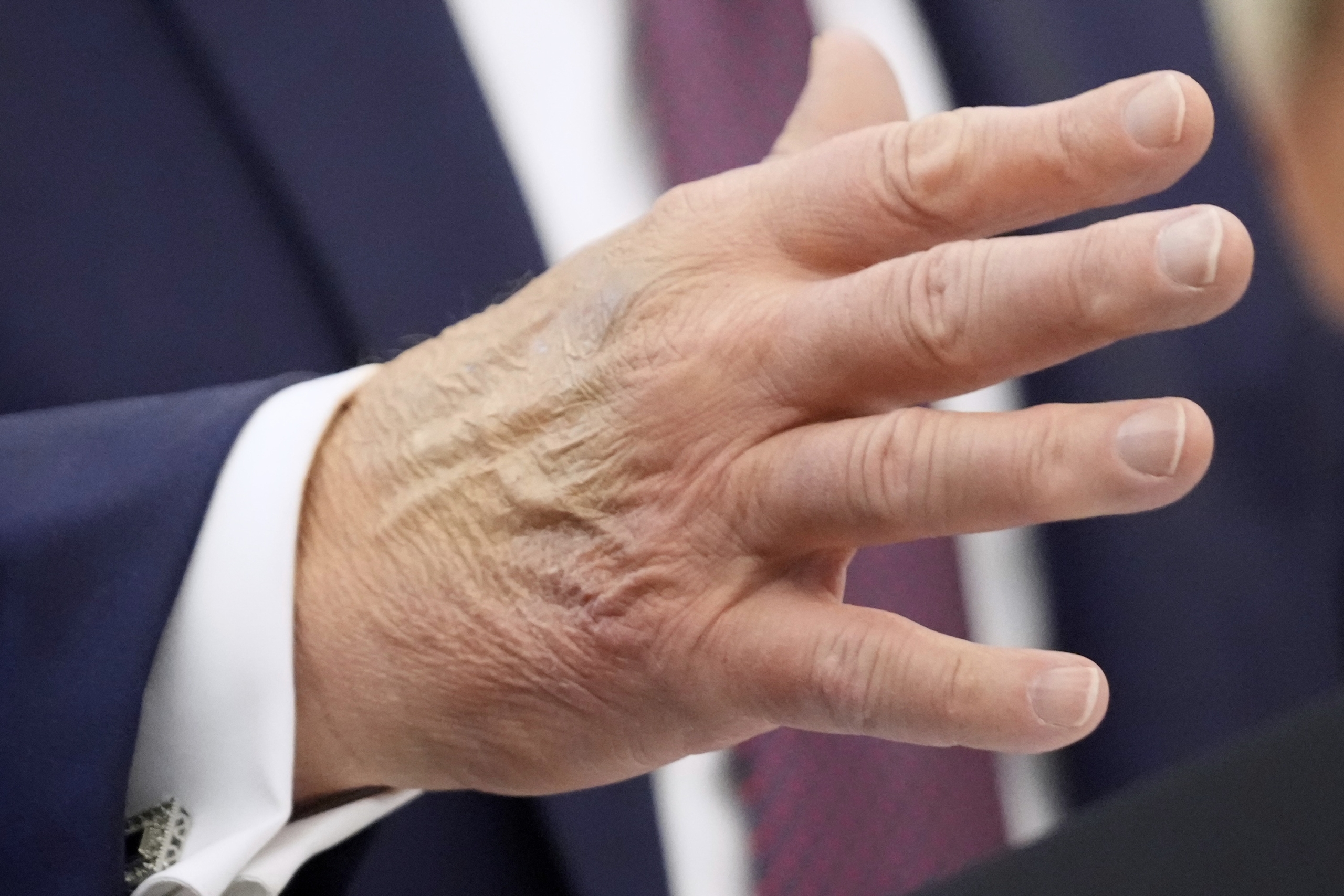
For several days, posts on sites like TikTok, X, and Reddit had picked up on Trump’s sparse calendar, as well as pictures of the president with bruising on his hands, as evidence that something had gone catastrophically wrong with his health. The White House has said the bruising was the result of frequent hand-shaking, but offered little to tamp down the growing online frenzy. “People were enjoying it,” said Claire Wardle, a Cornell University associate professor who studies misinformation. “It was the absence of information, and people filled in the gaps incorrectly.”
Despite how widely the rumors and memes spread, they were not exactly the indictment of the media that Trump and his political allies might want them to be. No mainstream outlets reported them as fact. “This was mostly a social media phenomenon,” said Kelly McBride, chair of the Craig Newmark Center for Ethics and Leadership at the Poynter Institute. (After JD Vance encouraged his followers on X to “imagine what else [the media are] lying to you about,” Natalie Allison, a White House reporter for the Washington Post, responded, “A strong endorsement from the vice president to read newspapers and other established news media, which did not report the false claims that conspiracy theorists on social media peddled!”)
But not falling into a trap of misinformation and fake news isn’t the only metric for the White House press corps. During the previous administration, mainstream fact-checkers repeatedly debunked—correctly—deceptively edited videos that appeared to show Joe Biden freezing onstage or wandering away absentmindedly from a gathering of world leaders, but missed the larger story of his declining mental acuity. Trump is seventy-nine years old, with actual health conditions acknowledged by the White House, including a relatively innocuous one called chronic venous insufficiency. “There’s a debate now whether there’s a double standard in place, and whether we should have covered Biden’s health more rigorously,” said Daniel Bush, the White House correspondent for Newsweek. “If we should have done more for Biden, shouldn’t we then also be doing more to shine a light on Trump?”
On Monday, the historian and journalist Garrett Graff wrote on his blog that mainstream reporters are dismissing reports about Trump’s health too quickly: “It’s very clear—at least so far—that Trump’s health is not a news ‘event,’ but what’s even more puzzling is the extent to which the national media doesn’t even treat it as a news ‘story.’” Graff told CJR, “We have spent so much of this year watching this weird shame cycle of self-flagellation by the White House press corps, who is saying that they didn’t dig into Joe Biden’s decline aggressively enough or early enough, and now seem intent on repeating that exact set of mistakes and blind spots in their reporting on Donald Trump.”
Another White House reporter, who spoke on the condition of anonymity because their employer did not authorize them to comment, said journalists should be covering Trump’s health more aggressively. “There’s a pretty serious reckoning, particularly after the June 2024 debate, that we needed to scrutinize Joe Biden more closely. That was a lesson learned that we should be applying this time around,” the reporter said. “We should be putting more scrutiny on the president. But with limited information, I think everyone’s doing the best they can.”
“Most presidents try to draw a zone of privacy around their health to some extent or another,” Peter Baker, the New York Times’ chief White House correspondent, said. “But the health of a president is not a private matter. It’s a subject of enormous public interest, and it’s our job to follow the facts and report as aggressively as we can.” That said, he added, “we are not doctors and ought not to speculate without hard facts.” Andrew Feinberg, The Independent’s White House correspondent, agreed that more investigating should be done, but “short of digging through his doctor’s office’s garbage, it’s hard to do solid reporting on it when he, or any president, for that matter, is intent on keeping that kind of thing under wraps, as most people would.”
That Trump himself is known for spreading misinformation was not lost on many watching the false reports proliferate over the weekend. Asked at his Tuesday appearance about another recent viral video, which appeared to show items being dropped out of a White House window, Trump dismissed it as AI-generated; the next day, he shared an AI-generated video of two of his critics competing as sumo wrestlers. “He has certainly done his share of platforming false information, and now he’s a victim,” said Kathy Kiely, a professor at the Missouri School of Journalism. “Live by the sword, die—at least according to the rumor mill—by the sword.”
Has America ever needed a media defender more than now? Help us by joining CJR today.