Sign up for the daily CJR newsletter.
I remember the first time I walked into the newsroom of Africa Uncensored, an independent investigative outlet based in Nairobi. It was 2016, and I was part of the inaugural cohort of Investigate 101, the outlet’s mentorship program for aspiring accountability journalists. At the time, I was in my mid-twenties and had worked mostly in fast-paced news environments where in-depth journalism was viewed as a luxury. I had been chosen, along with a small group of other early-career reporters, through a competitive process; I hoped to learn to report and produce complex investigative stories with skill and rigor.
What stood out about Africa Uncensored was not the editing suites or the cameras, but the quiet intensity of a newsroom built entirely around accountability. Here, the focus was on slowing down, following the evidence, and staying with a story long enough to understand it. Stories took months, sometimes longer.
The training began with a one-week intensive, followed by six months of reporting and producing a documentary. When it ended, I left to freelance, but I returned to Africa Uncensored a few years later as a producer. My first major project was a four-part documentary examining how Kenya Airways had gone from being a profitable national carrier to losing billions of shillings. It took our team nearly a year of cultivating sources, obtaining leaked audit reports from whistleblowers, and working through financial records that had long been public but were rarely scrutinized. The second documentary I worked on examined Kenya’s mounting debt to China. Both projects pointed to the same reality: the most important documents are often the ones nobody bothers to read.
Africa Uncensored has built a unique model for investigative journalism in East Africa, and demonstrated how to endure sustained pressure while holding power to account. Its mentorship program is central to that. Fred Kagonye, a fellow alum of the mentorship program who is now an investigative reporter at The Standard, one of Kenya’s leading daily newspapers, described it as an “important launchpad” that instills rigorous research habits and an awareness of the legal environment. “It allowed me to see what the craft really is,” he said. Without such programs, Kagonye added, many journalists would never encounter investigative reporting in practice. “Most newsrooms want investigations,” he said, “but don’t invest in training.”
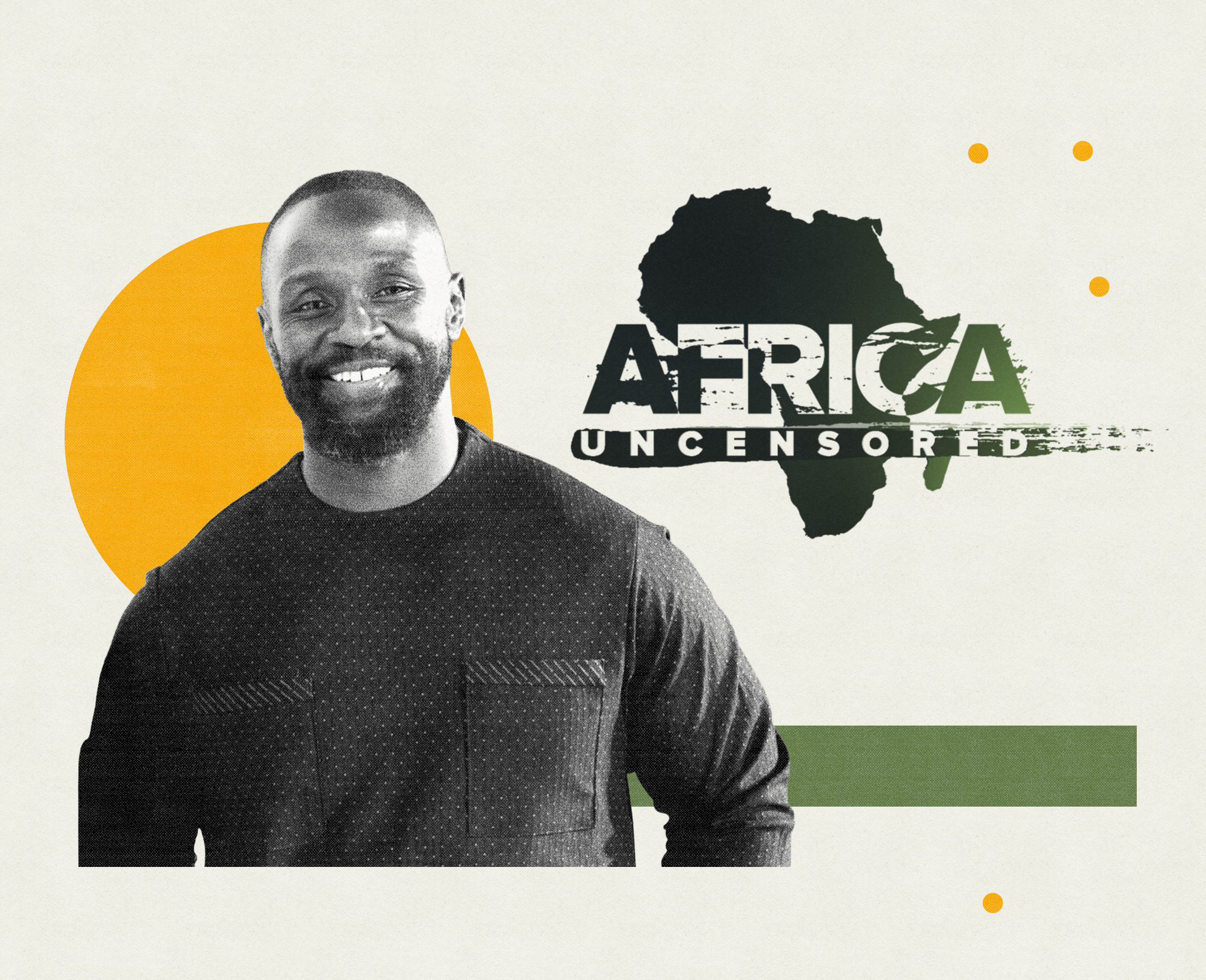
John-Allan Namu, a cofounder of Africa Uncensored, described mentorship as both a safeguard and a long-term investment. “It spreads the risk,” he said, by creating more journalists capable of holding power to account. “For me, it’s about building the field so we’re not a lonesome voice, in our country or on the continent.”
That is no small task anywhere. In East Africa, where shrinking revenues and rising political pressure have hollowed out many newsrooms, accountability reporting is at risk. Yet Africa Uncensored has, since its founding a decade ago, managed to publish hard-hitting long-form investigations into corruption, extrajudicial killings, and corporate abuse while absorbing legal harassment, financial pressure, and attempts to intimidate its reporters. Since 2023, Kenyan police have also detained at least three Africa Uncensored reporters while they were covering protests, part of a recurring pattern of journalists being arrested, assaulted, or blocked from documenting demonstrations and public unrest.
The newsroom grew out of Namu’s conviction that investigative journalism in Kenya had become episodic rather than institutional. Accountability reporting was praised when it appeared, but it was not practiced consistently enough to act as a sustained check on power. “There was no place where investigative reporting was the primary product,” he said. “Without consistency, it was difficult for the work to influence the field.”
By 2015, when he left his role as a special projects editor at Kenya Television Network—a leading national broadcaster known for its news and investigative reporting—Namu was ready for a new venture. He cofounded Africa Uncensored that year as an experiment in bypassing mainstream media pressures, but he quickly realized that he was unprepared for the business and financial demands of running a newsroom. He had not anticipated the sheer amount of time required for managerial tasks, from tax compliance and audits to balance sheets and donor accountability, which diverted energy from the journalism itself. “We were building the plane as we were flying it,” he told me. By bringing in trusted staff with administrative and financial expertise and forging early partnerships that prioritized organizational capacity, he made the new outlet sustainable. (The other two cofounders left Africa Uncensored around 2017 for roles in Kenyan politics and international media.)
Like many independent investigative outlets, Africa Uncensored operates with far smaller audiences and fewer resources than Kenya’s major television networks, limiting its reach. And in a country where corruption often goes unpunished, even major exposés do not always lead to accountability. But in building the outlet, Namu sought to address his longtime frustration with the orientation of legacy newsrooms in Kenya, which he said have gravitated toward power and often treated ordinary people as passive victims, rather than political actors with rights and agency. “Journalism should help restore dignity by making those people visible again,” Namu said.
Africa Uncensored primarily produces in-depth video investigations that are published on YouTube and social media, alongside written reporting on its website. Its flagship work chronicles systemic failure and elite impunity by centering those most affected. One of its earliest investigations was Kanjo Kingdom, which was released in 2016 and documented how Nairobi City County Inspectorate officers—known locally as kanjo—extorted bribes and used violence against informal street vendors and hawkers, many of whom survive on one hundred dollars or less per month. The exposé, which used hidden-camera footage, followed five officers and revealed how vendors working on the city’s sidewalks without formal licenses were coerced to surrender much of their meager earnings under threats ranging from harassment and confiscation of their goods to beatings and stabbings. Some of the officers captured in the documentary were implicated in a vendor’s murder. After the project ran, five officers were suspended; four of them were later charged with murder and sentenced to twenty-five years in prison. The victim’s widow also filed a civil suit against the officers and the Nairobi county government and was awarded four million shillings (about thirty-one thousand dollars) in damages. Africa Uncensored’s subsequent reporting on war profiteering in South Sudan and through cross-border collaborations like the Pandora Papers situated Kenyan power within a wider transnational system of secrecy and impunity. “Sometimes journalism is a spark,” Namu said. “Other times, it’s a library.”
Investigative journalism in Kenya is increasingly met with legal and psychological pressure, including SLAPP suits filed by politically connected individuals and corporations. “The goal is not necessarily to win,” Namu said. “It’s to exhaust you.” Odanga Madung, the cofounder and managing director of OdipoDev, a Nairobi-based research and data analysis firm that tracks media, public discourse, and social trends, describes this as a broader shift in how political and corporate leaders manage scrutiny. “You don’t have to censor journalism anymore,” Madung said. “You just have to make it expensive.”
For a reporter named Cynthia Gichiri, that logic became personal. Her 2024 Africa Uncensored investigation into a fraudulent fertilizer scheme began with a tip from a source via one of the organization’s social media platforms. As the reporting progressed, over the course of two years, sources grew fearful and Gichiri received a barrage of phone calls and emails from people connected to the scheme—some distancing themselves, others asking her to kill the story. “At some point, people were looking for me,” Gichiri said, describing how intermediaries, including other journalists, were used to track down her personal information. “One day I received a WhatsApp message from an unknown number,” she said. “The profile picture showed a man holding a gun.” The message left her anxious until the newsroom stepped in, helping to secure her devices and offering safety guidance and counseling to manage the stress.
When the investigation was finally published, it triggered a parliamentary inquiry, a rare outcome. Gichiri first encountered investigative reporting through Investigate 101, as I did, though in a different cohort, before joining the staff of Africa Uncensored; she “never imagined in my wildest dreams” that her work would have such consequence, she told me. Although the inquiry cleared the agriculture cabinet secretary of wrongdoing, eight senior officials from the government agency involved in the scheme were suspended and criminally charged.
Gichiri’s experience was not an anomaly. Joy Kirigia’s Title Deals series exposed systemic failures within Kenya’s land administration system and contributed to the arrests of two people on land fraud charges and the return of two parcels of stolen property. One of the parcels had been subdivided among forty members of a land-buying cooperative—a common Kenyan model in which groups pool resources to purchase land collectively; the owners had been dispossessed and denied access. Although the series focused on the experiences of two of the victims, all forty members of the cooperative regained ownership following the investigation.
Yet Kirigia said the most significant impact lay elsewhere: in exposing how corruption has hollowed out public faith in the rule of law. The work was “heavy,” she said, reflecting the emotional toll of witnessing people lose land they had legally owned and the slow, frustrating pace of justice. “When people stop believing in the law,” Kirigia said, “it signals something far more dangerous for society.”
This erosion of trust is a defining regional challenge, and investigative reporting can be indispensable in addressing it. Madung, of OdipoDev, sees Africa Uncensored as operating in a “third space,” combining large-newsroom rigor with the intimacy and accountability of a small, audience-facing organization. “They can set national agendas without losing closeness to the public,” he said.
Amid shrinking ad revenue and rising political pressure, that positioning is not accidental. Most newsrooms, Madung said, are less constrained by fear than by economics. The survival of Africa Uncensored, he noted, has depended on treating journalism as infrastructure that requires an ongoing investment in safety, technology, and people. Its work circulates far beyond its platform and is used by citizens and activists to challenge power. “That’s when journalism has real force,” he said.
Navigating financial realities has likewise been central to the newsroom’s survival. From the start, Namu said, Africa Uncensored adopted a hybrid model of philanthropic grants and commercial income to retain editorial control. “It would be foolish to rely on one partner,” Namu said. “We need to be certain our work is free from interests that could manipulate it.”
Some critics have targeted the outlet’s donors in an attempt to undermine its credibility. During protests over proposed tax increases and rising living costs in July of 2024, Kenyan president William Ruto accused the Ford Foundation, one of Africa Uncensored’s donors, of “sponsoring violence” during the demonstrations. A senior Kenyan official also wrote to the foundation, listing Africa Uncensored among grantees that were allegedly “at the centre” of protests and questioning grants that he said were used for “nefarious ends.”
It was a familiar tactic. “Propaganda around funding is a pernicious one,” Namu said, describing a pattern of coordinated online attacks over the years that recast scrutiny in the public interest as foreign subversion. “The goal is to get people not to focus on the quality of the work.”
Even as mentorship and networks help safeguard journalists, Namu sees a deeper, systemic challenge taking shape. At Stanford University, where he is a 2025–26 JSK fellow, he is looking beyond political pressure to the concentration of power in global tech platforms and AI’s growing influence over how information circulates. Namu describes an “algorithmic empire” that harvests content, shapes visibility, and personalizes worldviews. “The sovereignty of our stories has to be secured,” he says, to ensure that investigative work retains its value, reach, and impact.
The ultimate danger, as rigorous reporting is drowned out by algorithmic distribution systems, is not censorship but invisibility. Africa Uncensored’s next-decade challenge is not uncovering wrongdoing, but maintaining its influence in digital systems that reward scale, speed, and sentiment over accountability.
For Namu, though, the measure of success extends beyond any single outlet. “Even if the best reporting doesn’t come from Africa Uncensored, it will come from somewhere else,” he said. “For me that would mean one of my goals has been achieved: that the field is built.”
Has America ever needed a media defender more than now? Help us by joining CJR today.