Sign up for the daily CJR newsletter.
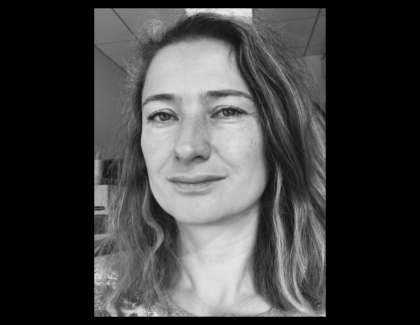
In December of 2025, after widespread massacres were reported in the city of El-Fasher, in the western Sudanese region of Darfur, a journalist named Nadia Taha was invited, along with other experts, to share her insights at a congressional briefing in Washington, DC.
Taha, who was born and raised in El-Fasher, began by describing the city and its society and culture, and related how a paramilitary group called the Rapid Support Forces (RSF) had seized control of El-Fasher on October 26 after a nearly two-year siege. Once inside, the RSF reportedly targeted non-Arab residents for atrocities ranging from torture to rape, killing tens of thousands of people, including many of Taha’s relatives and neighbors. The perpetrators boasted about their acts in videos posted on social media. As she spoke at the briefing, Taha choked up. “I used to work for the Voice of America,” she said, with evident frustration. She had been laid off a few months earlier, after Donald Trump issued an executive order calling for the near-elimination of the US Agency for Global Media (USAGM), which includes VOA. “I feel like my hands are tied.”
Called “the forgotten war” because of how little media coverage it has received, the conflict in Sudan has displaced twelve million people; some estimates put the death toll as high as four hundred thousand, making it the largest humanitarian crisis in the world today. The devastation has made ground reporting nearly impossible in much of the country; it has also coincided with America’s inward turn, marked by the Trump administration’s dismantling of the US Agency for International Development (USAID) and its decision to place more than a thousand USAGM employees on administrative leave, as well as layoffs in February at the Washington Post that disproportionately affected foreign coverage. “Sometimes I just want to scream and cry,” Taha told me. “I see a lot of stuff not covered the way I want it to be done.”
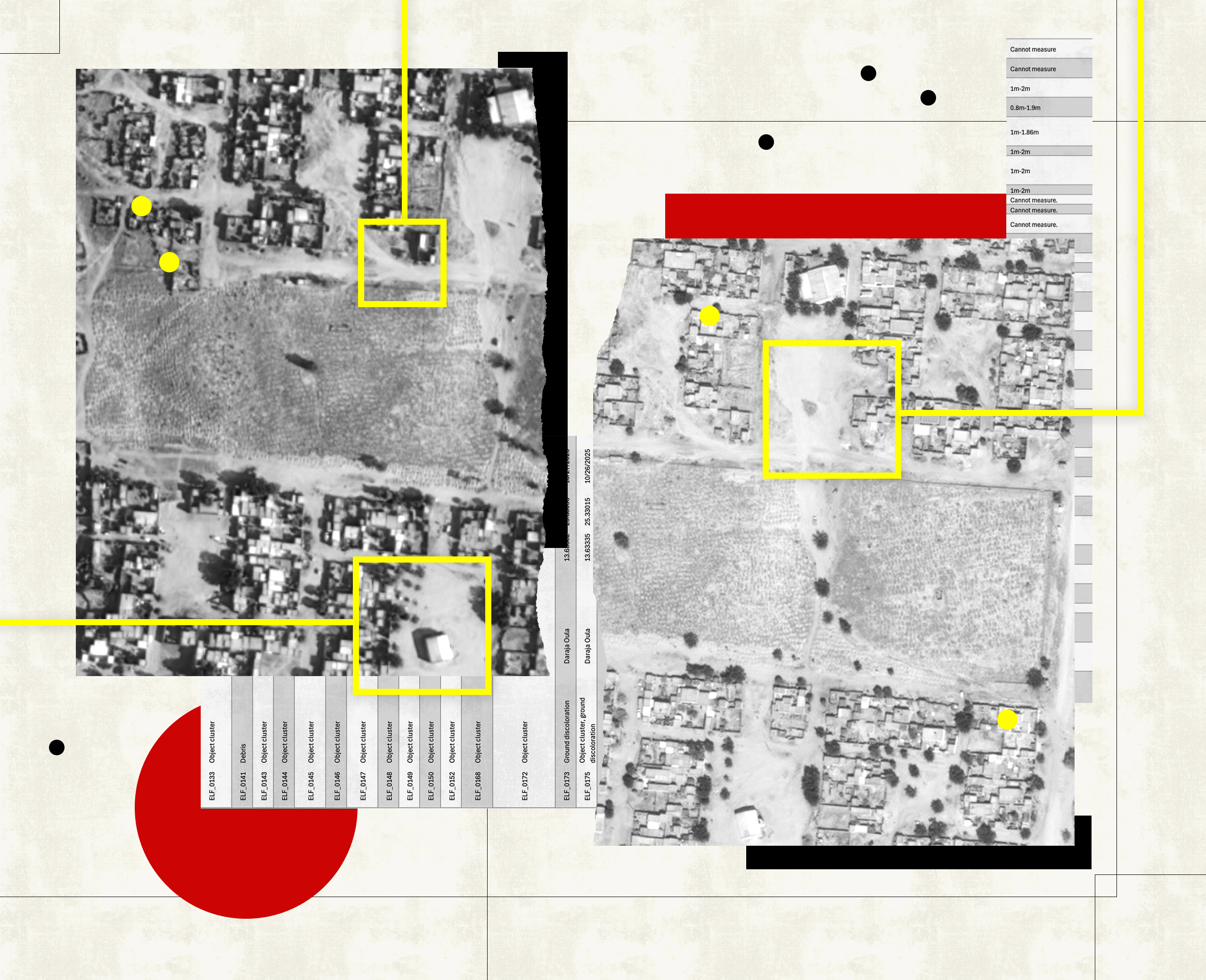
The fall of El-Fasher and its aftermath are another episode of mass atrocity in a power struggle that has been raging in Sudan since April of 2023 between the Sudanese Armed Forces and the RSF. A February 2026 United Nations fact-finding mission confirmed that the atrocities committed by RSF fighters in El-Fasher show “the hallmarks of genocide.” As in Afghanistan, Syria, Ukraine, and Iran, analysis of open-source intelligence (OSINT)—publicly available material such as social media posts, geolocation data, and satellite imagery—has proved crucial. Satellite imagery of El-Fasher analyzed by the Yale Humanitarian Research Lab shows evidence of mass killings by RSF fighters. The lab’s first report, published in October of 2025, grabbed global media attention when it revealed “objects consistent with the size of human bodies on the ground near RSF vehicles, including at least five instances of reddish earth discoloration.”
“The fact that blood was visible from space, that was a moment that captured international headlines,” Shaina Lewis, a Sudan specialist and adviser for Preventing and Ending Mass Atrocities (PAEMA), an advocacy group, told me. “I think El-Fasher was a breakthrough moment for all of the wrong reasons. We saw this massive uptick in attention that we had been calling for for the entirety of the war.”
El-Fasher is the historical capital of Darfur, where, in the early 2000s, the Janjaweed militia, established by the Sudanese government’s security apparatus, fought armed rebel groups and committed mass atrocities against Black, non-Arab communities accused of supporting the rebels. Around three hundred thousand are believed to have died from fighting, hunger, and disease in that conflict. Human rights activists also called it a genocide.
As a reward, Omar al-Bashir, Sudan’s former dictator, gave the Janjaweed control of gold mines in Darfur and elevated the group’s status within the military establishment—in part as a shield against political rivals. The Janjaweed, led by Mohammed Hamdan Dagalo, known as “Hemedti,” were rebranded as the RSF. In 2015, Bashir sent them to Yemen as mercenaries to fight Houthi rebels alongside the armies of Saudi Arabia and the United Arab Emirates (UAE).
In April of 2019, four months of pro-democracy protests brought down Bashir’s government in what was celebrated as the Sudanese Revolution. A civilian-military coalition formed a transitional government. But in 2021, before the end of the transitional period and elections, the military sidelined the country’s civilian leadership and the internal rivalry between the RSF and army leaders linked to the old regime escalated. In April of 2023, fighting began in the Sudanese capital, Khartoum, and spread throughout the country, including to Darfur. Since then, control of Sudan’s major cities has been a contest between the Sudanese army, which largely rules the country’s east, north, and center, and the RSF, which remains strong in the south and west.
By May of 2024, El-Fasher was the last of Darfur’s big cities under the army’s authority. For the next eighteen months, RSF fighters besieged the city. They dug ditches around it and fired mortars at military and residential areas. Locals starved, and tens of thousands left to seek refuge elsewhere.
During the siege, some local journalists stayed to report on the unfolding tragedy. But in October of 2025, the Committee to Protect Journalists said that thirteen journalists and media workers, whom it called “among the last sources of independent information from the besieged city,” had “gone missing under a communication blackout.” At least two had been abducted by the RSF, including Muammar Ibrahim, a stringer for Al Jazeera Mubasher, the network’s C-SPAN-like public affairs channel, who was recognized, captured, and detained by RSF fighters on October 26 as he tried to leave the city. In a video posted on social media, an RSF officer sitting on a desk accuses Ibrahim of being biased and misrepresenting the group in Facebook posts as a “militia” and “Janjaweed”—characterizations the RSF has dismissed as it tries to market itself as a legitimate political and military force. A visibly distraught yet measured Ibrahim responds: “I confirm I used these descriptions in past social media posts, but not in my reporting to official and media outlets.”
Beyond the fighting, obstacles to covering El-Fasher—and Sudan at large—have included electricity and internet outages, armed parties denying media access to survivors of the conflict, media funding cuts, and competing global crises. “We can go places journalists can’t go,” said Nathaniel Raymond, the executive director of the Yale Humanitarian Research Lab. “We don’t replace witness testimony, but we can operate when there is no ground access.”
Sudanese journalists connected to El-Fasher have been at the forefront of trying to make sure the world knows what is happening. Taha’s journalism career began in 2010, when she worked from Nairobi with the Sudan Radio Service (SRS), a network funded by USAID that was later known as Eye Radio. She was a host and Darfur specialist, reporting in Arabic and Zaghawa, the language of the Zaghawa ethnic group living mainly in northeastern Chad and western Sudan. Later, she worked as a reporter and communications director for independent media outlets Ayin Network and Nuba Reports, training journalists to produce short documentary videos in underreported-on conflict zones in Sudan, including Blue Nile State, the Nuba Mountains, and Darfur.
A 2016 Atlas Corps fellowship brought her to Washington, DC, to intern with VOA, which hired her a year later to be, as far as she knew, the first Sudanese woman and Darfurian journalist to work full-time for the organization. “I started bringing new voices to Voice of America, interviewing IDPs, people from El-Fasher, experts on Darfur,” she told me, using the initialism for “internally displaced person.”
The hope of bringing local, in-depth knowledge of the region is what, around the same time, motivated a journalist named Adam Mahdi to establish Darfur 24, a bilingual Arabic and English online platform, with a colleague, Mohamed Elfatih. Initially based in the city of Nyala, in south Darfur, the website aimed to “cover events that were not being covered in Darfur, places far from the big cities, population movements, tribal conflicts, shortages in services and development,” Mahdi told me. Soon, Darfur 24 expanded to employ five reporters in the Darfur region’s five states, including three video journalists in the major cities of El-Fasher, Nyala, and El-Geneina. It also had reporters covering refugees in Chad and South Sudan, and later grew its team to cover all of Sudan.
But when the war erupted in 2023, Mahdi and many other journalists had to relocate. “It became impossible for them to live or work in an area,” he said. “Our reporters were always in army areas. RSF never let anyone who didn’t support them work freely. Those in army and Joint Forces areas didn’t have much freedom, either, but were at least from the city and could move around.” One Darfur 24 reporter’s house was struck by a mortar, Mahdi recalled. (The reporter wasn’t home at the time.) Mahdi and Elfatih tried to recover lost ground by training non-journalists, including volunteers, activists, and human rights observers, to provide updates.
Hafiz Haroun, a journalist who is originally from El-Fasher, had been closely following the tensions, as well as the arms and mobilization race between the Sudanese army and the RSF, even before the fighting broke out. “It was clear a war was on its way,” Haroun told me.
After the fall of Bashir’s dictatorship, in 2019, Haroun had begun reporting for an independent newspaper, Al-Tayyar, in Khartoum, and was inspired by the country’s hopeful transition to democracy. In 2021, he was arrested by security forces; he subsequently relocated to Nairobi with support from Frontline Defenders, an international human rights group, and began freelancing for outlets such as Ayin, Le Monde, and later the Washington Post. While working on a documentary with the BBC on the Sudan-Chad border in 2024, he saw Facebook posts about the death of his younger brother back in El-Fasher. Weeks afterward, another brother was killed. “They died defending our neighborhood against the RSF,” Haroun told me.
From afar, in Nairobi, Haroun contributed to reports about the fighting around El-Fasher, including in the Post. “I did reports on the siege, starvation, rape, and kidnappings,” he said. “Usually with WhatsApp, but sometimes it was hard to get in contact when Starlink was down.” He sometimes used a satellite phone to contact and interview community and military leaders.
International journalists, meanwhile, reached out to advocacy groups such as PAEMA for contacts on the ground. “Journalists often get in contact with me to connect with Sudanese civilians,” Lewis, the group’s Sudan specialist, said. Through a network of civil society activists, she found interviewees who, for security reasons, “would record voice notes somewhere, then send them at a Starlink access point.”
Darfur 24’s local photographer had left El-Fasher in mid-2025. One writer in the city stayed on. “When it became too dangerous, along with food and water shortages, we forced them to evacuate,” Mahdi said.
When RSF fighters stormed El-Fasher, the city was disconnected from the world. “On the day of the fall there was absolutely no access, and I am someone who has wide connections in El-Fasher,” Haroun said.
For an entire day, Haroun couldn’t reach anyone. He was certain most of his sources had died. He turned to satellite imagery and contacts in the RSF. On October 27, he spoke to people who had made it to Taweela, a town along the Sudan-Chad border to the west, who explained what happened. “It was difficult. I had an interview with people I knew, including childhood friends,” he recalled. “That was one of the most painful stories.”
Darfur 24 hasn’t been able to report from El-Fasher since the RSF takeover. Starlink internet service is no longer available there, so connecting with sources is difficult. Its correspondents have instead focused on survivors who fled, relying on social media posts supportive of the RSF or visits by international humanitarian delegations that produce video reports to cover the city itself. “There is no independent reporting from the ground, and no verifying of sources,” Mahdi said.
This has made for missed stories, which frustrates Taha. When an RSF commander, Abu Lulu, claimed on TikTok to have killed two hundred people—then said he’d lost count and vowed to “start from zero” next time—Taha was horrified that no one interviewed the families of victims or followed up on RSF claims that he was being investigated.
At least one journalist, Tsabih Mubarak of Sky News Arabia, based in the UAE, who is married to a senior official in an RSF-backed parallel government, has drawn considerable controversy for her coverage. Days after the RSF’s takeover, she traveled from Abu Dhabi to El-Fasher, where she was criticized for whitewashing the level of atrocity as well as for taking theatrical selfies with children and a photo hugging a female RSF commander.
Taha, who in February cofounded Sudan Action Hub, an advocacy and humanitarian group, was excited when a federal judge ordered the reinstatement of the VOA workers who had been put on administrative leave. The ruling, however, didn’t include Taha, who worked for the agency as a contractor. Nevertheless, she remains hopeful. “We are still waiting for clarification from the lawyers,” she said.
The recent mass layoffs at the Post, which gutted many foreign bureaus, have left Haroun in limbo as well. “The Post was interested in regular reports,” Haroun said. “Work seems to be frozen. I don’t know what is going to happen.”
Reliable independent news from El-Fasher is still hard to attain, according to journalists and advocates close to the city. The RSF now controls Starlink stations, and the residents who remain are scared to talk. The latest information comes from those who fled most recently or from RSF-sponsored propaganda. “El-Fasher was the first time we saw the international media come close to what was warranted,” Lewis said. “Too little, too late.”
Has America ever needed a media defender more than now? Help us by joining CJR today.