Sign up for the daily CJR newsletter.
On March 3, days after the United States and Israel attacked Iran, Erin Burnett, a CNN anchor, was broadcasting outdoors in Tel Aviv when she pointed up to the night sky. “We’re not going to show this live, because we don’t show this live, but I do see interceptors going up,” Burnett said, referring to Israel’s missile defense network. “We’re not showing you that because the Israeli government does not allow or want us to show where that may have come up.”
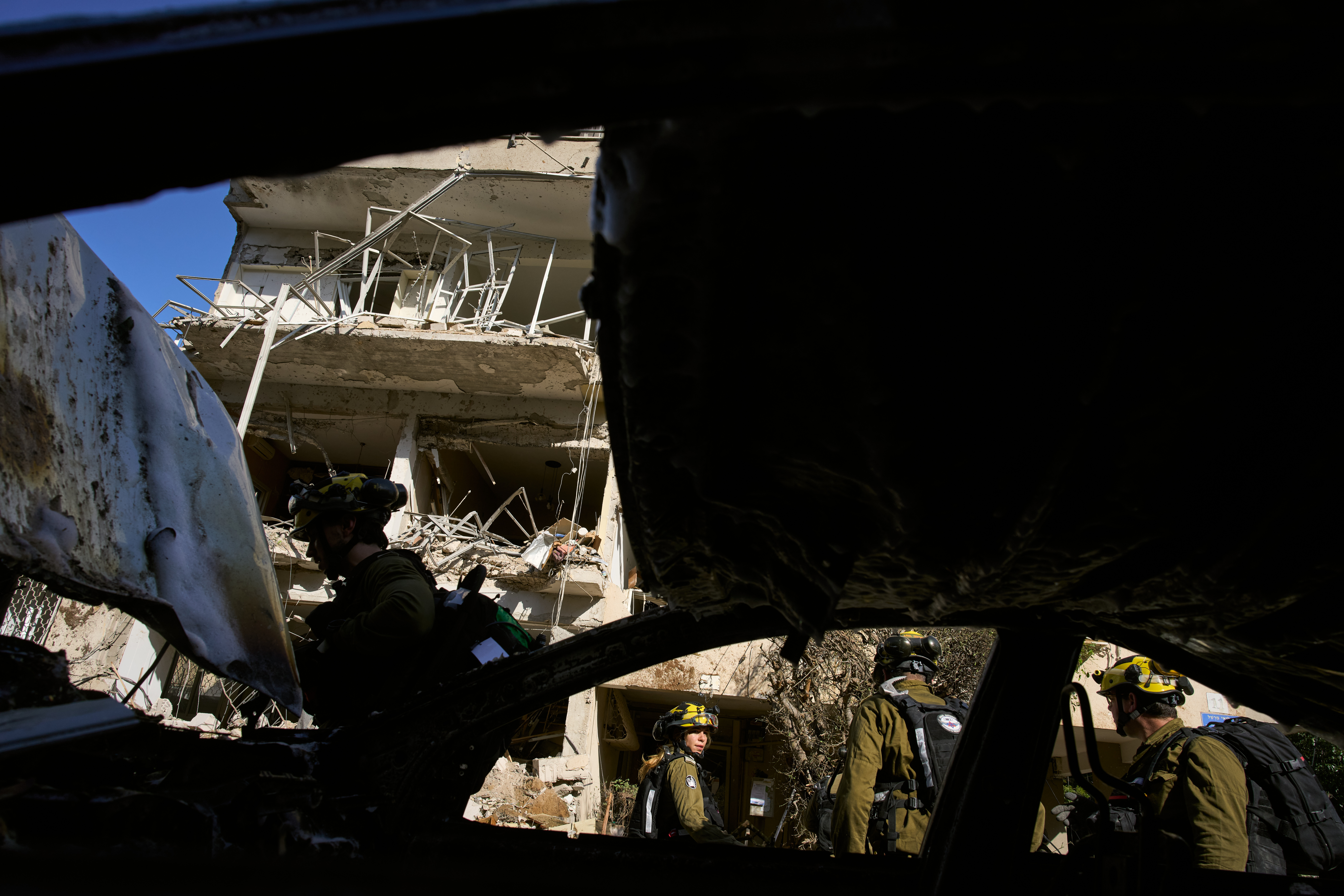
Burnett was acknowledging the Israeli Military Censor, a unit of the Intelligence Corps of the Israel Defense Forces (IDF) that controls what journalists working in Israel can and cannot report. In the name of national security the censor unit has barred media in Israel—both domestic and foreign—not just from showing the locations of its interceptor launchers but also from publishing the location of successful Iranian missile attacks on military targets. Since the recent attacks on Iran, IDF brigadier general Netanel Kula, the head of the unit, has told the press to clear its reporting on a wide array of topics. According to +972 Magazine, that includes “operational matters, intelligence, defensive preparedness, impact sites in Israel, armament management (including munitions and interceptor stockpiles, aircraft and air defense systems readiness, and the employment and use of unique and classified weaponry), and operational vulnerabilities in defense and offense.” To comply with the orders, journalists submit their reporting prior to publication to the censor, which then may insist on modifications to coverage. The censor can be contacted over WhatsApp.
The censor is not new: its origins trace back to the 1930s, before the creation of the State of Israel, when occupying British forces sought to control coverage of the conflict in the Arabic press. The censor has been a mainstay for the press in Israel ever since, affecting reporting on broad swaths of Israel’s warfare. (For example: until 2022, the censor prohibited reporters from writing about Israel’s use of deadly drones.) But the unit has intensified its actions lately, when it comes to coverage of Iran—and many American viewers of CNN may be learning about the censor for the first time. Though the unit is traditionally limited to national security, it has “vast powers,” Oren Persico, a staff writer at The Seventh Eye, an Israeli media criticism publication, said. By citing potential damage to the state, “officially, it can censor almost everything.” (The IDF did not respond to a request for comment. A CNN spokesperson told CJR: “CNN does not show the location of Israel’s interceptor launchers, nor live interceptions, as required by local law in order to avoid revealing sensitive military information. However, we do report on each Iranian strike. We retain full editorial control and are transparent with our audiences.”)
In an explainer published a few days after Burnett’s on-air comments, Oren Liebermann, CNN’s Jerusalem bureau chief, wrote that foreign media in Israel usually only interact with the censor when seeking to clear footage obtained while embedded with the IDF. But, Liebermann added, “the rules have tightened in this war.”
As the Israeli government attempts to persuade its citizens to accept more nighttime alarms and sprints to shelters, the unit appears focused on limiting coverage of successful Iranian missile strikes. “The military censor is an integral part of Israel’s media and journalism culture,” said Mairav Zonszein, a senior analyst for the International Crisis Group and a contributing writer for the New York Times opinion page. “It helps the military build the narrative that they’re degrading Iran’s launchers and military capabilities. It contributes to the war effort.”
The censor doesn’t acknowledge what it has censored but, at times, an observer can make educated guesses about the censor’s work. Take, for example, this piece published by Walla, an Israeli outlet, in August of 2025, during an earlier round of conflict with Iran. The article states that Prime Minister Benjamin Netanyahu’s office at the Kirya, a military headquarters in Tel Aviv, is unusable and requires renovations. The article mysteriously does not state what caused its sudden deterioration.
According to an analysis from +972 Magazine, of the roughly twenty thousand news items submitted in 2024 to the censor for approval, more than sixteen hundred articles were banned and another six thousand were partially censored—a 38 percent rate of intervention by the censor, which would represent an all-time high. But if the unit is more active than ever before, that is not necessarily an editorial choice. As the rate of Israel’s wars accelerates, “there are just more things to censor,” Persico said.
Technically, media outlets operating in Israel are not supposed to acknowledge that they have been censored. Still, it’s not only the censor’s actions that have intensified. Many Israeli reporters now boast that their reporting has been cleared by the censor. “Embarrassing nerds that they are,” Gideon Levy, a veteran columnist for the oppositional Israeli newspaper Haaretz, wrote in a recent column, “everyone’s obeying the rules, and then some.”
Levy told me that military censorship has never been as effective in pushing the government line as the Israeli press’s self-censorship. “They are really serving like the PR people of the army,” Levy said of Israeli journalists. These days, the fact that any piece of reporting was approved by the censor is presented “as if it’s a source of pride,” he observed. “Which is pathetic.” This form of self-censorship reached a peak, Levy said, during the war in Gaza. “You couldn’t see anything from Gaza in the Israeli media. Not the children, not the suffering. Nothing. They just didn’t cover Gaza.” But “nobody asked the media not to show it.” Both when self-censoring and when cooperating with the military censor, the media is also serving the interests of the public, Persico argues: “The Israeli public is so sensitive to news that might help the enemy, and are so aggressive towards the media, they would rather have a harsher censorship.”
The censor’s escalation comes amid increasing hostility toward journalists. This month, in East Jerusalem, police officers attacked a group of Palestinians praying, and then attacked reporters attempting to document the violence. The police said the journalists “were part of an unlawful gathering and disturbance of public order in violation of Home Front Command instructions,” and that they failed to identify themselves as journalists—a claim the journalists dispute.
The national police are under the control of Itamar Ben-Gvir, Israel’s radical minister of national security, who has also promised to use the military censor to punish journalists, saying in a statement that “anyone who endangers Israel’s citizens in the name of ‘journalistic reporting’ will face a determined and tough police force. No concessions, no games.”
Levy points out that Israeli media exists in a climate of discourse in which there is nearly no representation of dissent. “The United States should understand: 93 percent of Jewish Israelis are in favor of this war,” he told me. “Where in democracy do you have such figures? Ninety-three percent? Supporting a war of choice? This is a North Korean figure.”
Has America ever needed a media defender more than now? Help us by joining CJR today.