Sign up for the daily CJR newsletter.
“Dude im in vegas now covering mole people,” read a text from Jonathan Choe, a MAGA-aligned news influencer. We made plans to rendezvous at his next stop, Los Angeles. He was fraud hunting. Choe, who is in his mid-forties, is an outlier among his creator cohort: before going independent, he spent decades working for local TV news stations across the United States. Most recently, he was the crime and justice reporter for KOMO News, ABC’s Seattle affiliate. While at KOMO, which is owned by the conservative Sinclair Broadcast Group, Choe began covering the homelessness crisis in Seattle—a study in contrasts, since the city hosts the corporate headquarters of Starbucks and Amazon and has a long tradition of left-wing activism. (Real Change, a Seattle-based organization focused on the unhoused population, has its own newspaper.) Choe’s reporting has been nominated for regional Emmys.
He moved to Seattle in 2020, for the KOMO job. “It’s so far left I got radicalized,” he told me, of the city. In early 2022, he live-tweeted a Proud Boys rally on his personal account, including a photomontage of the event; some said he’d produced white-supremacist propaganda. “I want to show what’s happening at a Proud Boys rally, which ended up being quiet and peaceful, but critics accuse me of not being more disapproving of this event and also legitimizing hate?” he wrote at the time. “I don’t know, but that sure sounds like a double standard to me.” He insisted that he was doing journalism. KOMO fired him.
In the years since, Choe has dropped any pretense of neutrality on his way to cultivating a large personal audience. He now has nearly a million followers across social media, including almost two hundred thousand on X and many more on a platform called NewsBreak. He works both as a senior fellow at the Discovery Institute, a Seattle think tank inspired by the Heritage Foundation, and as a contributor for Frontlines—the news division of Turning Point USA, which operates a small team of independent, freelance contributors. He also appears on Newsmax and other conservative outlets. “Even though I represent several different brands, people are following me, Jonathan Choe, the news influencer slash journalist,” he said. Choe’s income derives from several sources, he told me, including donors, whose names he declined to share. According to the most recent available company tax filing, in 2024, Choe’s salary at the Discovery Institute was $163,894. (The Discovery Institute did not respond to questions.)
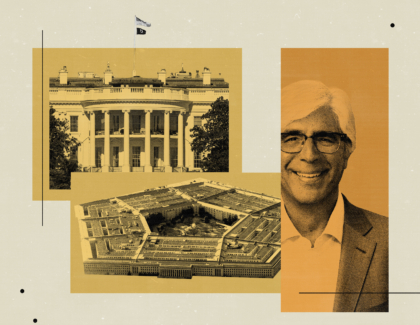
As with many of his peers, there is both a claim to unparalleled journalistic integrity and an apparent alignment with Donald Trump. Choe has recently teamed up with James O’Keefe, the founder of Project Veritas, as well as Savanah Hernandez and Cam Higby, who have both contributed to Frontlines, on a “multipart investigative series.” In October, Choe posed with Hernandez, Higby, and others at the White House, which has granted independent influencers unprecedented access; Higby posted the photo with the caption “The future of journalism in this country is bright.” Choe, too, views this group as “the future of independent journalism,” as he told me. “We’re setting aside our brands, our egos, and we’re teaming up for the greater good. I feel like we’re forming the Dream Team.”
In February, Choe joined two fellow media personalities from Washington State as plaintiffs in a lawsuit brought by the Citizen Action Defense Fund—a legal advocacy group with ties to right-wing nonprofits that is run by Jackson Maynard, a onetime Republican candidate for Congress—against the Washington State Capitol Correspondents Association and state house of representatives, claiming they were wrongly denied press passes to cover the legislature. Choe was officially not granted access because, according to guidelines quoted in a rejection letter from the house clerk’s office, “The press should act as an independent observer and monitor of the proceedings, not as an involved party.” Choe, like the other plaintiffs—Brandi Kruse, a podcaster, and Ari Hoffman, a talk radio host—had received payment from political groups. Kruse and Hoffman have both campaigned for Republican causes; Choe has done video work and consulting for political campaigns in Washington State—one Republican, one Democratic. Choe told me that he took the consulting gigs before he was actively covering the statehouse and that he is not currently being paid for any political work.
In general, news influencers such as Choe are caught up in a “feedback loop” with the Trump administration, Kayla Gogarty—a research director at Media Matters, a progressive research nonprofit that tracks conservative misinformation—told me. In Los Angeles, Choe wanted to see how signature collectors were bribing unhoused people to sign petitions and get proposition measures on the ballot by offering a few dollars or cigarettes. He had a list of names that he said had been fraudulently signed, and he was ready to track them down. Gogarty noted that this coincided with a campaign by the Trump administration to pass the Safeguard American Voter Eligibility (SAVE) Act, which would make it more difficult for people to register to vote.
Erica C. Barnett, the editor of PubliCola, a reader-supported news site covering Seattle, has observed Choe’s transition away from traditional journalism up close. She has seen him go from asking questions during press conferences with public officials to chasing them down with his phone in hand—in her view, for the drama. Choe “does know what the norms of journalism are,” she said, but has lately been twisting them in a non-journalistic fashion: “He will exercise them to his advantage.”
Since he left local journalism behind, homelessness has remained Choe’s signature subject, and he often posts footage of people living on the streets. When I arrived at our meeting spot, in suburban San Bernardino, he was waiting for me in sweatpants, slide sandals, and a black hoodie reading FREEDOM, an outfit he’d assembled to help him “play the part” of a “homeless drug addict,” he said.
I wore a white T-shirt and a pair of blue pants. “Is that how you fucking dress?” Choe said. “You look like some fucking white boy.” Kevin Dahlgren—a former outreach worker turned news influencer, who has recently served as Choe’s cameraman and co-reporter—joked that it was all good; when we headed to Skid Row, a neighborhood in downtown LA that has been a hub of the city’s unhoused population, I’d be bait.
During his local news career, Choe said, he had lost camera operators who were afraid to “follow me into encampments and crazy situations.” Now solo, he explained, he had the freedom to really mix it up. According to a Seattle police report, in 2024, while filming, Choe allegedly punched a volunteer Spanish-language interpreter who was blocking him from accessing a tent encampment housing migrants. (Choe said he was acting in self-defense; he was not charged or arrested.) “We’re risking our lives by going to Skid Row,” Choe told me. “But we’re chasing the truth at any cost.”
The truth was maybe less scandalous than he suggested. Veterans of California’s ballot measure process say that groups hire signature-gathering firms that, in turn, commission subcontractors tasked with finding people, sometimes via Craigslist ads, to collect signatures. Those people are paid fifteen bucks for every signature they gather, whether or not the signatures are later validated—and so they are effectively incentivized to engage in the kind of street-level fraud Choe and his colleagues had identified. But in practice, fraudulent signatures are for the most part identified and thrown out, either by the signature-gathering firms or by election officials once they’re submitted to the election board. Nor is this a new phenomenon: in 2018, the Los Angeles Police Department made arrests and the LA County District Attorney’s Office brought indictments against people engaged in the gathering of fraudulent signatures. “It is against California law to pay someone to sign an initiative petition,” Emma Olson Sharkey, a partner at the Democratic Party–aligned Elias Law Group and a nationwide ballot measure specialist, said. “However, from my experience, those instances are exceedingly rare.”
Choe didn’t see it that way. “Mainstream media is clearly missing the story,” he said. “It takes a bunch of independents to come out here ourselves to verify and record it. To see the homeless being exploited like this? The blatant fraud? It’s so sinister. We hope it changes public policy—and maybe even people go to prison.”
His approach paralleled that of Nick Shirley, whose viral videos from late last year documenting alleged mass fraud in Minneapolis’s Somali community inspired the Trump administration to unleash immigration enforcement agents on the city, resulting in thousands of arrests. It was during the backlash to that surge that federal agents shot and killed Renee Good and Alex Pretti. The fraud that Shirley purported to uncover had first been reported by local Minneapolis outlets in 2022, when the Department of Justice began prosecuting cases under the Joe Biden administration. But when Shirley alleged a wider conspiracy, he found a rapt audience. The FBI has since raided at least one daycare flagged by Shirley as fraudulent. Choe told me that the impact of Shirley’s video was a watershed moment for the scene. “That’s when people started to say, ‘This model could work at scale,’” he told me. “This really galvanized other citizen journalists and the community. And that’s ultimately why I got into journalism: to bring change into a community. I’m not doing this because I like creative writing, bro.”
Gogarty, of Media Matters, views this type of coverage as seeking to “exploit the void that’s left by the decline of local media.” Reporters in LA did cover the 2018 indictments of signature collectors, contextualizing the story as one with limited impact. AirTalk, a long-running public radio show in LA, quoted state officials and signature-gathering veterans who explained the multilayered processes by which California defends against fraudulent signatures. AirTalk also spoke with Larry Gerston, a San Jose State University professor emeritus who argued that there was a bigger problem with the ballot measure process: the legal ways the system favors the state’s wealthiest people.
In Choe’s experience, as he put it to me, “I’m using the standards and tools that I had working more than twenty years in left-wing corporate media.” He’s doing so with an eye on culture wars: by his own accounting, most of his reporting gets more pickup from national media such as Fox News and Newsmax than it does from local outlets.
Last July, Trump issued an executive order, “Ending Crime and Disorder on America’s Streets,” which sought, as the National Alliance to End Homelessness put it, “a return to forced institutionalization.” Choe said the order sent “seismic shock waves through the homeless-industrial complex”—his name for the collective efforts, and billions of dollars, he claims are being knowingly wasted on policies that prioritize housing in order to enrich developers and nonprofits. He believes in “treatment first” policies and increased policing. “The vast majority of the people causing all the crime, chaos, and death on the streets are the chronically homeless, and their issues are drug addiction and mental illness,” he said. “And all the government wants to do is just house them, house them, house them, and say they solved homelessness.”
Through his TV news career, Choe said, for the most part, he’d only get to cover homelessness on Thanksgiving with “feel good” stories about turkey giveaways. Now he’s proud to be fighting an “information war,” he told me. He has faced accusations of creating “poverty porn,” he said, which he rejects: “We’re the counternarrative to what the social service system and mainstream media has been showing the public. We’re showing the brutal reality of the streets whether you like it or not.”
Until he left KOMO, Choe’s journalistic résumé was traditional. He grew up in Massachusetts, a self-described “Kennedy Democrat,” he told me, and as a teenager he worked a paper route delivering the Boston Globe. His first reporting job, in 2002, was in the small-town market of Champaign, Illinois, making a little more than ten dollars an hour. He had a stint as a reporter for New England Cable News, a local television powerhouse, covering lifestyle stories and Patriots championships. “I loved it,” he said.
I am also from Massachusetts, and that was how I’d originally encountered Choe: I interviewed him more than a decade ago while reporting an article about a crew of dudes from Boston’s hardcore scene who had briefly built a flourishing bootleg enterprise selling shirts reading “Yankees Suck” to chippy Red Sox fans outside Fenway Park. Choe had fallen in with the shirt sellers while he was at Boston University studying broadcast journalism. Among the sellers, he was known as a dogged and prodigious moneymaker. “The most charismatic, hardworking motherfucker on earth,” as one “Yankees Suck” associate put it. Choe’s work today ties directly back to that time, when he was getting in fights and dodging cops with the guys, he told me: “You gotta be a renegade. This is not mainstream media. This is not status quo.”
That view may be best encapsulated by a scene in the spring of 2024, when Choe went to the University of Washington on assignment for Turning Point’s Frontlines ahead of a talk by Charlie Kirk. The campus was full of encampments protesting Israel’s assault on Palestine; in Choe’s telling, “pro-Hamas militants took over the quad.” In a fast-cut montage that Choe posted, he is confronted by protesters. He throws punches, then flees. He also calls for the governor to send in the National Guard. “It was a brawl,” Choe told me. “It was hilarious. I’m a pacifist. But I am prepared to defend myself when push comes to shove. I started swinging, knocking dudes out.” It was also a perfect closed loop of content creation: Turning Point’s presence on campus sparked unrest, during which Choe managed to create a viral piece of Turning Point media. “I thank Charlie Kirk for taking a chance on me,” Choe said. “I think about Charlie Kirk every day.”
After Kirk was killed, in September of last year, Turning Point entered a new phase: still a wide-reaching activist organization—and, by extension, media enterprise—it now operates under the leadership of Erika Kirk, who appears committed to keeping the Trump coalition together under increasingly difficult odds. Choe and his Frontlines colleagues have had a role to play with their investigation, posting ballot petition content tagged to an account called Citizen Justice League, an apparent reference to the DC Comics superhero crew featuring Superman, Batman, and Aquaman. The campaign was O’Keefe’s brainchild, and its appeal was obvious: everything was out in the open, ready to be filmed and chopped into dramatic bits of content.
As the videos started rolling out, over a few weeks this spring, O’Keefe Media Group hyped “bombshell” reports and claimed—just as major news outlets were largely focused on the war with Iran—that, when it comes to voter fraud, “We Are at War Right Now.” Choe shared an interview with a woman whose name was allegedly used by collectors gathering fraudulent signatures. The woman lives in a “picturesque farming community surrounded by horses and lush fruit orchards,” Choe says in voice-over as a gauzy sunset falls, “a far cry from the urban decay and hustlers operating without a conscience.” Trump posted Citizen Justice League content via Truth Social. In May, the Department of Justice held a press conference to announce that it had charged and subsequently secured a guilty plea from a veteran signature collector named Brenda Lee Brown Armstrong on one felony count of paying a person to register to vote. Bill Essayli, first assistant US attorney for the Central District of California, credited O’Keefe’s Citizen Justice League videos: “Once we saw these videos, we went to work.”
Though Choe is based in Seattle, he spends a significant amount of his life on the road. (When I asked about his personal life, he declined to comment.) The Olympia statehouse lawsuit, in that light, may be more a matter of principle than one of practice, and he described it to me as a press freedom cause. “I felt as though we were getting a bad rap for our opinions as independents and conservatives,” he said. On the one hand, he told me not having a press pass has not stopped his reporting, since he can still sit in the gallery or watch the legislative proceedings on a livestream; on the other hand, the Washington State legislature doesn’t represent a significant portion of his coverage anyway. In March, a judge ruled against a restraining order that would have granted him and his coplaintiffs access immediately; the case is now awaiting a date in court. In the meantime, Choe has regularly posted about the lawsuit on his social feeds, which he updates collectively dozens of times a day. He also uses social media to cultivate tips, sources, and friendships. “I mean, despite what you hear or what people say,” he said, “social media is real life.”
In the few days he’d spent so far in California, Choe told me, he’d posted a string of videos that had generated more than a hundred thousand views. “That’s a few pesos right there,” he said, referring to the ad-sharing revenue that the major social media platforms provide to content creators. Turning Point also pays Choe a fee for any given video he contributes to its platforms. We spent a few hours door-knocking in San Bernardino, then Choe drove us to Skid Row. He parked his rental car near El Cid Flowers, hopped out, and declared, “We’re in the epicenter.” He put on a pair of Ray-Ban Meta smartglasses with which he could surreptitiously record his interactions, a common tool for news influencers.
He idled near the Midnight Mission, a homeless services organization that offers housing and addiction treatment. Its sign read “Step into the Light.” Volunteers were handing out free meals. Music blasted out of handheld Bluetooth speakers. Choe spotted what he’d come for: a desk set up to collect ballot petition signatures. At the desk, he scribbled on a sheet of paper. “Yo, can I get a dolla?” he asked the man sitting behind the desk. I saw the man hand him two bucks from a short stack kept in a white envelope. Dahlgren, trailing behind, keeping incognito, stayed mute. “My man’s from Scandinavia,” Choe said by way of explanation. “He speaks Scandinavian.”
Matt Pearce, the director of policy for Rebuild Local News, knows from firsthand experience that this is a challenging time for local journalism in the city: at the Los Angeles Times, where Pearce was formerly a reporter, the newsroom has halved in size over the past three years. In Pearce’s view, the concern here isn’t just new media versus old but local versus national: out-of-town journalists do not regularly produce incremental coverage of crises as complicated and entrenched as homelessness. “A lot of that stuff can be kind of boring,” Pearce said, “but it’s the bread and butter of local news outlets to cover the long tail, the bureaucracy, the complexities.”
Continuing on through the neighborhood, Choe moved fast, grabbing boxes of Narcan, inhaling cigarettes, filming on his phone and smartglasses throughout. At one point, he stopped and huddled with Dahlgren. “This place is a human dumping ground,” he said. “It’s dystopian. Like a freaking bomb went off. This is hell on earth.” Later, he turned to me and remarked: “Notice that the story you just witnessed with your own eyes—the story is nowhere. The mainstream’s not out here.”
Watching Choe work was illuminating: his speech was slick and punchy; though he was no longer suited or coiffed as he’d been in his KOMO days, he still had the easy confidence and the mesmerizing cadence of a veteran TV reporter. Speaking with Sean, a man he’d found at a residential complex in Rancho Cucamonga, whose name had apparently been fraudulently signed on a ballot measure petition, Choe relayed that there was an “insane document” with his name on it. It was an impressive bit of content generation: Choe led him to what seemed the only logical takeaway. When Choe asked, “Do you think this is full-blown fraud?” Sean didn’t hesitate to say “Oh, yeah.”
Afterward, Choe said to me, “Do you see my standard? It’s gotta be slam-dunk. We have to show the fraud is so pervasive and egregious.” He added, “It feels like the last twenty years of working in corporate was preparation for this movement. There’s a difference between doing a job and fulfilling a calling.” There is, of course, a tradition of local TV reporters hitting the pavement, taking on a community advocate role to hold deceitful enterprises or catastrophically dysfunctional bureaucracies accountable. Choe and his colleagues are, in that sense, leveraging the modes of community journalism toward fundamentally partisan ends. Choe repeatedly boasted that he is one of the only reporters in America covering the homelessness story; he may not be wrong to think that his posts, for many news consumers, are the sole point of access to the subject. To expand the view, he popped the trunk on his rental in the Rancho Cucamonga parking lot and sent a drone flying high above.
Has America ever needed a media defender more than now? Help us by joining CJR today.