Sign up for the daily CJR newsletter.

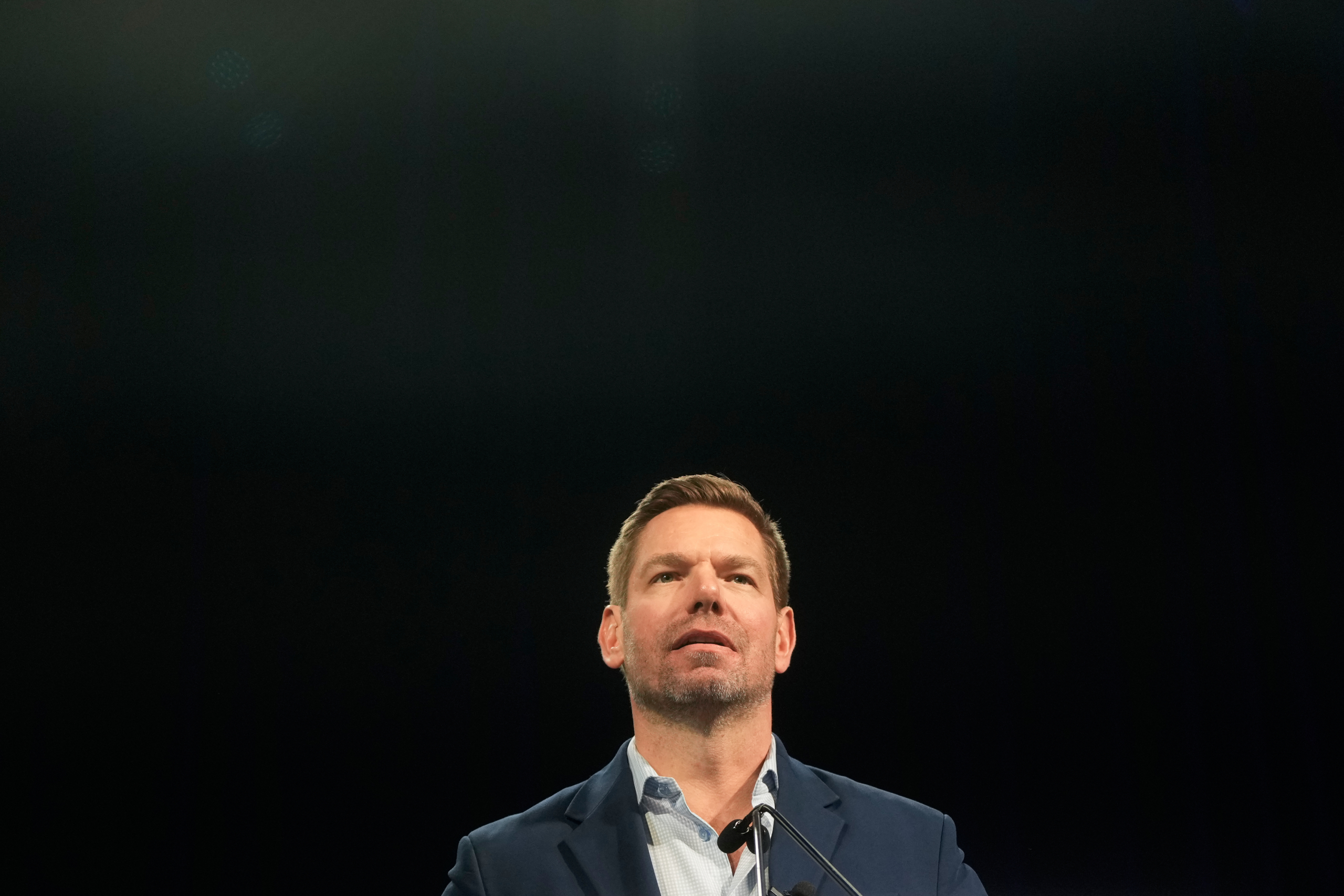
When Eric Swalwell, a Democrat from California, officially resigned from Congress on Tuesday, it was the culmination of months of work by journalists trying to verify whispers that had grown too loud to ignore. The San Francisco Chronicle broke the first story last Friday, reporting allegations from a former congressional staffer that Swalwell sexually assaulted her. CNN quickly followed with its own reporting, which included an account from the same woman and added new accusers to the record. Within days, the stories ended Swalwell’s gubernatorial campaign, his congressional tenure, and likely his political future.
Two content creators, Arielle Fodor, a former teacher who goes by “Mrs. Frazzled,” and Cheyenne Hunt, a lawyer and former congressional candidate, played a key part in the story getting out. They spent weeks publicly sharing allegations against Swalwell while reporters worked in the background to verify them. As CNN noted in its piece: “Most of the women who spoke to CNN initially reached out to one of these influencers, and said that before the social media attention, they had assumed they were alone in their experiences with Swalwell.”
What made the creators’ approach notable wasn’t just their persistence. It was their understanding that social media influence alone would not be enough to take on a powerful politician and care for Swalwell’s accusers. They coordinated with the women who confided in them, helping them find legal counsel and directing them to CNN once they were ready to share their stories. “I have a lot of fears about the blurred lines between content creators and journalists,” Hunt said in an interview with Politico. “I don’t want this to be a green light to creators who think that they should be breaking sensitive news.”
Warnings about Swalwell had circulated privately for years on Capitol Hill. (Notably, CNN published this story in 2017 that seems to clearly reference the Swalwell rumors.) Fodor and Hunt’s understanding of the value of rigorous journalism and instinct to amplify rather than report the story themselves led to a unique collaboration between new and traditional media that finally pushed it into public view. It’s a shame that took so long, but perhaps it will give others the courage and faith to come forward.
An update: Last week we highlighted the tireless work of Bayliss Wagner and Nancy M. Preyor Johnson from the San Antonio Express-News, whose reporting exposed the sexual misconduct of Tony Gonzales, a Republican congressman from Texas. He also resigned from Congress this week.

Sam Tabachnik, an investigative reporter at the Denver Post, first encountered April Morganroth in 2020. He was on a Zoom call to learn about safety protocols for covering George Floyd–related protests when Morganroth, a writer at a sister publication, the Boulder Daily Camera, asked the instructor if she could bring her gun to the demonstrations. “All of us were like, ‘That’s an interesting question from a reporter.’ And the safety instructor was like, ‘Uh no, don’t do that,’” Tabachnik recalled.
A year later, Morganroth was fired for fabricating quotes for a story about the anniversary of 9/11. In a remarkable retraction of nearly nine hundred words, printed on its front page, the Daily Camera said her article “substantially misrepresented the stories of its primary subjects” and admitted to a laundry list of other errors. As one writer put it at the time, it was “a painstaking account of so many inaccuracies and fabrications a reader might understandably wonder if anything was correct.”
For most journalists, that episode would—and should—have been career-ending. Not for Morganroth. She went on to land jobs at a string of local papers under a variety of aliases, leaving a trail that Tabachnik eventually followed. For a report published last week, he tracked her to Wyoming, where she now faces twenty felony charges.
It’s a wild story full of other twists that I’ll let you discover for yourself. It also raises serious questions about how small, underresourced local news organizations vet the people they hire, at a moment when public trust in media is already so fragile. What struck Tabachnik most was how her lies seemed to grow more audacious over time. “She would add more years to her journalism experience. She would add more degrees from universities. Then in Wyoming she started to say, ‘Not only do I have a bachelor’s, I have a master’s and PhD in journalism,’” he said. “That should have been a red flag probably.” Given that brazenness, a little digging likely would have exposed her and spared the newsrooms she worked for from the damage she caused.
Tabachnik said the story also points to a structural vulnerability in local news. “In these kind of rural areas, it can be tough to attract solid candidates, so when these editors and publishers saw this person with this résumé that seemed kind of too good to be true, they were like, ‘Great,’” he said. “Some of these smaller newsrooms are starved for people who can really do the job.”
Dauphin County, Pennsylvania, has a population of just under three hundred thousand and more than a quarter of a billion dollars in casino tax revenue. That windfall is intended for projects that serve the public: improved emergency services, updated infrastructure, and other community needs.
But in an ambitious, deeply reported five-part investigation out this week, presented as a lively interactive, Juliette Rihl and DaniRae Renno, reporters at PennLive and the Patriot-News, found a pattern of misuse and gaming grants being funneled to businesses connected to public officials and their associates. One local official received a grant for forty thousand dollars to deliver produce to low-income residents. He used it to buy a 2020 Dodge Ram 1500, a luxury pickup truck, which sits outside his home. A county commissioner’s brother received a grant for building upgrades to his barbershop. A popular former NFL player received fifty-five thousand for an affordable housing project. Three years later, no land has been secured.
For their reports, Rihl and Renno reviewed more than two thousand gaming grant applications, filed more than sixty records requests to government agencies, and interviewed dozens of people. Rihl told me she submitted the first request nineteen months ago. It’s the type of meticulous, unglamorous work that produces stories that are nearly impossible to report any other way. “We had to build multiple databases,” Rihl told me. “We had to look through every single application—not just from businesses, but all of the applicants—to get a sense of who was trying to get this money and then compare it to where it was actually going in the end.”
The impact was immediate. The day after the story ran, Rihl reported that Dauphin County commissioners vowed to reform the gaming grant program and increase oversight of future projects. Rihl and Renno’s investigation isn’t over. So far, the county has released only about a quarter of the grant requests.
Hat tip to Bill Grueskin for the PennLive/Patriot-News story. If you have a suggestion for this column, please send it to laurelsanddarts@cjr.org. We can’t acknowledge all submissions, but we will mention you if we use your idea. For more on Laurels and Darts, please click here. To receive this and other CJR newsletters in your inbox, please click here.
Has America ever needed a media defender more than now? Help us by joining CJR today.