Sign up for the daily CJR newsletter.

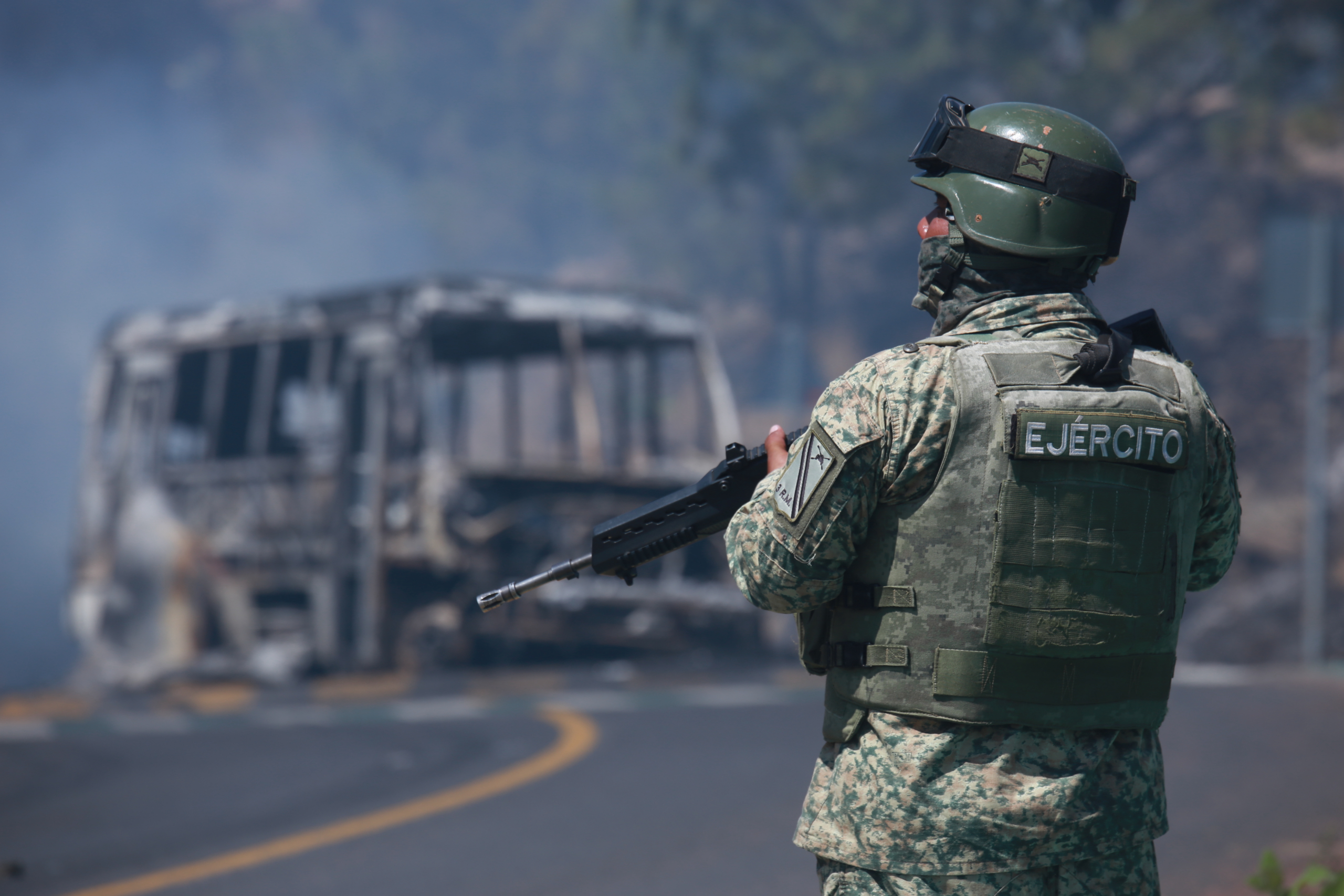
On Sunday, Nemesio Oseguera Cervantes—the nation’s most feared cartel leader, known as El Mencho—was killed in a dramatic military raid. The killing of El Mencho, who led the powerful and brutal Jalisco New Generation Cartel (CJNG), sparked retaliatory violence across the country.
Much of the coverage in the United States focused on the impact of the unrest on American tourists and retirees. The Los Angeles Times, by contrast, has taken a more thoughtful approach, publishing several deeply reported pieces, including an insightful profile of El Mencho from Keegan Hamilton that traces Oseguera’s rise from small-time California drug dealer to the head of CJNG.
Hamilton, a senior editor at the Times, has covered the Mexican drug trade and cartels extensively. He returned to reporting and writing for this story, building on his previous work at Vice News, where he hosted an excellent podcast on El Chapo and secured unprecedented access to the CJNG for this report from the front lines of Mexico’s drug wars. “It is super important to hear from cartel members themselves,” Hamilton told me when I spoke with him this week. “Hearing what they have to say about why they do the things they do, understanding where they came from. I think that really gets to the root causes of the violence in Mexico and provides a perspective that isn’t often heard.”
Hamilton first became interested in the influence of the cartels while covering crime for alt-weeklies in Seattle and St. Louis. He believes that covering the drug trade well requires trying to understand its leaders, rather than reducing them to one-dimensional villains. “I have been to the part of Michoacán where this guy was from,” he said. “And you can kind of imagine how somebody who’s eighteen, nineteen years old and comes from a big family and is super impoverished is going to do whatever it takes to survive. And if that’s the drug trade in San Francisco, if that’s the only way to feed your family, he’s going to do that. And then, of course, the unique twist is a lot of people do that. There’s a lot of drugs in San Francisco. A lot of people sold drugs in San Francisco, but only one goes on to become El Mencho.”

Apparently, for many journalists, the State of our Union is collective amnesia. On Tuesday, the previews of Donald Trump’s address suggested that we should approach it as if encountering him anew. The Atlantic explored “what Donald Trump’s State of the Union address could achieve—if he doesn’t get in his own way.” The Wall Street Journal touted an exclusive, declaring, “Trump to Sell the Economy During State of the Union Address,” which read more like wishful thinking from his aides than insight into a plausible reality. On CNN, there was much discussion about the decorum of the Democrats: Would they show up? Would they interrupt? Never mind that the speech was being delivered by a man who recently called a reporter “piggy,” has repeatedly shared a vile conspiracy theory that Representative Ilhan Omar married her brother, and just last week suggested that several Supreme Court justices are “unpatriotic” and “swayed by foreign interests.”
The pundit class generally agrees that the State of the Union is largely political theater, unlikely to move voters or shift the president’s dismal poll numbers. This year, the interminable speech—the longest on record—felt even more like a spectacle than a serious address. And it was made all the more surreal by Trump’s game-show-host instinct to summon the US men’s Olympic hockey team to come on down and award presidential medals live.
Initial reviews graded Trump’s performance on a curve, acknowledging that he did little to reset the narrative but giving him credit for passing the absurdly low bar he had set going into the evening. “Trump finally stayed on script,” Axios declared, while chastising Democrats for taking “the bait.” Politicocredited Trump with avoiding “rambling, angry digressions from the script.” On CNN, Abby Phillip commended the speech as “skillfully done” and “higher energy” than last year. I suppose we can at least be grateful no one repeated Van Jones’s now-infamous 2017 verdict: “He became president of the United States in that moment. Period.”
For more than a century, the Smith family has owned one of the largest Black-owned farms in Georgia. Their grandfather, a sharecropper and descendant of slaves, bought the land, roughly six hundred acres, by trading in his cotton harvest in the late 1920s. But now, in a cruel twist of fate, a railroad company owned by a descendant of a slave owner is attempting to seize the Smiths’ property, as well as the land of other poor Black farmers in the state, through eminent domain.
In a report for Capital B, Adam Mahoney and Aallyah Wright visit Sparta, Georgia, to meet the families fighting the railroad’s attempt to cut a stretch of track through their backyards. The seizure would split eight working farms in half, making it extremely difficult to work the land.
Locals say the proposed rail project would primarily serve the private interests of Benjamin Tarbutton III, the railroad’s owner, and argue that it is an improper use of eminent domain, which is supposed to serve a public good. Sparta is one of the poorest and Blackest towns in the state and, as Mahoney and Wright note, “eminent domain falls hardest on Black and brown communities, where political power is weakest.”
One of the Smiths’ neighbors, whose property is also targeted for seizure, is Ida Lowe Blocker. Blocker, ninety-two, inherited the land from her great-grandmother, who was formerly enslaved, and her family has lived in the area since the 1800s. She sees the attempted land grab as a reflection of a long history of disenfranchisement in the area. “This is a thriving Black community, has been for approximately 200 years,” she tells Capital B. “Some don’t care if it continues to be.”
Correction: This post has been updated to reflect Keegan Hamilton’s biographical information.
If you have a suggestion for this column, please send it to laurelsanddarts@cjr.org. We can’t acknowledge all submissions, but we will mention you if we use your idea. For more on Laurels and Darts, please click here. To receive this and other CJR newsletters in your inbox, please click here.
Has America ever needed a media defender more than now? Help us by joining CJR today.