Sign up for the daily CJR newsletter.

“Don’t mess with the Fed” is standard advice for presidents and lawmakers. The idea is that, no matter how much you might disagree with any particular Federal Reserve decision on interest rates, the board’s independence is critical to ensuring confidence in the US economy.
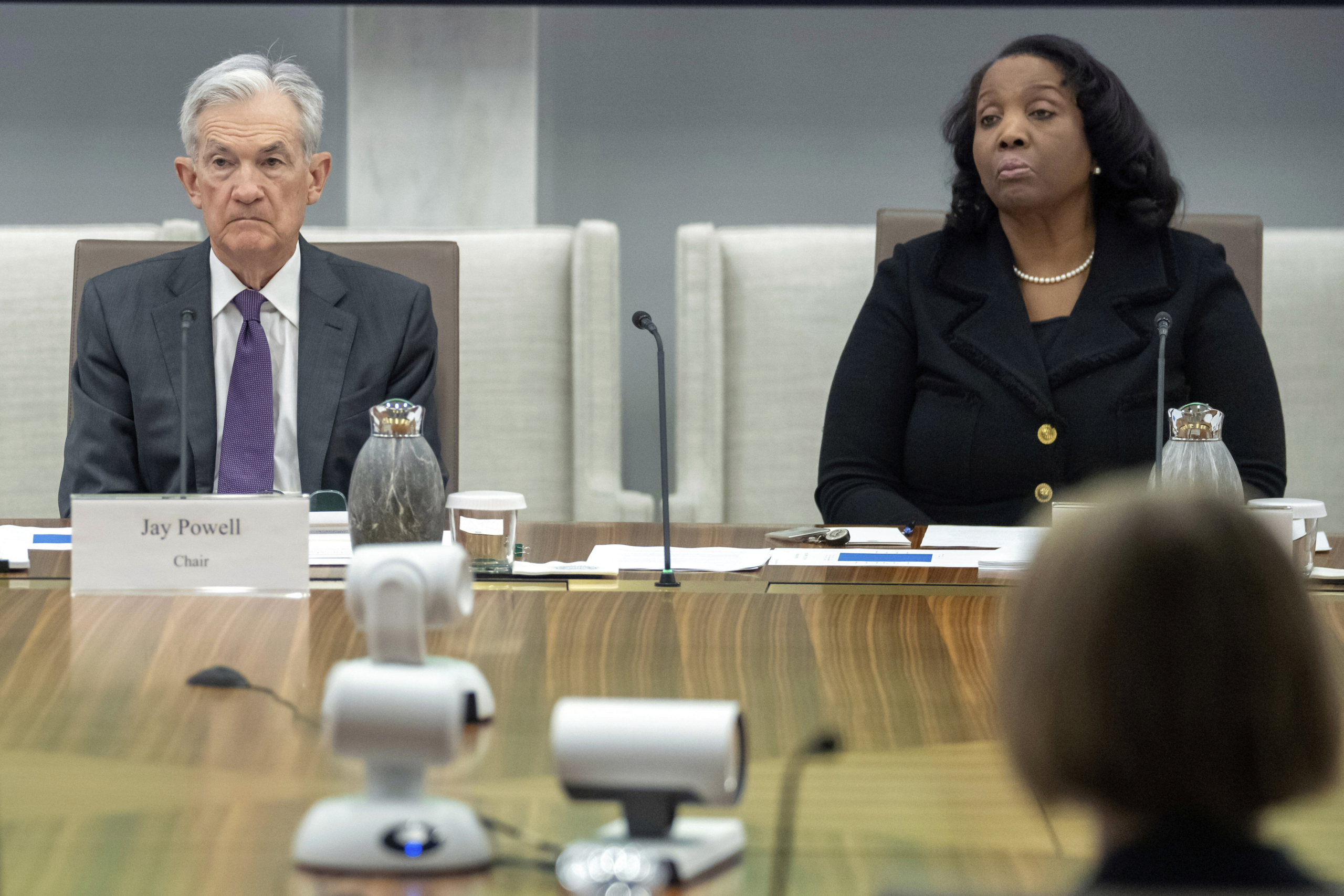
That went by the wayside this summer after President Trump lambasted the Fed’s chair, Jerome Powell, and then escalated his attacks by pushing to have Fed governor Lisa Cook removed altogether. His chief ally has been Bill Pulte, the lucky grandson of a major homebuilder, who seems to have two jobs: director of the Federal Housing Finance Agency, and MAGA flamethrower on Twitter.
Pulte came up with an allegation (and a criminal referral to the Justice Department) that Cook had improperly claimed more than one property as a primary residence, supposedly committing fraud in the process.
Pulte might’ve called Dad first. Thanks to digging by Reuters’s Marisa Taylor, Chris Prentice, and Mike Colias, we now know that Mark Pulte and his wife, Julie (Bill’s stepmom), have been claiming homestead exemptions for properties in both Michigan and Florida since 2020. That can help cut tax bills, and that is also improper since most couples can have only one homestead. Michigan officials are sending a bill for back taxes to Pulte’s dad. (New Father’s Day card: “You’re the best, Pops! And sorry for siccing the tax guys on you. Your loving son, Bill.”)
But wait. There’s more. A week later, Prentice and Taylor found loan papers from 2021 showing that Fed governor Cook had declared one of the two suspect properties as a vacation home. The document “shows that she had told the lender that the Atlanta property wouldn’t be her primary residence,” the Reuters team reported.
Meanwhile, Trump’s crusade against Cook is in limbo. An appeals court ruled, 2–1, this week that the administration didn’t give her adequate time to defend herself. And, it should be noted, she hasn’t been charged with a crime.

That car isn’t used. It’s “pre-owned.”
That house isn’t a wreck. It’s an “investor’s dream.”
That paragraph isn’t a correction or a clarification. It’s an “editor’s note.”
We journalists pride ourselves on being truth-tellers, but when it comes to our own mistakes, we sometimes omit details and context, leaving readers to wonder what the problem was or how it came to pass. Which is what happened with two prominent news organizations in the wake of the horrific murder of Charlie Kirk and subsequent arrest of Tyler Robinson.
We’ll begin with the Wall Street Journal reporting this the day after the shooting, on September 11: “Investigators found ammunition engraved with expressions of transgender and anti-fascist ideology inside the rifle that authorities believe was used in the fatal shooting of Charlie Kirk, according to an internal law enforcement bulletin and a person familiar with the investigation.” The next morning, amid concerns about the claim, the Journal tweaked the lede and backtracked a bit, opening with “An early bulletin circulated widely among law enforcement officials said” and putting quotation marks around “transgender and anti-fascist ideology.” This version also added this key line: “But some officials later Thursday cautioned against reaching conclusions based on the internal report.”
The Journal soon amended the piece yet again, appending a 317-word editor’s note. It stated that the Utah governor, Spencer Cox, had mentioned a “Hey fascist!” engraving but that he “gave no indication that the ammunition included any transgender references.” And it noted Justice Department officials’ warning that the bulletin the Journal had quoted “may not accurately reflect the messages on the ammunition.”
Days later, the whole thing is a haze. The meaning of “Hey fascist” remains unclear: Did it reveal Robinson’s “antifa” sentiments, or was it the gauzy lingo of gamers, which most mainstream journalists (including myself) are ill-equipped to understand? Things got no clearer on Tuesday, when we learned that Robinson allegedly wrote this to his roommate after the shooting: “remember how I was engraving bullets? The fuckin messages are mostly a big meme.”
In the most literal sense, the Journal’s report appears not to have been inaccurate: it was repeating something law enforcement had stated. Elena Cherney, a senior Journal editor, told CJR’s Ivan L. Nagy that its reporting “wasn’t an error” and that its changes were a matter of posting an “update to an existing story.” Nevertheless, while other news organizations likewise reported on that early bulletin, they were far more careful to highlight the ambiguity, and officials’ warnings.
Moreover, if you’ve covered cops before, you know they often say stuff that turns out not to be true. Sometimes they’re lying, but sometimes they’re just passing on the flotsam that rises to the surface of any complex breaking investigation. Those pieces might turn out to be essential, verified facts, or they might be rumors that wouldn’t make it past a judge.
A more mysterious editor’s note relating to the Kirk shooting appeared in The Guardian, whose website reported, two days after the shooting, that a high school friend of Robinson’s found him to be “pretty left on everything” and that he was “the only member of his family that was, like, really leftist.” This characterization went viral, especially for those who, like President Trump, were seeking to portray the killing as an act of “the radical left.”
But hours later, this paragraph appeared atop that three-byline story: “Editor’s note: This article was updated on 12 September 2025 to remove quotes after the verified source who attended high school with Tyler Robinson said after publication that they could not accurately remember details of their relationship.”
I couldn’t recall ever seeing an editor’s note like this. So I spoke to a senior Guardian editor who was aware of the matter but asked not to be named in order to discuss internal newsroom details. (Several details of this account were confirmed by another Guardian staffer.)
The Guardian, I was told, started by doing due diligence to ensure that its source actually was a classmate of Robinson’s. So far, so good.
But its sole source for Robinson’s alleged leftist leanings was this unnamed classmate. And soon after the story ran, the person who had put The Guardian in touch with Robinson’s classmate contacted the newsroom, having just seen “screenshots of a private chat in which the source is joking around with their friends” and become “fearful that the source has deliberately misled us.” So The Guardian reached out again to the classmate, asking what the truth was. The backtracking started right away. The Guardian editor characterizes the classmate’s response this way: “Oh, it was all such a long time ago. I misremembered. Actually, politically, he [Robinson] was neutral to left-leaning. I don’t really know. I just can’t remember stuff so well.”
You can see the problem. Within hours of claiming that Robinson was “really leftist,” the source flipped the script. But not all the way. The source isn’t saying they got it wrong, just that they weren’t sure they got it right.
So did the source have a bad memory? Or was this person just having a blast, making a mainstream publication look foolish? Whatever the motive, the Guardian editor told me, “at that minute, we’re under an obligation to correct the record as quickly and transparently as possible. So that is what we did.”
These cases share a problem: in both, a news organization published highly charged information about a huge breaking story without enough context or confirmation. In the Journal’s case, some investigators passed on a tip, which was parroted, then couched. In The Guardian’s case, a source provided a characterization that turned out to be unverifiable and possibly false. To its credit, The Guardian did quickly notify readers that the claim was shaky; I can imagine other news organizations simply shrugging and staying silent, on the premise that the source said what they said.
A lot of the old adages about the news business have become obsolete, but there’s one about breaking news that still rings true: “Get it first, but first get it right.”
Arkansas has a problem similar to many states: as it has abolished or limited parole for many of its prisoners, its correctional facilities are overflowing. One solution is to build more prisons, and one problem is that some communities don’t want one nearby.
Lauren Gill, a reporter for Bolts, went to Franklin County, Arkansas, to dig into Gov. Sarah Huckabee Sanders’s plans for a massive prison project there. It’s in trouble, and Sanders and her allies have themselves to blame.
The plan was concocted in secret as the state negotiated a $2.95 million purchase price for the site. One official, when asked about the land deal, even told his colleague that the land was “not for a prison.… We are purchasing it to pursue our own corporate purposes.”
Residents shared concerns about water and development issues, and they also started to question the underlying assumptions behind prison expansion. “As I’ve come to know more and more, I’ve just been horrified about our entire prison system,” one local told Gill. Others were concerned about what the facility might mean for their community. One woman had moved to Arkansas from her Texas home, which was near a prison, and now she faced the prospect of the same issue in her new place. “I don’t want to raise my son in a prison town,” she said. “I mean, that’s the quickest answer, right?”
If you have a suggestion for this column, please send it to laurelsanddarts@cjr.org. We can’t acknowledge all submissions, but we will mention you if we use your idea. For more on Laurels and Darts, please click here. To receive this and other CJR newsletters in your inbox, please click here.
Has America ever needed a media defender more than now? Help us by joining CJR today.