Sign up for the daily CJR newsletter.

America’s national parks are facing unprecedented political and environmental challenges. Over the past fourteen months, the Trump administration has systematically dismantled protections for protected lands, despite record-high visitation. Much of what we understand about those efforts is due to the excellent and rigorous reporting of Ashley Harrell, the national parks bureau chief for SFGate, and her team.
It appears their coverage has touched a nerve. Last week, Harrell reported that, according to internal communications she reviewed and interviews with a number of sources, the Department of the Interior has effectively blacklisted SFGate. “We have received direction to not respond in any way to any inquiries received no matter the topic from SFGate,” an employee shared with her. Another said they were told the publication isn’t “in line with the administration’s views.”
A story Harrell published in February, about new and sweeping rules that dramatically restrict National Park Service communications with the public and the press, apparently triggered the ban. The changes are tied to a broader directive to present a more positive, “patriotic” view of American history on public lands. As a result, references to topics like climate change, slavery, and other historical injustices are being removed from park materials. The Interior Department has also publicly targeted Harrell on its X account over her reporting about lawlessness in Yosemite National Park.
Even without a blacklisting, covering the parks can be challenging. Federal employees are forbidden from speaking to the press, and this administration has been openly hostile to journalists. But Harrell and her team are undeterred: “We’re going to keep doing what we do and tell the stories of the national parks that matter most to our readers,” she told me.
It’s clear that SFGate’s work does matter. The national parks bureau, which debuted last year, has been SFGate’s most successful expansion project, driving thirty million site visits in 2025 and representing 12 percent of all site traffic. It’s proof that in journalism, good work is often good business. “We live in divisive times, and if there’s anything that brings people together from different backgrounds, I think it’s a love of national parks,” Harrell told me. “There’s a reason that they are often referred to as America’s best idea. And I think that, as Americans, protecting national parks is one of our deeply held shared values.”

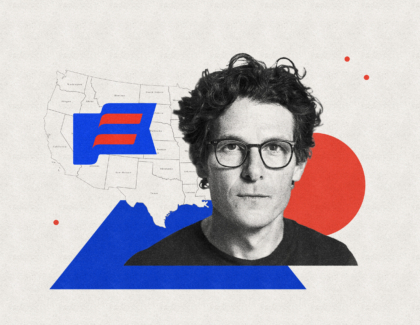
Joe Hagan’s latest piece for Vanity Fair is about Anthropic and the role it plays in the Silicon Valley AI ecosystem. He says the company offered “to roll out the red carpet” for his profile, including the promise of an interview with Dario Amodei, the CEO. For the story, Hagan visits the company’s headquarters, in downtown San Francisco, where he’s greeted by a friendly communications person with a nose ring and tattoos, and is taken from one conference room to another, to meet various employees. At the end, he meets Amodei, writing: “The shoes are what get me first. Brown, clodish things that split the difference between sneakers and orthopedic shoes, even though he’s the son of an Italian leather craftsman. Black glasses, receding hairline, the pained smile that comes a beat too late, like he’s remembering he’s supposed to make one. Rick Moranis in Ghostbusters, without the colander.” Good descriptive writing of their meeting!
Except, as Hagan reveals only at the end, “none of that is real.” Amodei never actually sat down with him, and instead Hagan “fed Claude several published interviews, including everything Amodei said at Davos, plus the contents of his two books of essays, and told Claude to simulate the interview using variations on real quotes—and to make it like a scene from Raymond Chandler’s The Big Sleep.”
It’s not exactly unethical journalism, because he does fully disclose the deception eventually—but it is generally bad. It’s a gimmick that doesn’t really reveal anything interesting or contribute to your understanding of Anthropic in any meaningful way. And it’s not clear why so many very specific lies had to be introduced into the narrative for the fake interview to work. Even if you don’t object to the use of AI in journalism (I don’t in all cases), Hagan points out the problem with Claude producing hallucinated quotes early on in the piece, writing, “I pray it’s doing better in examining MRIs for cancer patients.” He does seem to be aware, at least, of the meta weirdness of this story. He made the most obvious joke about the piece when he posted it to his Substack with this headline: “Dario Amodei Has a Cold.”
This month, Wired broke the news that Grammarly, the writing-assistance software, had introduced a bizarre new feature called “expert review.” The product was an AI agent that made suggestions supposedly inspired by real subject-matter experts, even though those “experts” were not affiliated with Grammarly and did not give the company permission to use their names or work in this way. The Verge quickly followed Wired’s reporting with its own piece, which found that four of its staff members, including Nilay Patel, the editor in chief, had been included in the list of experts without their knowledge.
The Verge found a number of other reporters included, such as Casey Newton of Platformer and Kashmir Hill of the New York Times. Julia Angwin, another of the “experts” offered in the feature, has filed a class action lawsuit against the company. (This is the opinion piece she wrote for the Times about it.) Superhuman, Grammarly’s parent company, has since killed expert review and apologized, admitting it “fell short.”
By a stroke of scheduling luck, Patel had already booked Shishir Mehrotra, the CEO of Superhuman, for his Decoder podcast. The resulting interview, which appeared this week, is an incisive and challenging conversation that reveals the profound disconnect between Mehrotra’s position and that of the journalists whose names he traded on without their consent. Here’s one exchange:
NP: How much do you think you should pay me to use my name?
SM: So I think it’s really important to think about attribution and think about impersonation and so on. As an expert, you have a trade you make on the internet. The idea is that, when you put content out there, myself included, you hope people use it. You want to refer to other people’s content. You want people to link to you. You really, really hope they attribute you when they do. When somebody uses your content, should they attribute you? Of course. And to attribute you, you have to use your name.
Throughout the episode, Mehrotra repeatedly insists that the expert-review function was a form of attribution, which raises the question of whether he fundamentally understands what the word actually means. Patel seemed equally perplexed:
NP: I’m not sure why this is an attribution. Like, if I’m like, “I talk to Shishir, and I think here’s what he would say,” that’s very different than saying, like, “I read all of his work, and I’ve asked, you know, whatever quick version of Claude or ChatGPT to just make something up, and I’m gonna put his name on it.” Like, there’s something meaningfully different there, and it doesn’t seem like you’re willing to concede that.
SM: No, I’m not.
As a host, one of the hardest things to do is to lean into awkward moments and keep pressing even when it’s clear the guest wants to move on. Given that Mehrotra apologized up front and admitted that expert review was a bad product, it would have been natural to let him off the hook. But Patel’s persistent questioning makes for a far more interesting interview and reveals a striking shamelessness in how AI leaders think about their responsibilities to the writers whose work is essential to their project.
If you have a suggestion for this column, please send it to laurelsanddarts@cjr.org. We can’t acknowledge all submissions, but we will mention you if we use your idea. For more on Laurels and Darts, please click here. To receive this and other CJR newsletters in your inbox, please click here.
Has America ever needed a media defender more than now? Help us by joining CJR today.