Sign up for the daily CJR newsletter.

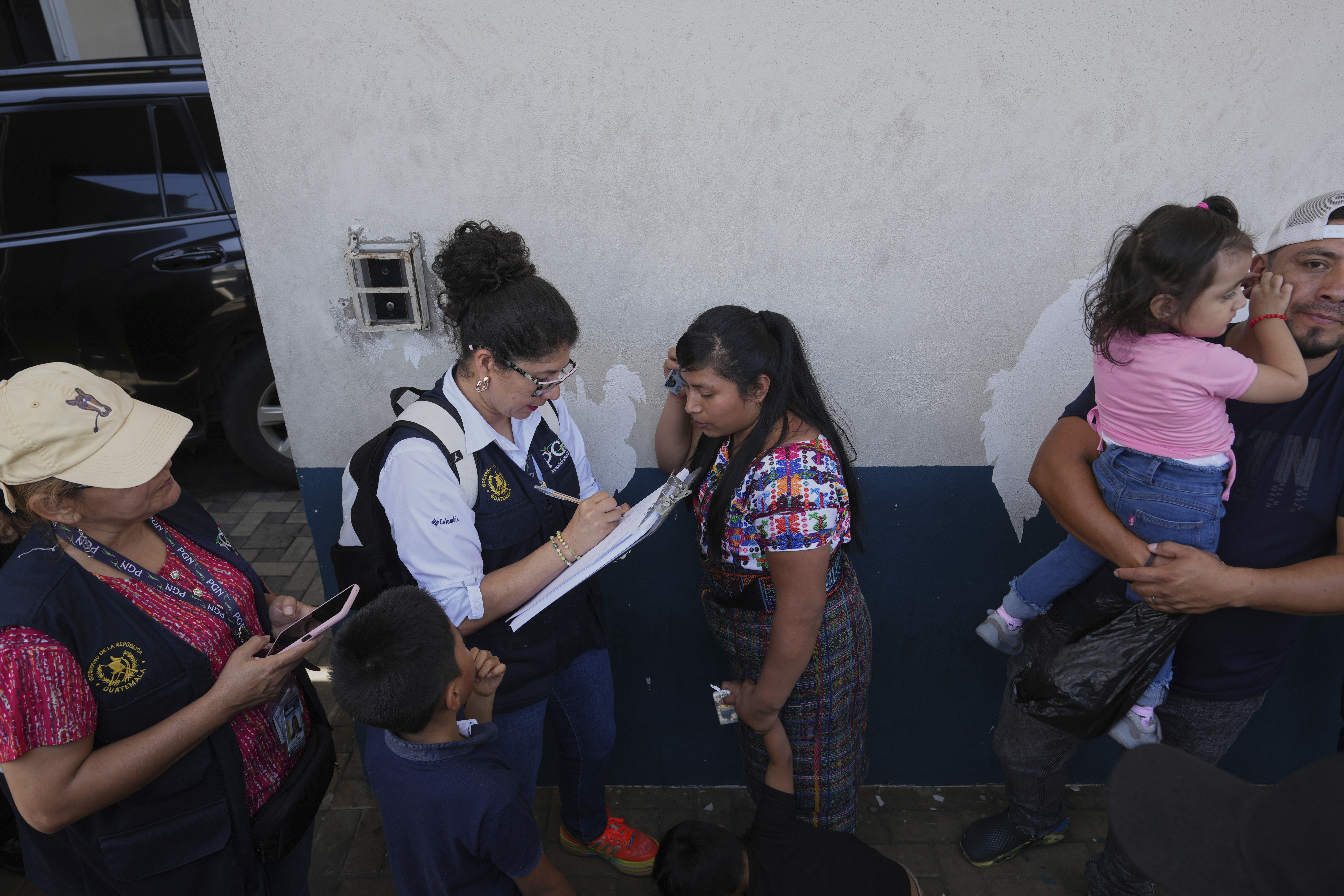
Around 1pm EDT Sunday—yes, smack in the middle of Labor Day weekend—one of the most dramatic court hearings in recent memory got underway in Washington. US District Court Judge Sparkle L. Sooknanan wanted to get to the bottom of why the government was about to send dozens of unaccompanied Guatemalan children back to their home country. And by “about to send,” I mean that the kids were loaded onto airplanes that were set to take off.
For the judge, it had already been a long day. At 2:36 that morning, attorneys for the kids alerted her that the government was planning this operation. And, with the knowledge of how the Department of Homeland Security secretly renditioned hundreds of immigrants to a Salvadoran prison earlier this year, she was racing to ensure the kids’ rights were protected before the planes left US airspace.
Given the timing over the holiday weekend, many of you might’ve been grilling a burger or frolicking in the waves. But not reporters like Joshua Friedman, Anna Bower, and Kyle Cheney. They were tuned in to Sooknanan’s hearing and posting about it, in real time, so the rest of us could understand the gravity of the hearing and the candor of the judge as she interrogated the DOJ lawyer—especially as the government’s claim that the children wanted to return was effectively challenged by the plaintiffs.
Unlike Bower or Cheney, who write for Lawfare and Politico, respectively, Friedman is a freelancer who seems to cover hearings such as Sooknanan’s for the love of the game. He doesn’t have a law degree, though he has been writing about the courts on and off for more than a decade. Over time, he told me via email, he has come to appreciate the way human dramas play out within the four walls of a courtroom—“It’s theater! It’s philosophy! It’s justice!”—and that it is the journalist’s job to capture that, as well as to explain the arcana that lie behind decisions that shape our lives.
But posting live before an audience of 177,000 Bluesky followers isn’t easy, especially when the stakes are so high. “There’s always an interesting push and pull between trying to transcribe every word and stepping back to get a sense of the larger points being made and what the reading audience is likely to take in,” Friedman wrote. “In other words, it’s a challenge to be writer and editor simultaneously. I just try to err on the side of omitting anything I’m not certain of, because readers don’t really benefit from reading every single uttered word anyhow.”
And, as all good reporters know, preparation is key. “I do the best job when I’m thoroughly familiar with the case ahead of time,” Friedman said, “because judges and advocates allude to statutes and precedent…in shorthand.”

Boston Red Sox manager Alex Cora has some advice for the New York Yankees. He thinks that their batters should swing at pitches in the dirt (because you never know when a chip shot might clear the fences) and that their outfielders should let routine fly balls hit the grass (to fool runners into thinking they can take an extra base).
Okay, Cora never said those things. And one reason is that sportswriters don’t typically ask managers to advise their historical rivals.
But some political writers, inexplicably, do this, and the result can be as risible as Politico’s recent feature titled “Trump Is Leaning in on Crime. Democrats Need a Better Response—and Fast.”
The gist of the story is that President Trump had, once again, caught the Democrats flat-footed, this time by sending National Guard troops into Washington, DC, as a way to combat crime. One of the helpful consultants for the Democrats in the Politico piece is Karl Rove, the architect behind George W. Bush’s election wins. Also quoted as approving Trump’s strategy: an unnamed “White House official” and an unnamed “senior official” from the National Republican Congressional Committee. There’s also a “Democratic strategist” and podcaster who served on Hillary Clinton’s Senate campaign nearly two decades ago and recently worked for more than six years as a lobbyist for H&R Block.
The Politico story also musters a poll from Mark Penn, the former Bill Clinton adviser who rarely misses a chance these days to support Trump or criticize Democrats. His survey purports to show 54 percent of Americans backing the additional law enforcement in DC.
Truth is, it’s too early to say how Trump’s anti-crime strategy will play out, especially if he expands to other blue cities. And one way we know what we don’t know is this: just one day after that Politico story ran, the respected Quinnipiac University released a poll with 56 percent of Americans opposing the deployment of troops to Washington. In other words, it’s the mirror opposite of the Mark Penn poll.
There are ways—inexact, but useful—to help readers understand how public sentiment is shaping up around a policy decision. That includes using polling averages, delving into political strategies, and talking to citizens on the ground. Not on that list: asking operatives from one political party what the other one ought to be doing.
Three years ago, Texas passed a tough anti-abortion bill, making the procedure a felony punishable with a life prison term, and with only rare exceptions. At the time, physicians warned that the restrictions could lead to deaths of patients who needed the procedure when facing troubled pregnancies.
How did Texas address that problem? By making it almost impossible to detect the problem, after the state’s Maternal Mortality and Morbidity Review Committee decided it wouldn’t investigate maternal deaths from 2022 and 2023.
Well, Texas made it almost impossible. Dallas Morning News reporters Lauren Caruba, Marin Wolf, and María Ramos Pacheco culled hundreds of pages of autopsies and other records involving maternal deaths to find heartbreaking cases of patients who died after hospitals declined or delayed the procedures, despite the women’s dire prognoses. One example: Brenda Yolani Arzu Ramirez, who was five months pregnant when she arrived at the hospital feverish and vomiting, showing signs of sepsis. Rather than perform an abortion, doctors induced delivery, with a fatal result for mother and child.
Physicians told the Morning News team that their decision-making in cases involving pregnancy loss is now riddled with fear. “I think doctors are terrified,” said one ob-gyn who practiced in Austin for almost four decades before retiring.
The story is part of a package the Morning News has been doing for months, titled “Standard of Fear.” Each piece is riveting.
If you have a suggestion for this column, please send it to laurelsanddarts@cjr.org. We can’t acknowledge all submissions, but we will mention you if we use your idea. For more on Laurels and Darts, please click here. To receive this and other CJR newsletters in your inbox, please click here.
Has America ever needed a media defender more than now? Help us by joining CJR today.