Sign up for the daily CJR newsletter.
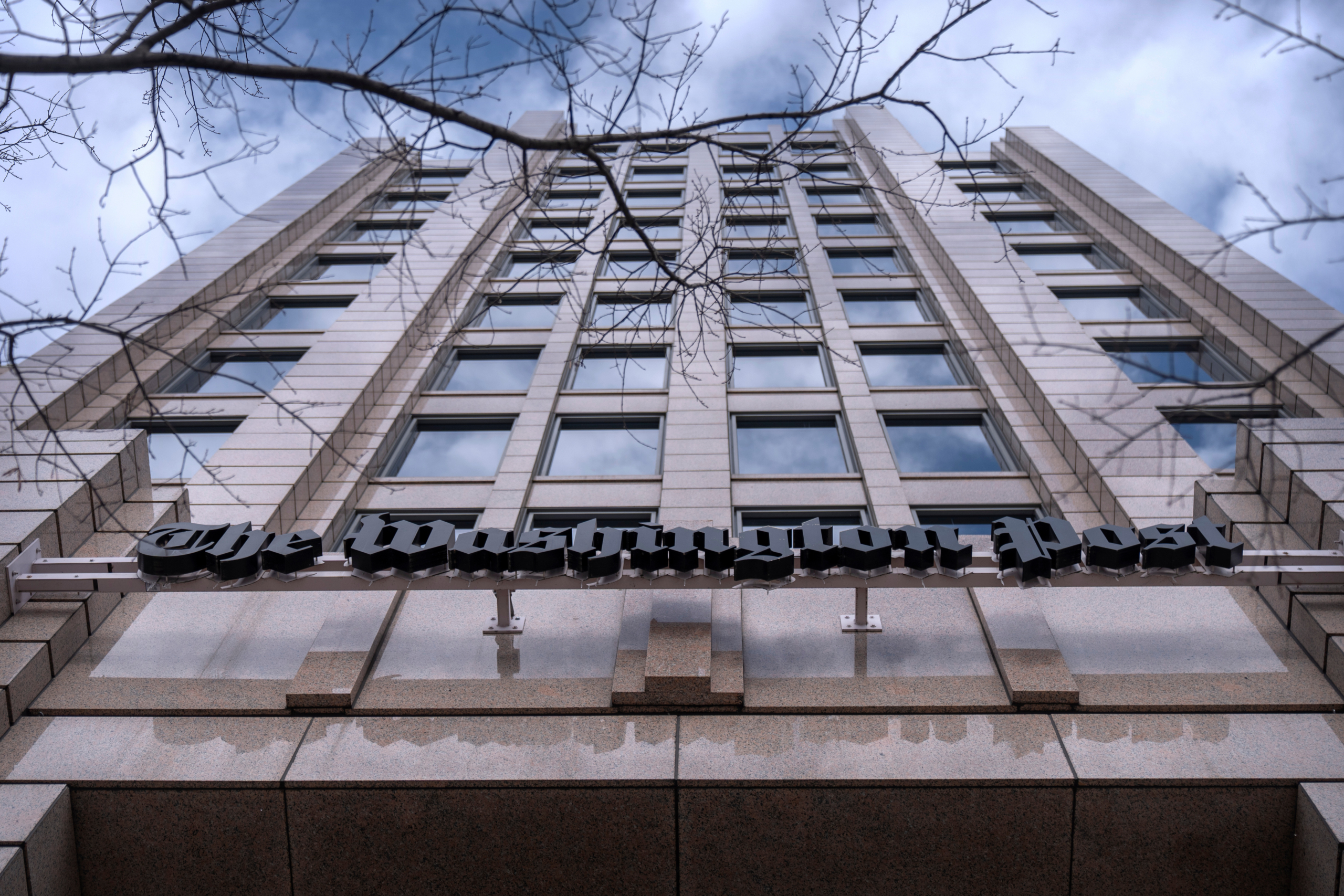
In a staff-wide call with employees Wednesday morning, Matt Murray, the executive editor of the Washington Post, and Wayne Connell, the paper’s chief human resources officer, announced sweeping staff cuts. “Every department across the newsroom will be impacted to some degree,” Murray said, in a recording of the call shared with CJR. The sports department and books section will be closed; Post Reports, a politics podcast, will be suspended. The paper’s international footprint will shrink, though Murray told staff, “We will continue to have a strategic overseas presence in close to a dozen locations with a focus on national security issues.” The metro team will be restructured. The number of editors at the Post will be “significantly reduced”; art teams will be merged. “These moves are painful,” Murray said. “This is a tough day.”
Politics and government, Murray told staff, will remain the largest part of the Post news operation. “A strategic reset is needed,” he said. “Over the years we simply haven’t evolved our model, or many operations and processes, as much as we should have,” he added. “These are difficult, really disappointing realities to wrap our heads around,” he said. “There’s no one event, no easy point of blame we can point to, it’s built up over a long time.” Some reporters from the sports team, he noted, will be reassigned to the features desk. Among the journalists losing their jobs are Ishaan Tharoor, Eva Dou, Jesus Rodriguez, Dino Grandoni, and Nilo Tabrizy, who just last week was given a laurel by CJR for deeply personal, effective coverage of the events unfolding in Iran. Caroline O’Donovan, who has covered Amazon for the Post, is also being laid off, along with the full lineup of correspondents and editors covering the Middle East and both the Ukraine bureau chief, Siobhán O’Grady, and correspondent, Lizzie Johnson.
Layoffs have been rumored for weeks. Inside the newsroom, a sense of dread has been pervasive for much longer. “The feeling in the newsroom is that the way they’ve handled this is like some kind of sick psychological warfare,” said a staffer—who, like others, spoke on the condition of anonymity, for fear of being forced out of their job. Links to media reporting on the layoffs have been “passed around like samizdat,” another staffer said. It felt like “a guillotine over our heads.” And “despite all that, from a reporting perspective, the paper’s been doing good work.”
Much of the frustration has been directed toward Jeff Bezos, the Amazon founder who bought the paper in 2013, and Will Lewis, a veteran of Rupert Murdoch’s News Corp who came on board as publisher in 2024. Lewis is “charming, in his way,” the second staffer said. “He’s a bit of a bullshiter. If he has some great plan to turn around the business of the Post, it’s never been evident.”
“I want to be explicit that the Washington Post’s commitment to riveting and impactful journalism of the highest caliber, that holds power to account without fear or favor, that entertains and informs, and helps people live better lives, remains as robust as ever,” Murray said. “I believe in that. That’s why I’m here. And, importantly, I am a hundred percent confident that that commitment goes to the very top reaches of our company.”
“The Washington Post is taking a number of difficult but decisive actions today for our future, in what amounts to a significant restructuring across the company. These steps are designed to strengthen our footing and sharpen our focus on delivering the distinctive journalism that sets the Post apart and, most importantly, engages our customers,” a spokesperson for the company told CJR.
“This ranks among the darkest days in the history of one of the world’s greatest news organizations,” Marty Baron, the former executive editor of the Post, said in a statement. “The Washington Post’s ambitions will be sharply diminished, its talented and brave staff will be further depleted, and the public will be denied the ground-level, fact-based reporting in our communities and around the world that is needed more than ever.”
Sources across the newsroom point to Bezos’s eleventh-hour decision to pull the editorial board’s endorsement of Kamala Harris as a turning point. In the days that followed, more than 250,000 readers canceled their Post subscriptions. “The sentiment is that the Post’s existing financial problems were drastically deepened by his yanking of the Harris endorsement and his remolding of the opinion pages, which led to a subscriber exodus,” the staffer said. “Paired with a failure to otherwise generate more revenue, it created a worse crisis for the business that we will now suffer for.” More recently, after the FBI raided the home of Hannah Natanson, a Post reporter, in connection with a leak investigation, “there was particular annoyance that Bezos didn’t say anything,” the staffer added.
As New York magazine’s Charlotte Klein recently catalogued, Lewis has pushed a string of projects that don’t seem to have gained traction, including WP Ventures, a “third newsroom” focused on “creator-driven experimentation,” and WP Incubator, an “initiative for building cutting-edge AI products and new media business models.” Lewis “started all these initiatives and then abandoned them almost immediately. He hasn’t actually proposed any ideas that have been successful,” a third staffer said. “I’d love to know how much money we’ve spent on AI experiments that barely anyone has engaged with.
“All publications are dealing with huge amounts of traffic loss because of AI summaries,” the staffer observed. “That’s not unique to us. But we’ve responded with these totally failed fad AI products of our own, when the way every other organization that’s been successful in dealing with this has done it is through leaning into personalities.” Thanks to Bezos’s well-publicized instructions, the staffer said, “we’ve been blocked from the human approach because our leadership destroyed our brand.”
In an X post from last February announcing dramatic change to the opinion section, Bezos wrote, “We are going to be writing every day in support and defense of two pillars: personal liberties and free markets. We’ll cover other topics too of course, but viewpoints opposing those pillars will be left to be published by others.” A former staffer who recently left the Post (and also spoke on the condition of anonymity) said that, under Bezos’s guidance, the opinion section effectively began to mimic the National Review, the conservative magazine. “There’s a lot of conservative media properties that have taken off like wildfire and drawn big audiences. The National Review is not one of them. It’s not a play you make if you’re trying to bring in an audience,” the former staffer said. “The one place that he’s putting his imprint on has been a play that will absolutely bring in the minimum number of subscribers possible, while also deliberately chasing away the ones who are bringing in the most traffic. It seems like a jerk move to take it out on the sports desk, rather than pay for it yourself.
“The big mystery is why he doesn’t just sell,” the former staffer said. It’s a question that echoes across the newsroom. “He has a large business empire that is vulnerable to White House decisions. Why not find someone who would be the steward he said he would be?”
One staffer described frustration over media reports in which sources from within the paper’s management argued that the cuts will, in the long run, help the Post deliver what readers want. “I think it would be more accurate to say they’re cutting costs because they want to cut costs,” the staffer said. “I don’t think anyone outside of maybe Will Lewis sees any strategy here. No one has shared anything with us about this supposed reorientation towards particular coverage or different formats.”
“This is a difficult time, but I know that every one of us believes deeply in this place,” Murray told staff. “The reality is, we need to meet consumers where they are. That’s central to our mission. Once we reach sounder footing, I am extremely confident that together we can do that, and there is real opportunity in this next era of the Washington Post.”
Note: This story has been updated to include a statement from the Post.
Has America ever needed a media defender more than now? Help us by joining CJR today.