Sign up for the daily CJR newsletter.
Since January 20, Immigration and Customs Enforcement (ICE) has arrested more than two hundred people in Maine, which has one of the smallest immigrant populations in the country. The operation, which ICE dubbed “Catch of the Day,” was largely aimed at immigrants from Somalia who are part of a long-standing diaspora community concentrated in Portland and Lewiston. For the Trump administration, it seems to have been a natural follow-up to ongoing operations targeting the Somali community in Minnesota.
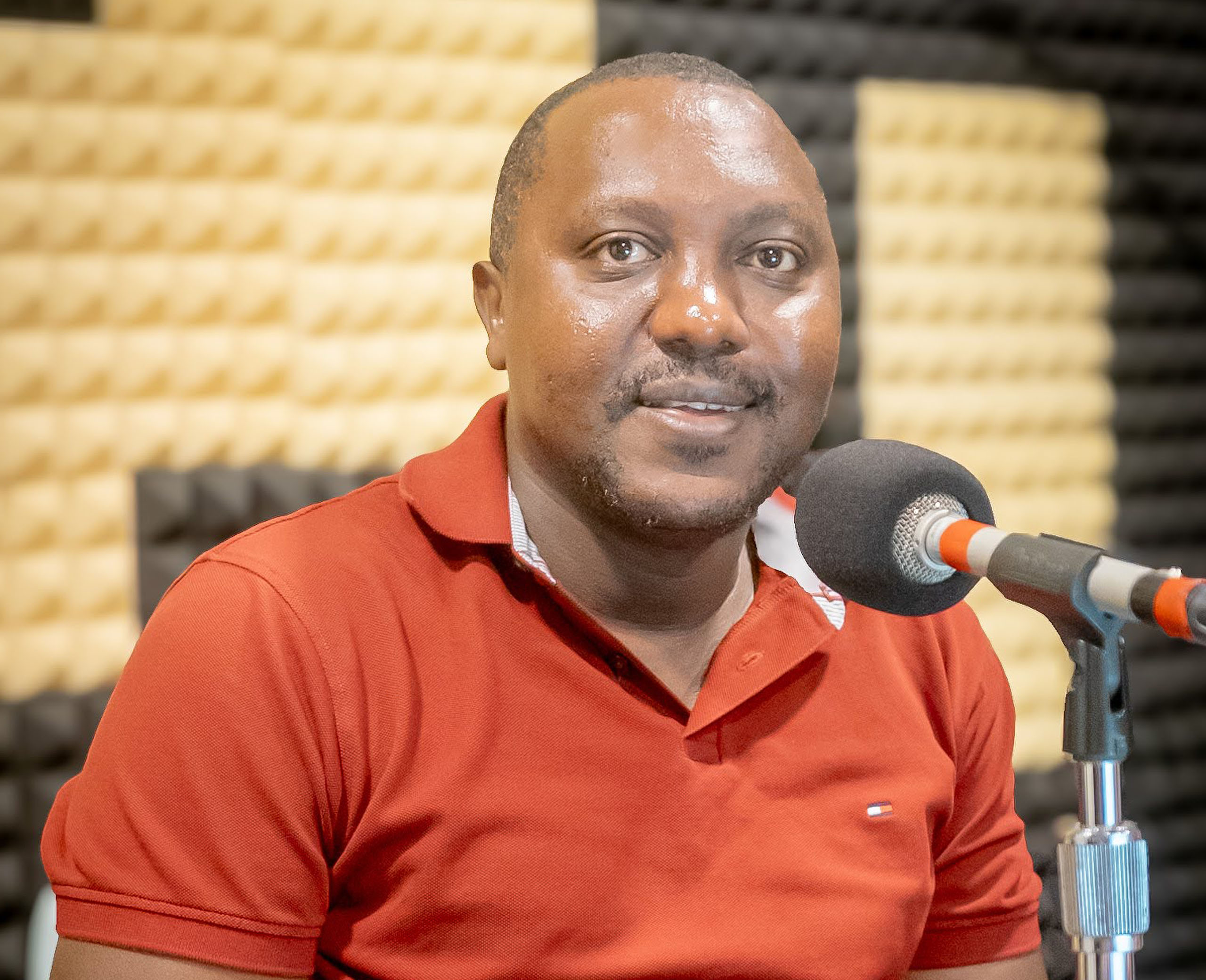
The staff at Amjambo Africa, a nonprofit news outlet based in Portland with a mission to bridge the gap between Maine’s newcomers and longtimers, has been covering the operation’s fallout for its tens of thousands of readers. “We are obliged to give more to our people online and respond urgently,” Eloge Willy Kaneza, the publication’s deputy editor, told me. Founded in 2018, Amjambo Africa publishes a mix of local and international news in English, French, Kinyarwanda, Portuguese, Swahili, Somali, and Spanish. Kaneza, who is originally from Burundi, described it as a place where anyone can “belong.” ICE has halted its surge in Maine, but many of the state’s immigrant communities still live in fear.
Kaneza began his journalism career in radio in Bujumbura, the largest city in Burundi. He continued working even after Burundi’s government tightened restrictions on the press following a 2015 coup attempt and closed all the country’s radio stations. Many journalists left the country; others feared being arrested for their reporting. To ensure that people still had access to information, Kaneza cofounded SOS Médias Burundi, a collective of journalists mostly working anonymously. He moved to Maine and started at Amjambo Africa in 2024. Our conversation has been edited for length and clarity.
CAG: As a publication that covers immigrant communities, how have you been responding to the recent ICE raids?
EWK: It’s a double-edged sword because, on the one hand, we can be affected easily. There are some reporters who cannot go out because they fear for their security. At the same time, we get original stories from families because they trust us. For example, we are working on stories about people who cannot go out, who can’t go to church. They open their hearts to us because they see themselves in us. We interviewed a woman from the Democratic Republic of the Congo with three children who is afraid to leave the house. When our reporter from the DRC went over, she opened the door.
Are there stories you’re particularly proud of publishing?
We covered a gathering in which local representatives, mayors, and city council members from Portland and Lewiston convened to remind people about their rights during the peaceful anti-ICE protests that have been happening. We also did a story about how local organizations are offering help to the families who are afraid to go out. There are volunteers who are shopping for those who can’t go to the shop and giving diapers to mothers. There are stewards who can accompany kids to school. We also have a reporter who is really familiar with the US immigration system, and we put out a lot of articles explaining people’s rights—as well as the limits of their rights—and informing them how they can get help.
How and why did Amjambo start?
Our founders, George Budagu Makoko and Kathreen Harrison, saw that there was this need from the immigrant communities; there was a lack, a gap. They didn’t know where to find true information, or how to find it. And even when they did, it was hard to find it in a language they understood well. So the main idea was to create a medium that would inform the immigrant communities, in their languages, and help them understand where to find resources.
How many people currently work there, and how are you funded?
There are four reporters in Africa, one in the Netherlands, and here in Maine we are thirteen. We are funded through donations, including individual donations, and money from foundations. For example, there’s a project we are going to do this year with the Melon Foundation. As for the donations, it’s amazing to see. We receive checks from individuals just because they love what we do.
You publish local and international stories. How do you strike a balance there? Do you see a relationship between the two?
One of the media’s roles is to inform. There are people in the community who are longtime residents of Maine, who don’t know why people are coming here. But if you report on what’s happening in the refugee camps, or on conflicts in the Democratic Republic of Congo, or Sudan, and people see it—even those elders who maybe don’t read online but always pick up one copy from the store—people will understand. We are creating a balance in this community. There are newcomers who come here because they are pushed away from their countries by violence. There are people who see them as a threat and don’t want to share resources. But on the local level, when we report on the startups of new Mainers—people who open restaurants, who have different companies in different sectors—we show that new Mainers are contributing to the society here. They are not only consuming resources.
As a newsroom, where do Amjambo’s strengths lie?
Everyone is welcome here. Every skill is welcome. For example, I work with people whose primary language is English. English is not my mother tongue, but they never despise me when I come to edit them. They come humbly and we collaborate. We also publish in several languages, and we always welcome those who are multilingual and encourage them and tell them they shouldn’t consider themselves less. So it’s a supportive newsroom. I always say that I see Amjambo as my own baby.
Where do you see the publication going?
Recently, we’ve managed to draw in a lot of young readers. In the last two weeks, we covered stories because young people reached out to us. There’s a café in Lewiston. It’s also close to Bates College. Every month, I bring copies to that café. I always see young people reading the paper there. I think it’s because we publish a lot of stories related to culture and music. I did a story, for example, about the Portland-based poet Nyamuon Machar, who was born in Ethiopia to a South Sudanese father and an Ethiopian mother.
I often read a verse in the Bible, Matthew 11:12: “And from the time John the Baptist began preaching until now, the Kingdom of Heaven has been forcefully advancing, and violent people are attacking it.” To me, it’s a kind of metaphor. The aggressive ones or the violent ones are not necessarily people who are violent, but those who are really courageous, who can take actions, who can take risks. As a journalist, as a reporter, you have to wake up in the morning and say, “I must be aggressive. I must advance. I must fight for the truth, I must fight for freedom of speech. I must fight for the freedom of the press. I must tell the truth.”
So I see us as being aggressive, though not in a bad way. I mean it more in the sense that we are continuously pushing more, and giving more to our community and to our audience.
Has America ever needed a media defender more than now? Help us by joining CJR today.