Sign up for the daily CJR newsletter.
More than a month into the United States and Israel’s bombardment of Iran, it is increasingly difficult to get reliable information about the war’s toll. The Iranian regime has imposed a near-total internet blackout and continues to crack down on satellite services and VPNs, which reporters, activists, and others in Iran often use to circumvent government control. “Journalists are working under foreign bombs and receiving menacing phone calls from the authorities,” an independent Iranian journalist told Reporters Without Borders. “This political pressure hasn’t stopped with the war. On the contrary, it has intensified since the announcement of Khamenei’s death.”
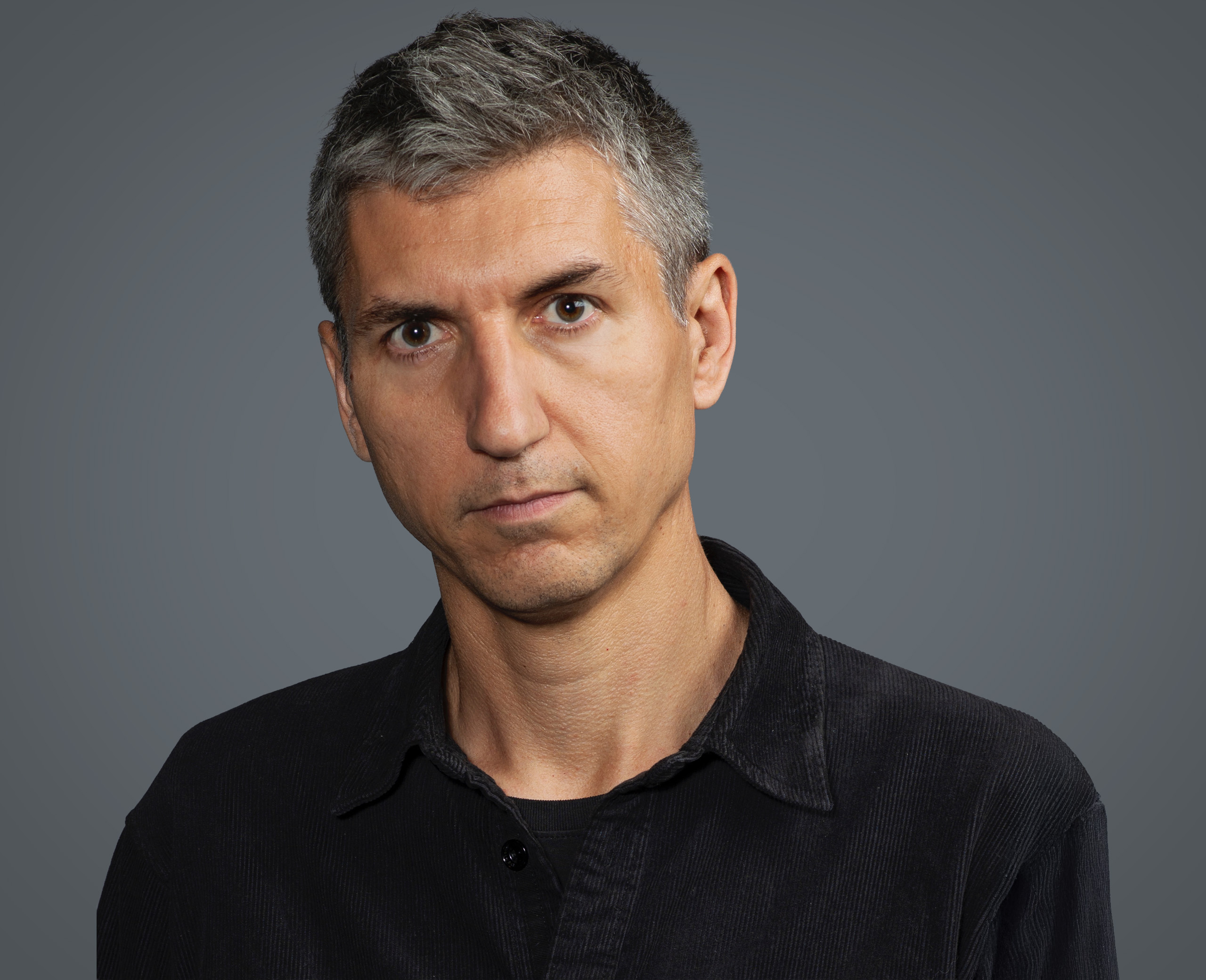
Any reporting that does emerge from the country is especially valuable. Iranian authorities have allowed some foreign journalists in since the war began, including Fred Pleitgen of CNN and Dominic Waghorn of Sky News. But even with access, international journalists must operate under strict guidelines, and their work is heavily monitored. To better understand what we should make of the coverage coming out of Iran, I reached out to Sebastian Walker, an experienced foreign correspondent and independent documentary filmmaker who has been to Iran four times and whom I know from our time working together at Vice News.
Most recently, Walker traveled to Iran with Adam Desiderio, his longtime reporting and directing partner, for Strike on Iran: The Nuclear Question, a Frontline film that aired in December. Produced in collaboration with the Washington Post, Bellingcat, and an investigative nonprofit called Evident Media, the documentary draws on rare on-the-ground access as well as in-depth forensic analysis. On Tuesday, Frontline aired an updated and expanded version of that investigation featuring new reporting and interviews on the latest strikes. Our conversation has been edited for length and clarity.
SB: For people who aren’t familiar with the process, what are the logistics of getting a visa to work as a foreign journalist in Iran?
SW: It’s complex to get a visa to report in Iran. There is a process that you follow that works through Iran’s different embassies or consulates around the world. International media does get access to Iran, but it doesn’t function in the same way that it does in many other places that I’ve worked in. It’s a more obscure process of approval, and it’s not completely clear sometimes why an organization is granted permission to come at a certain time and why it’s not possible to go at other times.
All journalists in Iran work in a tightly controlled environment, but Western journalists have a very specific set of restrictions they must follow. Can you talk about what that’s like once you’re on the ground?
Essentially, you have to work with a government-affiliated production services company that provides a translator who accompanies you at all times. You are able to operate in a limited way—you can ask to go to places, and they will sometimes agree and sometimes not—but there’s certainly a relationship that that company has with the government, with Iranian authorities that ultimately make the final decision on what you can do.
Your most recent trip was in the summer of 2025 for the Frontline documentary. You were transparent in the film about having government minders throughout your reporting. At one point, you show that they filmed you, and at another point, you asked them questions on camera about a location you were hoping to visit. Why do you think it’s so important to be clear about how you’re being monitored?
It’s different from many other places that I’ve worked in, and ultimately, it informs the reporting experience. It’s not a completely authentic reporting experience if you’re not allowed to go to certain places and see certain things. So this is something that is important to show the viewer. That’s why we decided to document that as part of this last trip. One thing I would add is that this last trip was at a very particular time. We were there less than three months after the Twelve-Day War, and we were one of the first American outlets to report from there, certainly one of the first to get outside the capital, Tehran. It was rare access that we got, and I think the extent to which we were monitored, the level of oversight, was probably greater than I have ever encountered on my previous reporting trips to Iran. That trip was much more intense than I’ve previously experienced.
The purpose of the film was to look at the impact of the US and Israeli bombing campaign on Iran’s nuclear program. Were you surprised by what you found?
We started this investigation following Operation Midnight Hammer, and the questions of the extent to which that operation had set the program back was something we wanted to try to examine as much as we could. We knew that we would be limited in what we could see on the ground, so we partnered with the Washington Post visual forensics team, Bellingcat, and Evident Media. Using visual investigative techniques and analyzing satellite imagery, our reporting partners were able to complement what we were able to see on the ground. Combining those things is what the film does to try to get closer to answering the question of how much Iran’s program was set back by those strikes.
On the ground, we were limited in what we could see. We were surprised to get inside, for example, the apartments of nuclear scientists who’d been targeted by Israeli strikes. We were able to speak to family members of those assassinated nuclear scientists. But we were not able to get close to any of the key nuclear facilities that were hit by the US. So really the most surprising parts of it were from the conversations we had with senior leadership figures. We got to talk to the head of Iran’s atomic energy agency, the AEOI. And we also sat down with Ali Larijani, who was recently killed, but was head of the Supreme National Security Council and one of the most powerful leadership figures at the time.
There has been some criticism of Western journalists who are willing to go to Iran despite the restrictions. That’s ramped up during this war. Someone from the State Department called CNN’s recent visit “straight up pro-Iran regime propaganda.” Why do you think it’s still important to go even though you’re being monitored while you’re there?
One of the most valuable parts of going is to get a direct conversation with Iranian leadership figures. That’s the situation where you can ask tough questions and have an authentic conversation as a reporter with somebody who is a key decision maker from the Iranian side. You can’t do that without going there and sitting across from somebody. It can’t be done remotely with the same impact. There’s tremendous value in being able to go and do that. I think we were the last American journalists to interview Larijani, and some of what he said to us during that interview resonates today. I think there’s huge insight that you can get from speaking to somebody at the very top, and having a direct conversation in person is really kind of a basic journalistic principle that I think is important.
Were you able to talk to everyday people while you were there? I know that most of them didn’t want to be filmed, but did you get a sense of what the mood was like?
We did speak to people, but I would say it’s a different kind of conversation from one I normally have as a reporter because our minder was right there. They know that we are an international media team. They know that we’re being monitored and closely watched by the translator we have with us. So I think that you don’t get a completely honest or authentic viewpoint of what they’re feeling or going through. We had conversations with people at the site of strikes in downtown Tehran who were expressing anger toward the authorities for the fact that they had senior nuclear scientists living in a residential building. I think a lot of Iranians were surprised by those strikes last June. And what we saw happening in the months afterward, with people taking to the streets—there’s a connection between what happened in those strikes and what we saw during those protests. But in our conversations as an American outlet working with a government-affiliated translator, there’s a limit to how much authenticity there can be to a conversation like that.
You’re working on an update to the Frontline documentary. What can you tell us about that?
This story is changing every day. It’s hard to keep track, in some way, of how quickly things on the ground are moving. We are updating the previous film to include everything that’s happened with the latest attacks on Iran, and it also contains another conversation with Rafael Grossi, who is director general of the IAEA, the UN’s nuclear watchdog, who we sat down with in the previous film, following the Twelve-Day War. We caught up with him again for an updated conversation on what his concerns are at this point in the conflict. Our reporting team, the Post, Bellingcat, and Evident Media have continued to report the story using satellite imagery to understand what’s happening on the ground. And we’ve also filmed here in Washington, DC, trying to get answers from lawmakers and administration officials about the extent to which Iran posed an imminent threat.
Has America ever needed a media defender more than now? Help us by joining CJR today.