Sign up for the daily CJR newsletter.
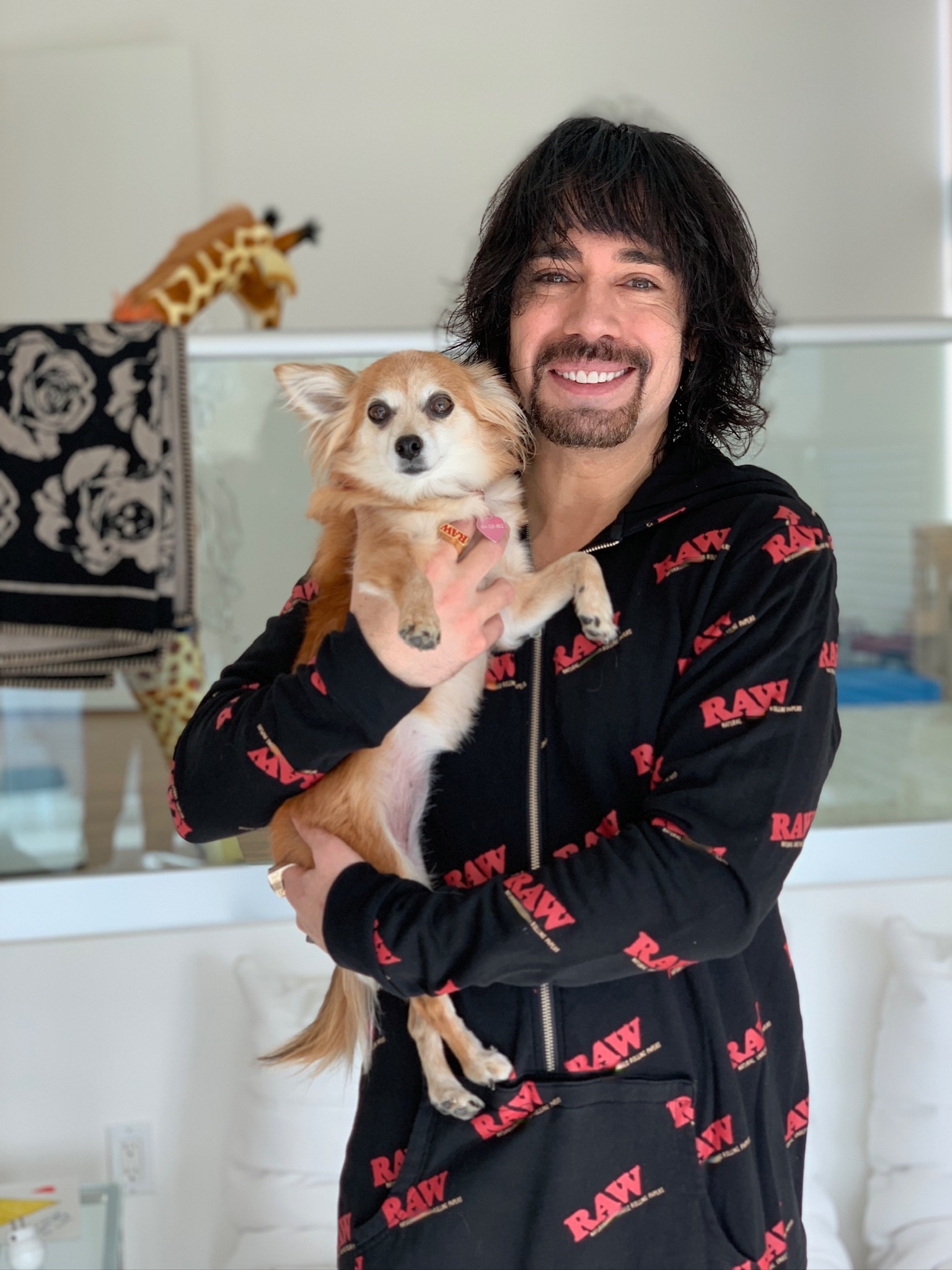
Josh Kesselman remembers buying his first issue of High Times magazine when he was “far too young,” from a smoke shop in the West Village. “I hid it in my jacket from my parents,” he said, “but once I opened it up, it was an entire world I didn’t know existed.”
High Times, which, as its name implies, celebrates counterculture and cannabis, has always been more than just a weed mag. Since its founding, in 1974, by Thomas King Forçade, a top marijuana smuggler of the time, it has published writers ranging from Hunter S. Thompson and William S. Burroughs to Truman Capote and Charles Bukowski, developing a reputation for gonzo-style journalism. A former editor called it the “bible of marijuana news.” Throughout the years, the magazine devoted its coverage to the fight for legalization and the benefits of medical marijuana. In 1988, the magazine started the Cannabis Cup, an annual festival and competition that brought together marijuana growers and enthusiasts from around the world. (Its staffers, calling themselves the Bonghitters, also improbably became repeat champions in New York’s celebrated magazine softball league.) The magazine’s success continued until, like so many others, it didn’t. In 2017, private equity investors bought High Times and it soon found itself sold for parts, with little left to show but a dilapidated website.
In June, Kesselman, the founder of the RAW brand of rolling papers, bought the paper for three and a half million dollars. He has enlisted Matt Stang, the magazine’s co-owner right before the private equity takeover, to help kick off a revival that he hopes will include both online and print editions. Javier Hasse, who is also the CEO of a Spanish-language online news site about cannabis called El Planteo, will be the editor. This conversation has been edited for clarity and length.
FM: Why did you want to buy High Times?
JK: When I got that first issue, it was like going into an incredibly free world, a different way of thinking and being. Looking at that magazine changed my life. I remember thinking that if you got your product in High Times—like, they wrote about it in a positive way—it was the greatest compliment you could get. And so once I went to the rolling-paper industry, I made a point of sending them to High Times. After sending boxes and boxes and boxes, like every month, they reached out to me and brought me to help sponsor the Cannabis Cup. It was a relationship built on a mutual love for smoking.
When it got sold to private equity, I was very scared. I watched it go through bankruptcy, and I was talking to Matt Stang, who by that point had been a friend of mine for a long time. I kept asking, “Should I get involved?” Finally, one day Matt said, “If you want it now, Josh, you could, I think, get it for three and a half million.” I was like, “Jeez, for that entity, it’s an incredible value.” It’s nothing to somebody like me, because I know what I can do with it.
Where do you think weed fits into the culture today, now that it’s legal in so many places and doesn’t have the same counterculture cachet that it did in the past?
High Times never was only about cannabis. High Times was very instrumental in getting many states to legalize. Now we are in a state of recriminalizing. Recently, the federal government passed this—I don’t want to call it what he called it—the big ugly bill that, in a way, recriminalized cannabis. There was this thing called the Rohrabacher-Farr amendment, which got renamed something else, that made it so that the federal government was not allowed to spend any money on enforcing federal laws against a business or a person that was complying with state law for medical marijuana, and that was not renewed for the first time in a decade.
After that, there were large federal raids on the largest cannabis growers in America. And when they went in there, they found a few underage workers, which is terrible, but that is all a [pretext for] what they’re doing, which is recriminalization of cannabis in what we believe, or I believe, in order to help certain special interests like Big Pharma and alcohol companies who are losing trillions of dollars with the legalization of cannabis. Who is going to tell the other side of the story? Who’s going to dig in deeper and teach people about what’s really happening?
Private equity poses challenges to the media, but couldn’t you say the same about a publication that is run by a brand?
What I’ve told people about this is we just have to do it. When I say “do it,” I mean, show them what it’s actually about. So over the course of the next year, when there’s no puff pieces on me or my brand, then people will understand our goal. Like, I’m just the publisher of High Times. What I really look at myself like is the caretaker trying to guide it in one particular direction: we’re trying to keep a really high level of journalistic integrity.
Because I’ve done so well with my rolling papers, I did not need financing; I didn’t need investors. I’ve had people—when they heard we were doing it, lots of investors came around, but they didn’t understand what my intentions were for High Times, and they wouldn’t listen to me when I would tell them they weren’t getting it. So I literally turned to them like this: “Oh, you want to invest? Okay, here’s the deal. Whatever money you put in, you can’t get any money out for twenty years, and in twenty years you can get back what you put in. Maybe less. You still want to? Exactly. Now go away. You don’t know what I’m doing here.”
So you don’t expect to make any money off this?
No. I fully do not believe we will make any money on this whatsoever. This is not about making money. At least it shouldn’t be. The goal of High Times right now is to break even. It needs to break even so that it can continue on long after I’m gone. High Times is a very popular name, like it has a lot of standing. I used to have the cool, you know, tie-dye High Times T-shirts and the hats, and I would go to the Cannabis Cups, and all that is licensing. My goal is to generate enough from licensing to fund the journalism.
We’re looking at people like Hunter S. Thompson, William S. Burroughs, Andrew Weil, Charles Bukowski, Allen Ginsberg, Timothy Leary, who have all written for High Times in the past. The foundation of High Times is this elevation of human consciousness. It’s about journalism, where you’re taking the reader on a trip.
My overarching goal is these beautiful journalistic journeys, these articles that will change people forever.
I’m curious to hear more about these types of articles you have in mind. Can you explain more about what you’d like to see discussed in High Times?
We’ve had a lot of people within our community reach out and [say they] are willing to contribute—some big names within cannabis, for example. But in addition to that, we’re asking people for help, to kind of help us find the next incredible writers so that we can, in our own way, slightly change the course of human history by taking readers on this ride. The type of ride I’m talking about is, if you read the articles, or if you’re familiar with Hunter S. Thompson, it’s long-form. It’s not short. Some of it can be in-depth science, like exploring the connection between humans and cannabis, going back to the beginning, and explaining what it really does to us and what humans might be like if we hadn’t discovered that plant, or how the spread of humanity followed the spread of hemp. High Times is not only going to be about substances, it’s also [about how] you can elevate your consciousness through meditation, through cold plunging, through fasting.
So what’s the plan going forward? Who do you want to reach?
Our goal is to elevate human consciousness. How do we do that? We need the next Hunter S. Thompson to write that piece, and then I need to get people to read that piece. That’s really what it’s about. We’re going to be very keenly focused on community building. A limited run will come out. It’ll probably be printed on a thicker paper, it’ll be a little nicer, because my goal is for it to sit on your coffee table forevermore. We’ll talk about how many issues we think people really want, and then we’re going to cut it in half and print that many. We’re building a completely new website by the end of the year.
Our social media is also being rebuilt. Cannabis is a forbidden fruit of social—they are constantly deleting our accounts, they are constantly shadow banning us. So it needs to be entertaining. We don’t want to be the next WorldStar. The entertainment is there to get them to come in, and then we hit them with what we actually want, which is this important piece of news about our community or this article about this incredible journey.
For Gen Z, we have to reintroduce it to them, which is not very hard to do. Something that I’ve learned by doing this since 1993 is, and forgive me for saying this, but everybody smokes. Maybe not everybody, but I’ve been shocked at the high level of consumption that actually exists in the world. So who would come to High Times? Well, most adults would come to High Times.
Has America ever needed a media defender more than now? Help us by joining CJR today.