Sign up for the daily CJR newsletter.
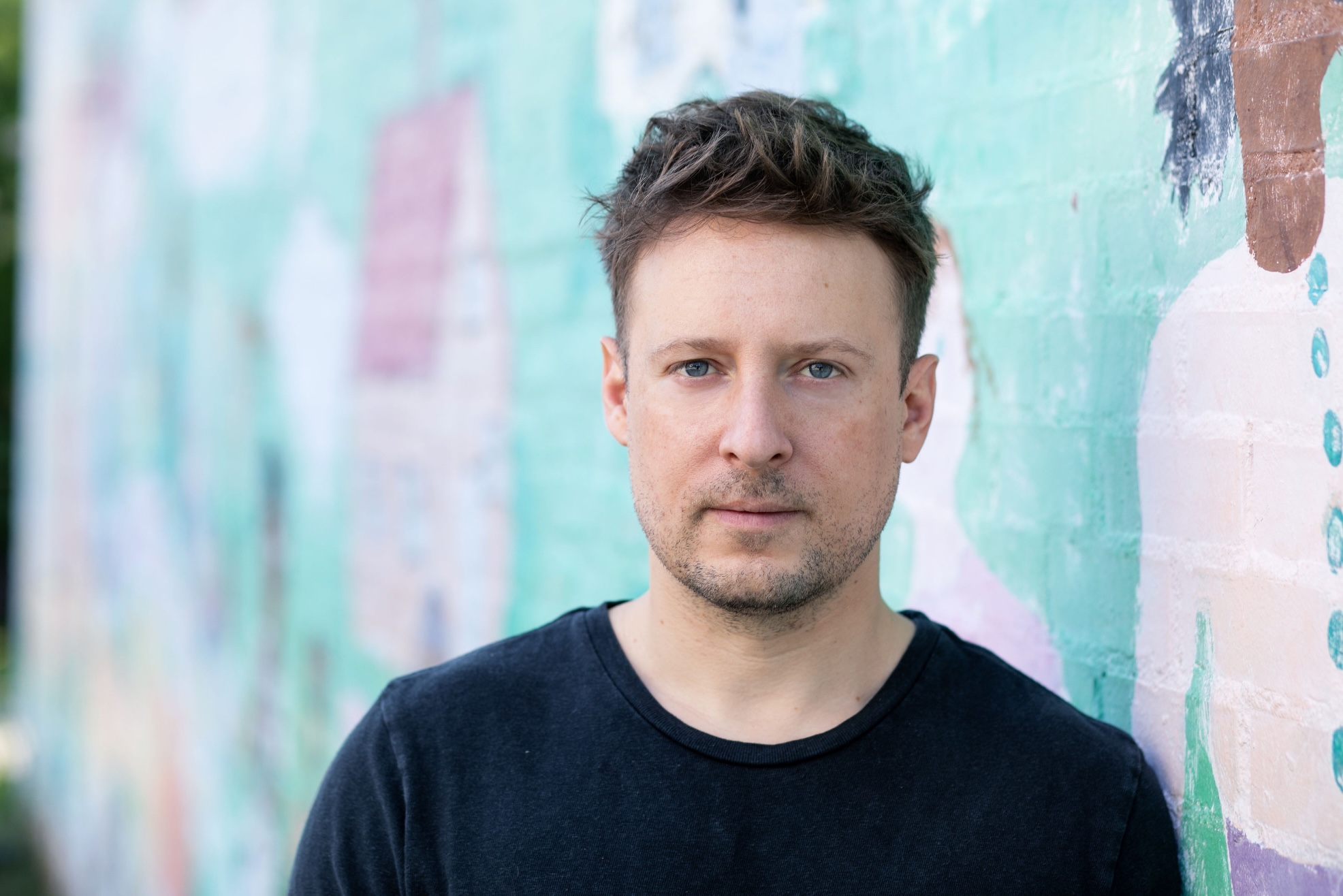
In the beginning, there was the podcast boom, and with it came the kind of resources that few long-form creators could resist. Matthew Shaer, who spent more than a decade as a freelance magazine writer, for publications like New York and the Times Magazine, was among those who felt the draw. “There was the money to report,” Shaer said recently. Over the next several years, he would become a leading figure in the audio revolution, specializing in a kind of elevated true-crime storytelling. Over My Dead Body, released in 2019, retraced the killing of a Florida attorney; Suspect (2021) examined a 2008 murder at a Halloween party outside Seattle, and won the Ambie for Best True Crime Podcast. In 2020, he cofounded the podcast studio Campside.
Podcasting has changed since then; as Shaer acknowledges, there “is now no longer a boom.” In its place is the rise of a kind of talk show–cum-podcast—one-on-one conversations that are filmed and intended to be watched as much as listened to. In his newest project, Shaer splits the difference. Origin Stories, which launches next week, is a series of conversations with journalists, memoirists, novelists, and screenwriters about the creative process—some with video, some audio-only. Among the guests for season one are New Yorker staff writer Patrick Radden Keefe, Fargo showrunner Noah Hawley, and Pulitzer-winning podcaster Connie Walker. “There’s a selfishness to it,” Shaer said. “I’m the audience for the Paris Review interviews where writers talk about what pen they use, or how they outline something, and whether they use index cards, or how many cups of coffee they have to have before they set pen to paper. That is what I really want to hear.” This conversation has been edited for length and clarity.
LS: What’s the origin story of Origin Stories?
MS: There’s more of a hunger for ongoing, talk-show-style shows. And I had been a longtime listener to the Longform podcast. It was basically my favorite show. I was a guest in an early episode, years and years ago. And I started thinking about what I would want to listen to. You’d never be able to replicate what Longform was, nor would I want to try. That was its own special thing. But I started to think about a way to take the basic premise of talking to a creator, a journalist or a filmmaker or TV person. What made Longform so wonderful was you got to hear how somebody got to where they got to be, the steps they took in their career, the setbacks, the failures, the successes. I thought it would be really interesting to take that and put it on a specific work, a book or a podcast or a TV series, and learn about how that was developed from beginning to end. It kept evolving, and we kept adding people from different disciplines and backgrounds. The only thing that I really care about is it’s someone telling a story over a lot of words, over a long period of time, and learning about how they came up with that story and how they decided to tell it. It’s all born of my personal, selfish curiosity.
Are there any through lines or similarities you’ve noticed about the creative process for people in these different fields?
People definitely fit into one of two camps: the rigid outliners and the headlight people. In one camp are the people who literally cannot move forward until they know what the ending is going to be, and they’ve thought about the outline, and then once they have that scaffolding, they feel the freedom to be able to actually start to create. On the other end are the headlight people. I got that from an old E.L. Doctorow quote about a car driving down a dark road, and he can only see as far as what the headlight exposes in front of him. He might know roughly where he’s going, but he doesn’t know exactly how he’s going to get there.
There’s some other commonalities, too. I’ve been truly astounded by how much all these people, across the board, follow their gut. They seem, to me, to be successful because they trust themselves. They have an idea for how an episode should look, or a cold open should look, or how the beginning of a magazine article should look, and they’ve learned over their career to listen to what their stomach or heart is telling them. The last thing has to do with notes and the back-and-forth that happens with an editor or executives. They’re very open to listening and collaborating with all these different layers of editors and producers, but they also have developed a real talent for understanding where to push back.
Are you a rigid outliner or a headlight person?
I am nothing but a headlight person, to my own detriment. With magazine articles especially, I have always been really wedded to the beginning. I can’t get anything done until I have a beginning that I’m really happy with. So if I don’t have the first three paragraphs in the way that I want them to be, I will just sit and never do anything again. Someone like Patrick [Radden Keefe] would be like, “Well, if you got an outline, it would solve your problem.” But I can’t do it that way. I was really gratified to hear that Noah Hawley is the same as me. Headlight people have built in a lot of flexibility into the process.
How do you think the podcast industry is doing right now?
It’s hard out there. It’s undergoing a real transformation on multiple levels, in terms of where the focus is for the industry and the kind of shows that are getting made. My source of optimism is that people are consuming audio at a rate that increases every year. People want audio products. They want narrative podcasts. They appreciate them when they’re produced, and they know the difference between good podcasts and middling podcasts. The monetization and the way podcasts are marketed and distributed and the way ads are sold against them hasn’t worked in the way that it should. It hasn’t worked enough that it can support the kind of quality storytelling that people want. So it feels to me like a crucial moment in podcasting. This is something that I think about with magazines, too. But that’s the pessimistic side of me, and the optimistic side of me knows that people still not only want these stories, but kind of need them to make sense of the world around them. Good storytelling will find a way.
What do you think about the rise of podcasts that are integrating video? Does that diminish the art form?
It’s not a one-size-fits-all thing, which is sometimes what I worry about. It’s pretty easy to say the future of podcasting is in video, so that means all podcasts must be video podcasts. I don’t think that’s true. There are podcasts that will truly benefit from having a video component, and I think there are podcasts that won’t need it. One of my favorite shows right now is Pablo Torre Finds Out, which I watch in video form on Instagram. The data doesn’t lie. There are a lot of folks who consume podcasts on YouTube. It’s just unavoidable. It’s just the truth. So it would also be silly of me to say, “No, I don’t like the idea,” because you do have to go, to a certain extent, to where your audience and listeners are.
But when you start to incorporate video, is a podcast still a podcast?
There is, inevitably, in the age of media that we’re in right now, going to be all sorts of blending of short- and long-form content, and video and non-video, and print and visual. That, to me, feels like where we’re going. It’s just a real mélange of different mediums, all colliding because people consume them in different ways. That doesn’t necessarily mean that the audio podcast, as its own thing, is going away. I don’t foresee the death of podcasts that are only audio. I’m not even sure what the video component of a long narrative podcast would be. There’s certain stories that should be told in audio-only versions, and there’s certain stories that will benefit from having video. And I think we’re just, as an industry, getting a little less prescriptive about which is which.
To the extent that I’m concerned about good, creative narrative reporting and storytelling, full stop, I’m concerned about that, yeah. It’s a broader and existential question. These things that we have held so valuable—great magazine journalism, in-depth newspaper reporting, beautifully composed narrative podcasts—what those do are tell stories in creative and elaborate and compelling ways. Looking around at what’s happening to magazines, what’s happened to narrative podcasts, what’s happened to documentary films, you’d be silly not to be concerned. But I’m not pessimistic about storytelling. I am worried about finding ways to fund it and to keep it sustained.
Has America ever needed a media defender more than now? Help us by joining CJR today.