Sign up for the daily CJR newsletter.
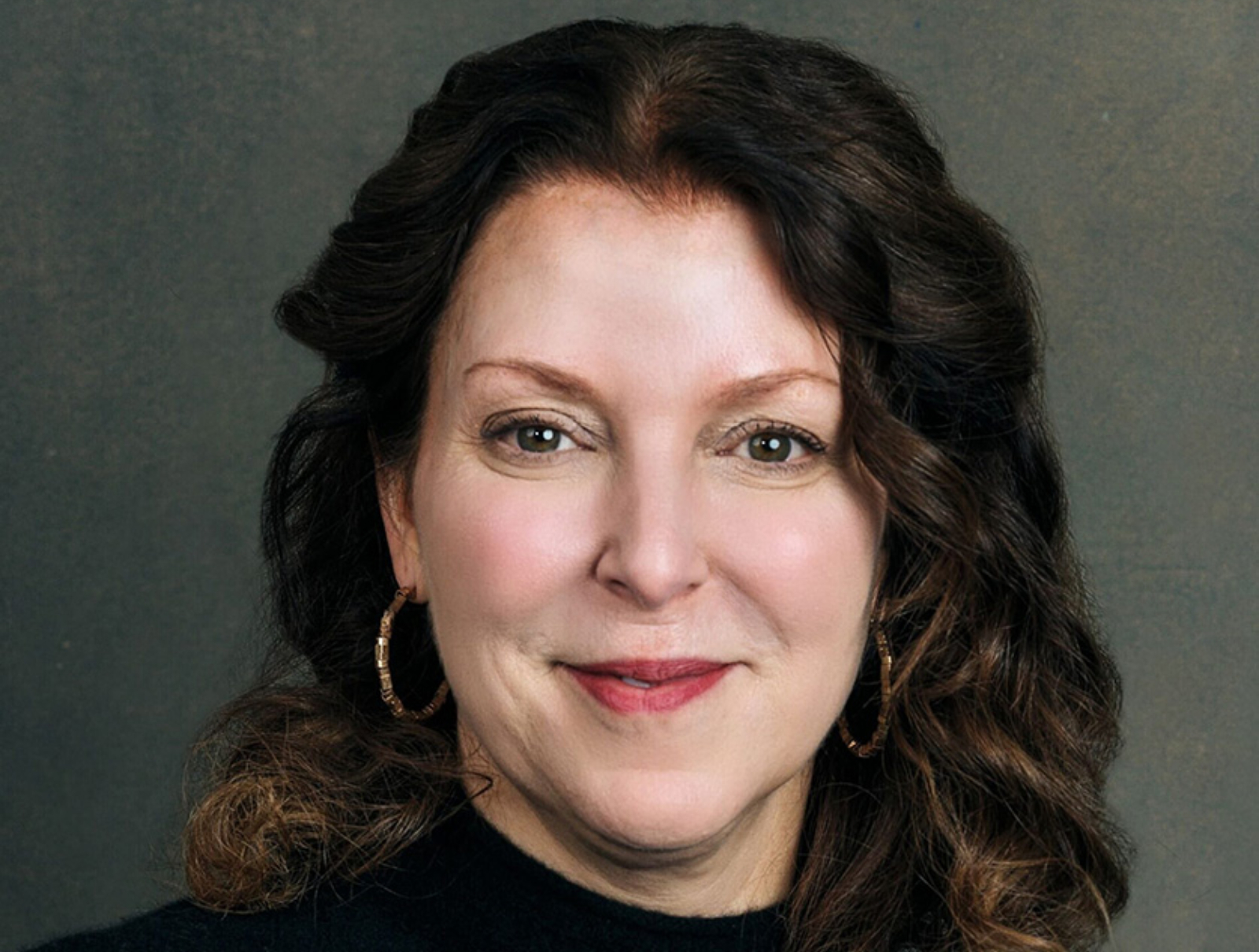
It has been a difficult year for public media. After Congress eliminated more than a billion dollars in federal funding, the Corporation for Public Broadcasting (CPB) shut down, removing support for local stations and the national network that relies on their programming fees. But throughout the turmoil, Frontline, PBS’s flagship documentary series, led by longtime executive producer Raney Aronson-Rath, has remained focused on the ambitious investigative storytelling that has made it a defining force in documentary film.
Frontline was launched in 1983 by David Fanning, the only other executive producer in the program’s history. He handed the series over to Aronson-Rath more than three decades later, in 2015. Her role at Boston’s GBH, which produces Frontline, recently expanded to include oversight of two other documentary series, American Experience and Nova. During Aronson-Rath’s tenure, Frontline has been honored with every major award in broadcast journalism and grown its audience by embracing digital distribution, prioritizing platforms such as YouTube, which draws younger viewers. “My kids have really driven a lot of my strategy,” she told me. “I’m seeing how their worldviews are formed in the social video landscape, and we need to be there with facts. We need to be there with journalism. We need to be there with the truth.”
Aronson-Rath has led initiatives to support local journalism in news deserts and to increase transparency by sharing the source material behind Frontline’s reporting. In perhaps her most consequential move, she pushed to release Frontline films in theaters and film festivals before they aired on PBS. In 2024, that strategy helped Frontline win its first Academy Award, for the feature-length documentary 20 Days in Mariupol, produced in partnership with the Associated Press. The film is a devastating on-the-ground look at Russia’s invasion of Ukraine through the eyes of AP journalists trapped in the besieged city. Aronson-Rath recently formalized Frontline’s push into theatrical releases with a new distribution arm, Frontline Features, that will develop three to five feature-length and short films each year. Our conversation has been edited for length and clarity.
SB: You’ve been in your role at Frontline for almost twelve years now. The landscape for documentary film has obviously changed so much in that time. How do you think differently about the role now?
RAR: There has been so much disruption especially in the world I live in, which is streaming and broadcast. What we really shifted into over the last decade is that we are broadcast still, but we really think about streaming literally every single day, every minute of our days, all the way from the mobile phone, and how people find Frontline and see Frontline, to the long-form that we do on YouTube, and on our broadcast, all the way into theaters. So it’s essentially like, “What are all the different touchpoints where we can reach people with Frontline?” Years ago, when we launched Frontline on YouTube, it was thought that current affairs would not be as tangible on all these different platforms. But now YouTube is absolutely where people watch long-form.
Frontline has almost four million followers on YouTube, and you’ve said there are seven million people who watch your work there every month. Why do you think it resonates so powerfully there?
What we saw almost immediately was a massive audience, but also massive commenting, and the comments were really edifying. I spent a lot of time reading the comments in the early years to try to understand: What does this YouTube community see in our work? And what they saw was authentic reporting. They saw real news. They saw real investigative journalism that they had just never experienced before on YouTube or in their watch habits at home. Our audience taught us that there was a real hunger for this kind of in-depth work, and the more on-the-ground, the better. And that was really gratifying, because a lot of our reporters do risk their lives. They go into the world, they tell us stories.
There seems to be a gap between what you’re seeing the audience choose and what corporate media seems to think they want. You said recently that there’s more visual storytelling now than ever, and less support for it than there ever has been. Why do you think that is?
What you’re not seeing as much of is investigative journalism that is embedded inside documentary films being supported across the ecosystem. And I can’t answer the why of that, but I can say that there’s a real hunger for investigatively driven documentary films that are more cinematic in their nature. Stories that are told with truly beautifully filmed moments, but that are really journalistic—those are the films that do best on YouTube and on streaming in general. So some of our more hard-hitting films that are just amazing films, like 20 Days in Mariupol or 2000 Meters to Andriivka, those are not bespoke films only for the theater. Millions of people are watching those on YouTube and on streaming now.
The last year has been challenging for public media with the loss of federal funding. What has that impact been for Frontline, and how are you closing that funding gap?
It’s definitely been quite a year. For Frontline, specifically, it was a loss. What we did was a very hard pivot to fundraising. We have also seen a lot of people who really want to come forward and support Frontline, and that’s been very gratifying. All of our funders stayed with us. They stayed true to our mission. I have to say that, as hard as the year was, it’s also encouraging that we didn’t see any drop-off and we didn’t see anyone feel like they couldn’t support us for whatever reason.
Is there any way in which it’s been liberating? We’re seeing a lot of corporate media face pressure from this administration. Is there any upside to no longer being under that microscope?
No. I think if you look at Frontline’s reporting from the first Trump administration through the Biden administration to today, we have had very consistent political reporting over the last twelve years, and before that as well. At Frontline, our heads are down. We’re working hard. We’re always fair and factual, and that is my guiding light every single day. Remember, Frontline wasn’t directly funded by the government. The government funding went to the Corporation for Public Broadcasting, and then to the stations. The stations subscribed to the national programming service, which is PBS’s service, things like Nova, American Experience, Frontline, and Masterpiece.
That doesn’t mean that it’s not difficult for the stations. What I am most concerned about are the small, local stations, which really relied on the CPB dollars. There have been some great solutions, like the Bridge Fund and foundations coming together to support the local stations most in need. But in terms of Frontline’s journalism, I think the work that we did before defunding and after is exactly the same: the same people, the same editor, the same oversight. Frontline doesn’t feel pressure from anybody above us or externally to do anything differently, and I, as a journalist and editor, do not feel the pressure that other people are talking about, and I don’t expect it. Our leadership is very steady. And that is a privilege.
Frontline produces roughly twenty films a year. What makes a film right for Frontline, and how do you think about the mix? Not just each project, but what you want to present overall for a year?
The best way to understand it from a print or text perspective is: What’s on A1? It’s very difficult in this day and age to not want to do every single story, but a lot of what we do is try to figure out, what are the stories we can tell, for which we have the most original reporting and that we feel are not being told by the rest of the media, for whatever reasons? So a lot of times, you’ll see us do a big film, like on the Federal Reserve. It’s not that there isn’t reporting out on that, but there’s not another longitudinal documentary series out there. So that film aired recently because we knew what was happening in the news, and this was a time when people might be willing to watch a documentary on why the Fed matters.
Other times, we’re making decisions because we have something really special. A great example is 20 Days in Mariupol. A lot of news stories had already been released on this, but when I saw the underlying materials, it was like, “Oh my God, there’s a documentary film here.” So sometimes we’re just looking at the underlying film that a director has collected or we’ve commissioned, and it speaks to us in an edit room or speaks to us in an editorial meeting, where we realize we have something very special. One in a Million, which just premiered at Sundance, is a great example of that too. We followed one person’s life as a refugee in Germany for ten years, and enough things were happening during that decade that we realized her life story could be a vehicle to understand the open-border approach through what’s been happening over the last three or four years in Europe and beyond.
You won an Oscar for 20 Days in Mariupol in part because you’ve expanded into the theatrical documentary space. What was the thinking beyond behind that expansion?
I was a person who was an actual print reporter once upon a time. But I sat in the premiere of Hoop Dreams, the Steve James film in the mid-1990s, and I was transfixed, and I changed my whole career to be, at that time, a production assistant on documentaries. I love documentary films; that’s just what drives me as a person creatively. It’s what I do on my weekends. So I was always interested, even as a young filmmaker and a young executive at Frontline, in whether we could actually expand into that space.
The challenge for Frontline, historically, was that we had such a current-affairs imperative that we had to release the films right away. So when I took over Frontline, twelve years ago, I was actively looking for: What were the documentaries that could actually transcend the news cycle? The first one I did was Abacus, with the Hoop Dreams director, Steve James, which got nominated for an Oscar. That was literally the first time I experienced a Frontline documentary in a theater, and saw how open people were to it, and that was the start of me really studying: Could Frontline expand in the cinematic journalism genre? I did it again with For Sama, which is a beautiful film about a woman and mother in a war zone. We had done, by the way, seventeen films on Syria at the time, but that was the film that broke through, and that was also Oscar-nominated. And then the third one I did was A Thousand Cuts, which is the Maria Ressa story. That film taught me a lot about releasing big cinematic films on YouTube.
Winning the Oscar was a huge honor, but as importantly, it drove millions of people to watch the film online. We literally saw the spike. People started to understand that this was a documentary they could see in front of a paywall. They didn’t have to pay for it. And interestingly, 60 percent of our audience now on YouTube is global. So I have a totally expansive view on the types of stories we should be telling now. I started my career in Taiwan and was an international reporter for years before I came back here, so for me, it’s full circle.
Has America ever needed a media defender more than now? Help us by joining CJR today.