Sign up for the daily CJR newsletter.
Last Wednesday, Representative Anna Paulina Luna, a Trump-supporting Instagram star turned lawmaker, introduced a motion in the House Oversight Committee to subpoena the journalist Seth Harp for allegedly “leaking classified information” and “doxing.” Harp’s crime? Tweeting the photo and public biography of an officer he identified as the commander of Delta Force, the elite Army unit that spearheaded the January 3 operation to capture Venezuelan president Nicolás Maduro and his wife, Cilia Flores. “The public identification of a covert or sensitive special operations servicemember, particularly one actively associated with a classified or partially classified military operation, creates foreseeable and substantial risks to operational security, the safety of US service members and their families, and the effectiveness of future intelligence and military operations,” Luna wrote in a letter to the Department of Justice she later posted on X.
Press freedom organizations condemned Luna’s subpoena, characterizing it as an attempt to intimidate journalists reporting on sensitive stories. “Throughout his career, Harp has reported critically on the US Special Forces, as well as on US foreign policy more broadly,” reads a letter to the Speaker and minority leader of the House of Representatives that was signed by groups including Defending Rights & Dissent, PEN America, the National Writers Union, and the American Civil Liberties Union. “While members of Congress are, as individuals, entitled under the First Amendment to disagree with Harp, they cannot abuse the compulsory process to retaliate against journalists.”
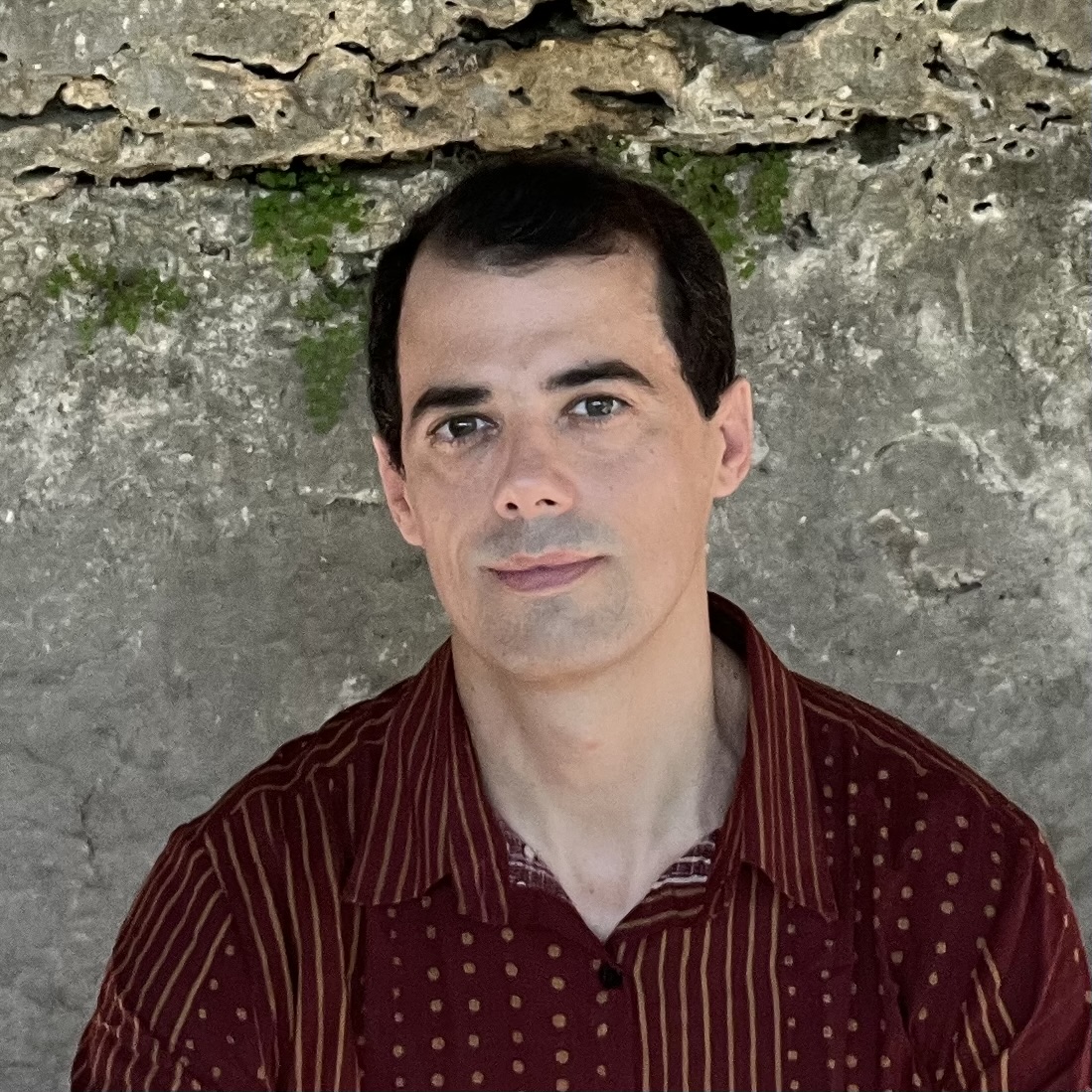
For his part, Harp, a contributing editor at Rolling Stone and the author of The Fort Bragg Cartel: Drug Trafficking and Murder in the Special Forces, which investigates the dark side of a premier special operations base in North Carolina, maintains that the commander’s identity is not classified, and even if it were, that reporters have a constitutional right to publish information the government wants to keep secret. “I know what I know because they themselves put it on a public website or turned the documents over through FOIA, and that’s it,” Harp told me. Our conversation has been edited for length and clarity.
CAG: A lot of this took place on X, but you were locked out of your account, and in order for you to log back in, some of your posts had to be taken down. So what happened?
SH: I posted the online biography of a high-ranking Special Forces officer, and I didn’t expect it to be of interest—or of that broad interest—except to specialists and people who have read my book. But it kind of turned into a tempest in a teapot, with a bunch of people angry about it and trying to describe it as doxing, etc. What I posted came from a publicly facing biography that was written either by the man himself or someone acting at his direction.
Rep. Luna posted Wednesday on X that she made a motion to subpoena you for doxing and that it “passed unanimously with support from both Democrats and Republicans out of committee and will be sent.” Have you received a subpoena?
I’ve heard conflicting reports. She says that it was unanimous, but people who were present there told me that they heard audible “no” votes. I will say that Robert Garcia, who is the ranking Democratic member on that committee, very disappointingly went along with this. And that’s just unfortunate and disappointing, that the Democrat didn’t do anything to resist this blatant attempt to intimidate and silence the press.
My understanding is that the subpoena was all Rep. Luna’s doing, and the other members voted for it out of procedural convenience to get those Epstein-related subpoenas out the door. But no, the subpoena has not been served, and subpoenas for journalists are extremely rare and often walked back.
The committee still has the opportunity to do the right thing and either not serve the subpoena, not enforce it, or vote to rescind it. If instead they insist on hauling me before Congress, I will use the forum to defend the freedom of the press, condemn the entitled culture of secrecy around extralegal military units like Delta Force, and call attention to the systemic problems in the Special Forces at Fort Bragg, including drug trafficking, overdoses, and unsolved murders.
As a lawyer, an Army veteran, and a journalist, do you think this is just hot air? Does it represent a real risk to journalists and the First Amendment, or is it more of a MAGA-generated distraction?
I think that even the threat of a subpoena on a journalist who’s doing legitimate reporting about high-ranking US military officials at the center of massive breaking news stories has a chilling effect on the entire profession and is an abuse of Congress’s subpoena power. I don’t know what they’re going to do beyond that. I don’t know whether they’re going to issue it or not. But I have to take the possibility seriously.
Do you see a connection between what’s happening to you and the Pentagon’s new reporting rules, both the version proposed in September that said reporters needed to get official sign-off before publishing defense information and the current, revised version that penalizes “soliciting” via callouts and other normal reporting strategies?
Absolutely. It’s all part of a concerted effort by the administration to run roughshod over the First Amendment and try to bring the press to heel by forcing them to only disseminate narratives that are friendly to the administration and the military operations it’s carrying out, including all their regime-change operations and attacks on foreign countries.
They don’t want the free press to be able to report independently on this stuff. They just want propagandists who will toe their line, and they are going to use anything in their power to try to punish working reporters who don’t go along with what they want.
Mediaite initially claimed that you doxed the Delta Force commander. You later wrote on X that you got them to dial back their story under threat of a defamation suit. Can you tell me a little more about what happened there?
The original Mediaite story, by Sean James, was full of factual errors. Some of them were damaging; some were just inexplicable. They did accuse me of doxing. Doxing can be a crime, and in many jurisdictions it is. That word refers to publishing personally identifiable, nonpublic information: someone’s birthday, their Social Security number, their home address, their phone number, names of their family members, pictures of their houses, things like that.
I did nothing of the sort. To identify a high-ranking US military official at the center of a breaking news event cannot, under any circumstances, be described as doxing. That’s just reporting; it’s just journalism. So they made major changes to the story after I threatened to take them to court for libel.
I read that you’ve sold close to a hundred thousand copies of your recent book about Delta Force, which is also being made into an HBO series. How have you been using social media to get that story out, and do you see your Venezuela posts as part of that continuing project?
I certainly didn’t do anything with the intention of selling more books or promoting anything. That’s not how I think. If it has that inadvertent effect, well, that’s just the natural result of people wondering, “Who is this journalist that the government wants to silence?” It’s natural that they would then take an interest in the book; then it would sell more copies. But that’s not why I’m doing what I’m doing. It’s not even why I wrote the book.
Delta Force is a secret military unit that acts at the direction of the US president, often carrying out offensive operations, assassinations, and abduction missions in foreign countries with which the United States is not at war, keeping all its operations secret from the public. To me, all of this offends the foundational principles of our country, and is not the kind of thing that we want to have in a free and open society. I’ve been very critical of excessive military secrecy in the past, and my book is about the sort of abuses that are allowed to take place, the sort of criminality and lawlessness and impunity that flourishes when you have these massive military organizations completely insulated from outside scrutiny.
Your book isn’t about Venezuela, but how do the subjects it explores help us understand what happened there?
Well, it’s another example of this military unit being the tool that’s used by the imperial presidency to effect regime change in foreign countries that the US isn’t at war with, in operations that nobody voted for, and which don’t benefit the people of the United States in any way.
You mentioned that subpoenas of journalists are extremely rare. Could that be changing? Is this something we might be seeing more in the coming months or years?
I hope it doesn’t become more common. But again, we’re dealing with an administration that wants to silence the press, that wants to bring the entire press corps to heel and obligate them, through threats and coercion, to only publish stories that enhance and benefit its own narratives about its military operations abroad.
Has America ever needed a media defender more than now? Help us by joining CJR today.