Sign up for the daily CJR newsletter.
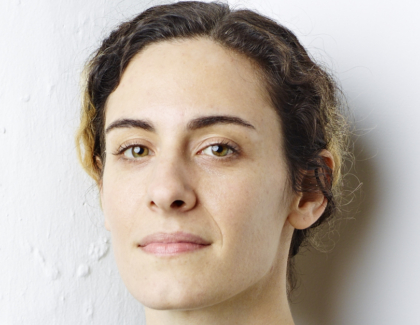
I announced in yesterday’s newsletter that today’s edition will be my last, after nearly seven years at the helm. I’ve been at CJR even longer—I arrived as a(n extremely green) twenty-four-year-old Delacorte fellow in September 2017 (and took part in a CJR-led seminar at the Columbia Journalism School even prior to that), and never really left (bar a few months reporting from South Africa in the summer of 2018). CJR was my first job in journalism, if you discount a few months as a copyediting intern at BuzzFeed. When I took over this newsletter, I initially wrote it four days a week; after four years, that got a bit much, and so we reimagined the newsletter in its current form, with me writing on Mondays and Tuesdays then keeping the trains running the rest of the week. Developing it has been a labor of love. I have aged alongside it (sometimes very quickly). I started writing it hunched over a laptop; I finish up seated at a monitor, sporting a trendy new pair of reading glasses. I tried to take a global perspective. I’m sure I wrote a lot of nonsense. Hopefully not just that.
I leave the newsletter in exceedingly capable hands. Starting next week, Jem Bartholomew, a contributing writer for CJR (who regular readers will notice has taken the lead on the organizational side of the newsletter since I took a step back from those duties earlier this year), and Aida Alami, a CJR contributing writer and the James Madison Visiting Professor on First Amendment Issues at the Columbia Journalism School, will write on Mondays; on Tuesdays, our new staff writer Amos Barshad, our current crop of Delacorte fellows (i.e., me, several regenerations hence), and other writers including Joel Simon, Lucy Schiller, and Liam Scott will contribute to a new feature called “Near and Far,” focused on journalism at the ground level in the US and around the world. The schedule for the rest of the week will stay the same—and as ever, you’ll be able to find everything we have to offer on our website, at cjr.org. As for me, I’ve been contributing to The New Yorker for the past several months, which has increasingly been eating up my time, and will continue to do that. I’m sure my byline will crop up elsewhere, too—including, I have absolutely no doubt, in these pages.
As the band plays me off, I’d like to thank all my colleagues at CJR down the years, especially Kyle Pope, who hired me, and Betsy Morais, a cherished editor who has been with me every step of this newsletter journey; also, a shout-out to Mike Laws, the most recent editor to draw the short straw of dealing with me at an ungodly hour, Eastern time, who has at least put up the pretense of enjoying it. While mine has often been the name atop it, this newsletter really has been a team production, and it never ceases to amaze me how consistently such a small magazine punches so far above its weight. It’s a cliché, but its work has never been more vital. I already shared some parting thoughts yesterday on all the reasons for that. For today’s newsletter, I wanted to quickly revisit 10 of the 1,071 articles (but who’s counting?) that I’ve written over the years that still have something to impart today (or were simply fun). They’re below, if you want to read them. Even if you don’t, a final thanks to all of you. You could have read almost literally anything else, but you read this. It truly meant the world.
September 2017: Inside the fairy tale mind of Trump
This wasn’t my first CJR byline, but (I think) it was the first piece that I worked on that ended up getting published. I explored the similarities between Donald Trump’s nicknames for his perceived opponents (“Crooked Hillary,” “Little Marco,” “Sleepy Eyes Chuck Todd,” and so on) and the language of fairy tales; as Jack Zipes, an expert in the genre, told me, such language is familiar to voters, and name-calling has always functioned as a primal assertion of dominance. (“Whether he does it consciously or not,” Zipes added, enduringly, “Trump has found a way to narrate a story in which he is the star.”) There was a serious lesson here for the press, which, at least back then, would scramble fact-checking teams to parse Trump’s every statement while not only allowing the Manichaean claims in the building blocks of his epithets to slip past their faculties, but often grading them as insult comedy. (A couple of years later, I had cause to return to this deeply irritating strand of coverage after Trump likened Pete Buttigieg to Alfred E. Neuman, the gap-toothed kid on the cover of Mad magazine.)
May 2018: One deadly day: Afghanistan’s murdered journalists, in the words of the people who knew them
On April 30, 2018, a bomb went off in Kabul, the capital of Afghanistan. As reporters rushed to cover the aftermath, a second bomb was detonated by an assailant who, reportedly, had flashed a press pass and camera to get closer to the scene. Nine journalists were killed that day, as was a tenth in a separate attack in Khost Province, making it the deadliest twenty-four hours for members of the media since the Taliban regime fell in 2001. Working with Aliya Iftikhar and Mehdi Rahmati from the Committee to Protect Journalists, I set out to learn more about the human beings behind the tragedy; in total, we spoke with twenty-two of their relatives, friends, and colleagues. Since then, of course, many more journalists have been murdered all over the world; I’ve continued to try to keep track of their stories, from Cameroon to Gaza. In Afghanistan, the Taliban returned to power in 2021, after US and allied troops began to withdraw, exacting a sharp toll on press freedom and eliciting a furious outcry from sections of the US media that would prove, in the end, to be greatly too brief.
November 2020: Addicted to CNN in the UK
I followed the marathon coverage of the 2020 US presidential election from my home in London, during a period of COVID lockdown when one’s ability to go out and touch grass was limited by law. While I consumed news from a variety of sources, CNN was a mainstay—and it turned out the rest of the UK was hooked on it, too. (At least, my politics-nerd friends were. “John King turns a trickle of data into a bombardment of analysis,” one said. “It’s just very loud,” said another.) In fact, my girlfriend and I watched the network so much that we started to be able to recite from memory a handful of commercials for CNN International shows. To my horror, I realized this week that I can still do this; Richard Quest striding through a maze continues to haunt my dreams. Not everyone in the UK was impressed by the coverage; some (myself included, sorry) felt that the constant, screaming barrage didn’t really match the trickle of available new data. This didn’t stop King being nominated for a UK journalism award (or me being interviewed about it).
Fall 2021: The Debater
For CJR’s “Reset” issue on the future of political coverage post-Trump (or so I thought, lol), I profiled Mehdi Hasan, the British American anchor who had recently landed at MSNBC and was, as I saw it, doing two things that were practically unheard of on US cable news: anchoring his analysis in a genuinely left-wing perspective (before you email me, no, by “left wing” I do not mean “liberal”) while interviewing politicians from both sides of the aisle with a very British intolerance for bullshit. (John Bolton, then on an anti-Trump tear, probably didn’t expect to be asked whether his advocacy for the Iraq War keeps him up at night.) At the time, MSNBC bigwigs past and present predicted to me that Hasan would have a storied career at the network. It didn’t work out that way. But Hasan has still ended up, as Phil Griffin foresaw, a “player,” going on to found Zeteo, an independent outlet that is proving you don’t have to be an anti-vax comedian to thrive in this fractured new media landscape. Oh, and he’s still tweeting. A lot.
November 2021: CJR at COP26: The People’s Summit, Extinction Rebellion, and the press
Media criticism tends to be a sedentary beat—it can get kinda metaphysical, after all—but sometimes, an opportunity presents itself to get out from behind a desk and go talk to people about how they see the news. So it was that I found myself in Glasgow in November 2021 for COP26, the major United Nations climate summit. I wrote daily dispatches that week, but my favorite came when I got out of the conference center itself and spoke with protesters, including on a march with members of Extinction Rebellion, the climate movement dedicated to nonviolent civil disobedience. XR had recently orchestrated a “die-in” outside the offices of the New York Times and dumped manure outside the Mail in London. But organizers and activists with whom I spoke had highly nuanced views of the news media and its coverage of the climate crisis: several praised The Guardian unprompted; others felt as if the movement was beginning to be taken seriously even in more traditionally hostile precincts. Out in the world, you don’t always see the shit you expect.
May 2022: The Times, Haiti, and the treacherous bridge linking history and journalism
In an edition of this newsletter, I reflected on the publication of a major Times package about the history of Haiti, which sought to put a number on the catastrophic debt that the country accumulated after its former French colonizers came back and demanded so-called “reparations,” or else. A Times editor described the package as “investigative journalism, the documents are just really old”—but many historians didn’t agree, criticizing the paper for, in essence, passing off the work of others as a scoop of its own. The sharpest of the criticism wasn’t really fair—unusually for a journalistic project, the Times published an extensive, if not exhaustive, bibliography—but it did all tap into a very interesting big-picture debate, of the type that I’ve often tried to mine in this newsletter: What should the proper relationship between history and journalism actually look like? “The former, fundamentally, is seen as being expansive and about the past, whereas the latter concerns what’s new, often tied to a rigid ‘news peg,’” I wrote. “But the two disciplines aren’t conceptually separable either, given how deeply the past informs—or should inform—our understanding of the present.”
Summer 2022: The Everything Virus
In 2021, as the pandemic receded and life began to return to whatever “normal” was supposed to be, Kyle Pope and Betsy Morais, then the two top editors at CJR (Morais remains in post), proposed an ambitious idea—an entire issue of our magazine anchored around one single piece—and showed immense faith by asking me to write it. The result was a ten-thousand-word-plus recounting of the pandemic—augmented by numerous sidebars from the team at CJR, and presented on a special website designed by Frost Creative and Kiel Mutschelknaus—as told through the lens of the media debates that marked it, as well as the experiences of the journalists, experts, and officials (among others, I was able to interview Anthony Fauci) who guided the world through it. “The pandemic has been an object lesson in the dangers posed by people who weaponize science for political ends,” I concluded. “But the journalists and pundits who have tried to counter that dynamic with patronizing oversimplification never once made things better, only worse. Becoming a bit less sure of some of the truths we tell ourselves, in an era when they feel so precious and so threatened, might just help us see more clearly how to protect them.” I absolutely stand by that.
August 2022: An encyclopedia of local anchors who ran for office
A couple of months out from the Biden-era midterms, I wrote a typical edition of this newsletter about Kari Lake, an unexceptional local TV news anchor turned Trumpier-than-Trump candidate for governor of Arizona. For context, I searched for other examples of broadcast journalists who had gone on to run for office—a controversial pathway, given the supposedly nonpartisan trust such figures often engender—and was surprised by how many I was able to find. I asked readers to identify any I may have missed, and you responded in your… well, quite a lot of you responded. For a subsequent newsletter, I compiled all the names I’d come across into an encyclopedia. Was this biting off massively more than I could chew? Yes. Was it useful? Maybe. Was it a testament to the incredible forbearance of my editors at CJR, and their willingness to let me play around with this format? Also yes. Was it a testament, too, to the extraordinary engagement and knowledge of our readers? You already know the answer to that.
September 2023: What is media criticism for?
A couple of years ago, following a very niche back-and-forth between two media writers I greatly admire (Paul Farhi and Will Bunch), I took the chance to address another one of those big-picture debates that I’ve enjoyed untangling in the newsletter—about the act of media criticism itself, and what it’s even for. Picking up on Farhi’s complaint—that, whereas cultural criticism tends to praise artistic works as much as it pans them, media criticism is typically negative—I wrote that the cross-genre comparison was valid: “While media criticism might seem very different to these other enterprises,” I wrote, they are all “concerned with meaning, and how we see and reflect the world around us.” And yet “media criticism has its own particularities: our job is ultimately to interrogate the basic ways in which people find out about things that impact their lives, and the mechanisms of power.” I enjoyed being able to take a step back to try to conceptually justify what it is I’d done for a living for the past six years. And the exercise proved useful as I sought to frame my book, What Is Journalism For?, itself a capstone, of sorts, on my work for CJR. (What? You really thought I’d get through this newsletter without a plug?)
July 2025: Lunch with the FT, with the FT
Over the years, I have interviewed many, many people for CJR. I have only interviewed one while merrily stealing another publication’s signature format, and only one while eating fried rabbit and charcoal-grilled lamb and quaffing white wine in a fancy(ish) restaurant. It was very good.
Has America ever needed a media defender more than now? Help us by joining CJR today.