Sign up for the daily CJR newsletter.
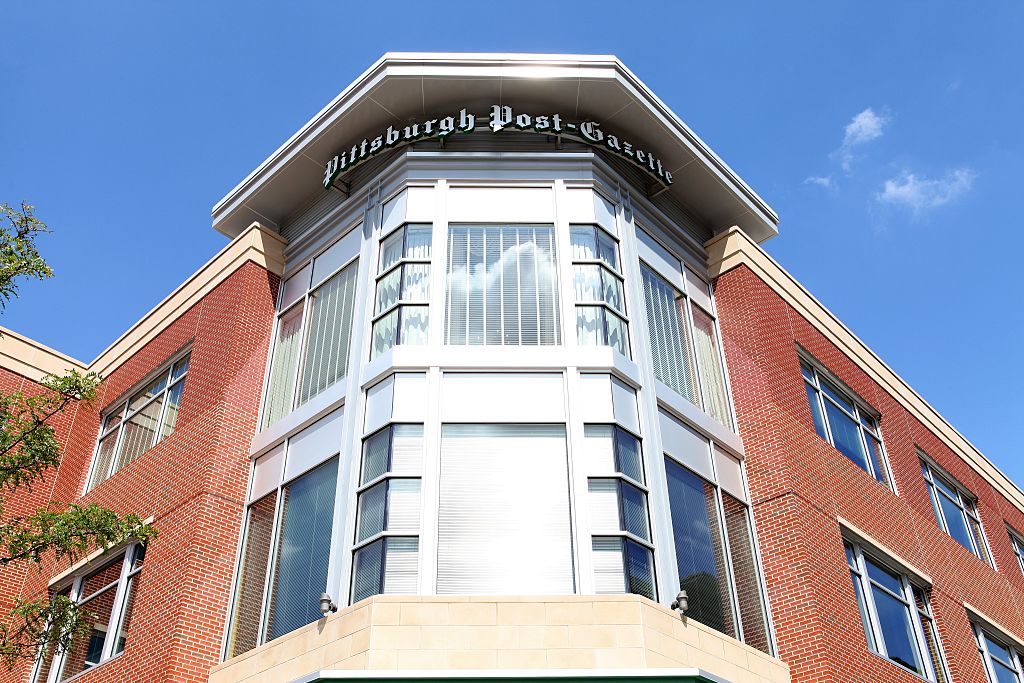
After three years on strike, twenty-six employees of the Pittsburgh Post-Gazette are preparing to return to work. But they might have an uphill battle before they step foot in the office.
The workers voted to end their strike on Thursday, after receiving a decision from the Third Circuit Court of Appeals that determined the Post-Gazette had been bargaining in bad faith and must offer compensation for its workers’-rights violations. The strike at the paper was the longest active strike in the country.
“Thursday was a glorious day. It was one of the single most important days in the history of the Newspaper Guild of Pittsburgh, but also of my life and, I think, the lives of many of us,” said Andrew “Goldy” Goldstein, the president of the guild. Goldstein was an education reporter at the Post-Gazette and walked out with colleagues in October 2022.
“This fight goes back the better part of a decade,” Goldstein said. In 2017, the Post-Gazette ended the union contract that was in place, imposed higher fees for employees’ healthcare, and went back on its commitment to implement a forty-hour workweek. Another point of complaint for workers was wages, which Goldstein claims have not been raised across the board since 2006. In 2020, the company declared a bargaining “impasse” illegally, without good-faith negotiations. A couple of years later, the strike passed.
The Third Circuit’s decision came after years of legal battles, first at the National Labor Relations Board and then in federal court. At every step of the way, the Post-Gazette fought the union’s terms and court decisions. In 2023, an NLRB judge ruled that the paper didn’t negotiate in good faith and ordered it to reinstate the union’s pre-2020 contract. This March, following a lawsuit filed by the NLRB to enforce the board’s decision, a panel of judges at the Third Circuit ordered the paper to to reinstate the pre-2020 health insurance plan for workers. The paper did not comply. Last week the Third Circuit’s most recent decision, handed down by a panel of three judges, required the paper to reinstate the pre-2020 contract, return to the bargaining table and compensate workers for the healthcare charges imposed in 2020, and restore the forty-hour workweek.
In a statement sent to CJR, the Post-Gazette said that if that decision is allowed to stand, it will lead to the closure of the paper. “We have endured wars, economic collapse, and seismic industry change—but this moment represents an existential threat unlike any we have faced before,” the Post-Gazette wrote. The paper also said that it will be appealing to the full Third Circuit court, and that the decision goes against the court’s precedent, as well as Supreme Court precedent.
The three years that the Newspaper Guild of Pittsburgh has been on strike have been contentious. The strike itself started on a tenuous note. It was originally slated for August 2020, when workers voted 88–31 in favor of a strike, but the guild’s parent union, the Communications Workers of America (CWA), never authorized it, and it lost momentum. On the heels of this vote came reporting about decades of alleged sexual misconduct by Michael Fuoco, who was then president of the Pittsburgh chapter.
When the strike was put to a vote again in 2022, Jon Schleuss, the president of the national CWA NewsGuild, made it clear to the Post-Gazette journalists that they had no choice but to strike because their sibling unions at the Post-Gazette were striking.
“I told [members of the Newspaper Guild of Pittsburgh], if they [voted] yes, they were going to go out on strike. If they [voted] no, they were going to go on strike,” Schleuss said, according to reporting by 90.5 WESA. This time the vote was 38–36, a much slimmer margin than in 2020.
Over the years, the Pittsburgh Newspaper Guild’s four sibling unions either settled with the company or took buyouts, but many of the journalists continued to strike. Roughly sixty journalists initially walked out, a number that has now been reduced to twenty-six.
“When this situation started, we had our backs against the wall,” Goldstein said. “Truly, many days it felt like it was us against the world. Despite having so many supporters across the country, when you’re on strike, you’re always on strike. Doesn’t matter if it’s Wednesday or Sunday, if it’s Thanksgiving or Christmas.”
During this time, the union has received criticism from employees and management at the Post-Gazette regarding its leadership of the strike. Multiple sources who spoke with CJR complained of cyberbullying and aggressive tactics by the union against those who crossed picket lines. In November of 2024, Zack Tanner, who was then the president of the union, made headlines for throwing a chair against a wall during contract negotiations.
The union has a published list of “scabs.” In 2022, members picketed outside the wedding reception of John Robinson Block, the paper’s publisher and co-owner, and disseminated a “save the date” invitation for the public to join them. Last December, union members went to Block’s house for a labor-themed Christmas-caroling event; Block invited them in.
Block owns 25 percent of the Post-Gazette’s parent company, Block Communications. He drew attention in 2019 for showing up intoxicated and out of control to the Post-Gazette newsroom late at night on a Saturday. In a 2022 interview, he told CJR that the guild was populated with “malcontents…who were wanting to come in and grieve the fact that their mother didn’t love them when they were five.” In the same conversation, he said he had “a lot of respect for the guild when they’re representing the interests of their workforce.”
Throughout all of it, the employees on strike didn’t hang up their reporting hats—they’ve been writing for a strike paper called the Pittsburgh Union Progress. Bob Batz Jr., an associate features editor and writer at the Post-Gazette who walked out and joined the picket line the first day of the strike, became interim editor of the strike paper. “We went on strike, and fifteen minutes later we were working on a paper,” Batz said. He added: “We didn’t want to not do what we do. At our core, we are and were journalists.”
While on strike, the journalists received four hundred dollars a week in strike benefits, as well as donations and mutual aid. They’ve all had to tighten their expenses and make sacrifices, but many said they have been able to get by.
When asked why he wants to return to a workplace that is potentially still very fraught, Goldstein said that he grew up reading the Post-Gazette from an early age. “It was my New York Times. I felt like if I could ever get a job at the Pittsburgh Post-Gazette, my life would be made,” he said.
The strike is now over. The union filed a request to return to work on Monday; the newspaper has five days to respond. As the journalists prepare to take up their old jobs at the Post-Gazette, they are also readying themselves for a potential appeal before the Third Circuit—or company pushback against their return to the office. While their jobs are guaranteed, it is unclear whether their roles will change, given that the Post-Gazette has hired dozens of journalists since the start of the strike. If all goes well, the workers will end up back where they were in 2017—at the bargaining table, trying to negotiate a new contract.
Editor’s note: This article has been updated to better reflect the Third Circuit’s ruling in March 2025.
Has America ever needed a media defender more than now? Help us by joining CJR today.