Sign up for the daily CJR newsletter.
Two weeks ago, Peter Kyle, Britain’s minister for science, innovation, and technology, sat down to answer questions posed by users of Mumsnet, a parenting forum (that has a peculiar power in British political life), to talk about the impending implementation of provisions contained in the country’s Online Safety Act, a landmark and complicated piece of legislation aimed at protecting people—in particular children—from harmful content on the internet. A key part of the law—a mandate that platforms take down illegal content, for example suicide forums—was already in effect, and in a few days’ time, online services would have to restrict other types of content on the basis of age, using tools like credit card and photo ID checks or automated facial scans to keep users under the age of eighteen from seeing it. Speaking with Mumsnet, Kyle apologized to the current generation of teenagers and their parents, suggesting that the government had let them down. (The current government is run by the nominally center-left Labour Party, which took power last year; the Online Safety Act was introduced by the previous Conservative government.) He then promised that the coming measures would represent “the biggest step forward for a young person’s experience online since the internet was created.”
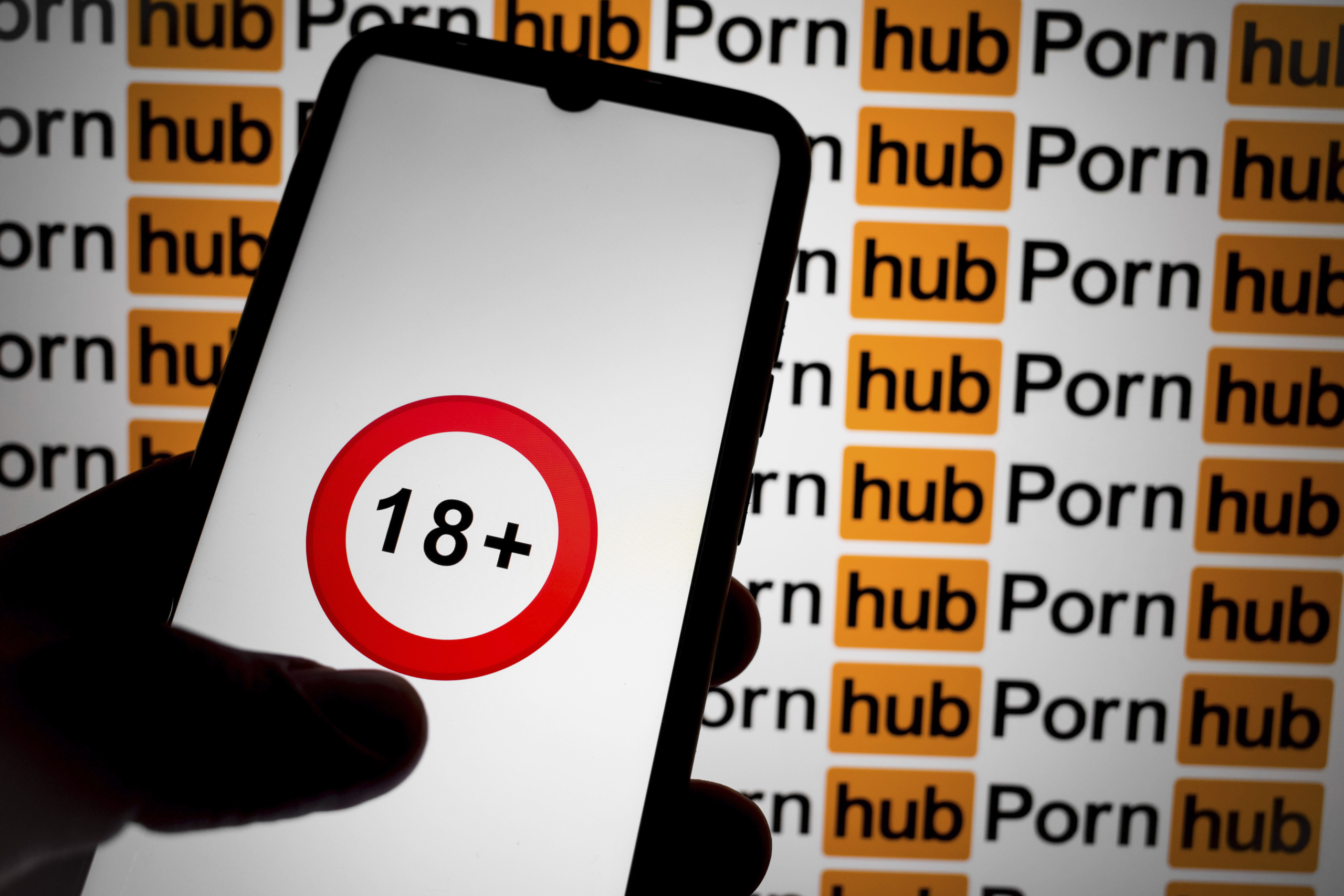
Some observers were skeptical that their enforcement would amount to a clear line in the sand: “The UK’s online safety regime is here,” Politico wrote in a headline the day before the age-gating was due to take effect. “Will anybody notice?” As the new rules rolled out eleven days ago, however, many people did very much notice—and, as with other online trends, the canary in the coal mine was porn; Pornhub began requiring age verification, as did a welter of other sites; so, too, did X, a key smut vector these days, in what Politico described as a “major coup” (or should that be a minor one?) for the British government, given the platform’s reluctance to comply with restrictions in Ireland. In addition to pornography, the new law is intended to stop children from encountering “content which encourages self-harm, suicide or eating disorder content,” as well as “bullying, hateful content and content which encourages dangerous stunts or ingesting dangerous substances.” It is not intended to restrict political debate or other forms of legitimate speech. Indeed, if platforms can face steep fines for allowing children to encounter the aforementioned digital harms, they also, the government says, have “clear and unequivocal duties…to protect freedom of expression.”
And yet, in addition to all the porn-gating, the implementation of the new provisions led to at least some restrictions on the latter type of content. It’s safe to say that people noticed this, too. Four days after the provisions came into effect, Politico reported that they had “swept up a lot more content than social media users expected,” including, apparently, posts about the war in Gaza on X (though access to some of these was later restored). A subsequent analysis by the BBC—mostly of content on X and Reddit, since those platforms are apparently the easiest on which to identify age-restricted content—also found that some posts about Gaza were blocked, including a video on X of a man searching for bodies in a pile of rubble, even though the footage was in no way graphic. (This post, too, was unflagged after the BBC contacted X.) Also reportedly restricted: an X post showing an unmanned drone being blown up in Ukraine, footage of a debate about grooming gangs in Britain’s Parliament (which is still freely available on an official government website), and whole Reddit pages devoted to topics including the news broadcaster Al Jazeera and support for smokers and survivors of sexual assault. X also blocked a graphic image of a man devouring his child. The man was the titan Cronus of Greek myth (a/k/a Saturn). The image was painted by Goya.
Even if you think that children as old as seventeen should be prohibited from seeing newsworthy images or nineteenth-century Romantic masterpieces, the age-gating has affected adults, too; for some, it might merely be a temporary annoyance, but for others—who, out of generalized suspicion or for life-and-death reasons, might be wary of putting their personal details online—it’s an outright hindrance, and some platforms appear simply to have blocked sensitive content outright while they set up the age gates. One expert in children’s online rights told the BBC that the apparent overapplication of the new provisions might just be a teething issue that tech companies will figure out over time. But she also acknowledged the possibility that such firms might deliberately be “over-blocking” to undermine public perception of the new law. Even if this isn’t the case, they certainly seem to be erring on the side of caution. Again, the law will theoretically hold platforms to account for failures to strike an appropriate balance. But that balance is inevitably subjective, and it’s not yet clear how the government intends to enforce it; to a large extent, it’s up to tech platforms themselves to decide how to comply. Viewed one way, this looks like a bulwark against official overreach. Viewed another, it looks like a hole, especially at a moment when major platforms—not least X—are moving away from their more stringent past standards around content moderation.
Predictably, enforcement problems on the user end have also become apparent. The new law bans platforms from hosting or sharing content that encourages visitors to circumvent the law by using virtual private networks, or VPNs: tools that allow Web users to browse as if they are in another jurisdiction, and are commonly used for reasons of both convenience and enhanced privacy. But many people haven’t needed any encouragement: in the days after the new provisions came into effect, the BBC reported that half of the top ten most popular free apps in Apple’s UK App Store were VPNs, with one maker reporting an 1,800 percent increase in downloads. (As of this morning, four of Apple’s top ten apps were VPNs.) Not that such tools have even been needed to bypass the age-gating—players of Death Stranding, a video game with a “photo mode,” reported using a character’s face to trick age-verifying scans.
Equally predictably, a political circus has sprung up around the new provisions, and the Online Safety Act as a whole. Tommy Robinson, a notorious far-right activist (who, incidentally, was arrested yesterday in connection with the very offline alleged crime of assaulting a man at a train station), has repeatedly posted on X condemning the law as an attack on free speech, and circulating a petition for its repeal. Last week, the Reform Party, the latest political vehicle of the right-wing populist and key Brexit agitator Nigel Farage, which is currently surging in the polls, described the law as “massive overreach” that “plunges this country into a borderline dystopian state,” and vowed to get rid of it as a priority should the party take power. Farage pledged to find other ways of protecting children from harmful content, but acknowledged that he didn’t have the answers just yet. In response, Kyle said that Farage’s opposition to the law in effect put him on the same side as Jimmy Savile, a former BBC personality who was revealed after his death, in 2011, to have been a serial abuser of children—for some reason continuing the recent transatlantic trend of the center-left leaning into attacks linking their opponents to infamous pedophiles.
Indeed—and, again, all too predictably—the recent circus around the Online Safety Act has had a direct transatlantic dimension, too. Elon Musk, the sometime X owner and full-time provocateur, amplified some of Robinson’s posts about the law, and said that its purpose was “suppression of the people.” On the day that the new provisions took effect, President Trump happened to land in the UK, on an unrelated visit to Scotland. Asked at a press conference with Keir Starmer, Britain’s prime minister, about “state mandated” powers to “censor” Truth Social, the platform that Trump owns, Trump exhibited rare rhetorical restraint—“I don’t think he’s going to censor my site because I say only good things,” he said—and Starmer assured him that it wouldn’t happen. But Trump wasn’t the only US politician to visit the UK last week: lawmakers from the House Judiciary Committee were in town, too, as part of a supposed “free speech” tour of Europe, and Jim Jordan, the panel’s pugnacious Republican leader, expressed concern about online censorship in the country. During one meeting, Farage reportedly shouted down Jamie Raskin, the top Democrat on the Judiciary Committee, when the latter started talking about Trump’s threats to free speech, and things deteriorated from there. Farage described Raskin as “the most pigheaded person he’d ever met”; Raskin shot back, “This is why we had a revolution against you guys.” Eric Swalwell, another Democratic member of the committee, told Politico afterward that Farage “just looked unhinged and like a giant manbaby.”
The current Republican “free speech” crusade is transparently hypocritical, as I wrote earlier this year, and we live in an age in which US culture-war flotsam has been globalized, with Britain’s often the first shores on which it washes up. And yet, amid all the high-pitch talk of rampant political censorship, the new law does pose genuinely thorny transatlantic questions. Its requirements apply to online platforms wherever they’re based, but some US-based services don’t think they should be compelled to comply; last week, Preston Byrne, a partner at a US tech law firm, told Politico that “multiple” American sites had instructed him to sue a British regulator over the law, and that he is seeking “a declaratory judgment from a federal court that confirms, in writing, the indisputably correct legal position that the Online Safety Act is null and void in the United States.” (“Much of what we consider the ordinary Sturm und Drang of American political discourse—the ordinary back-and-forth—in the United Kingdom is unlawful,” Byrne said separately; whether or not you think this is desirable, the First Amendment does, indeed, protect various types of speech that the UK prohibits.) On Friday, X warned—in more measured tones than those of its owner—that the law needs reform (with a small r), claiming that it currently incentivizes over-enforcement and does a poor job of balancing harm prevention and free expression. Meanwhile, Wikipedia—a site that hardly has a reputation for Muskian histrionics—has taken legal action over a different provision of the law in the UK, claiming that its enforcement could compromise the privacy of its volunteer editors, thus potentially exposing them to abuse or other threats. Recently, the site warned a court that it might have to cap UK usership in response.
And on both sides of the Atlantic, criticism of the law extends far beyond the political right. Yesterday, Mike Masnick, of Techdirt, wrote that it has so far “turned out to be exactly the privacy-invading, freedom-crushing, technically unworkable disaster that everyone with half a brain predicted it would be.” (“Let’s be crystal clear about what this law actually accomplishes,” he added. “It makes it harder for adults to access perfectly legal (and often helpful) information and services. It forces people to create detailed trails of their online activity linked to their real identities. It drives users toward less secure platforms and services. It destroys small online communities that can’t afford compliance costs. And it teaches an entire generation that bypassing government surveillance is a basic life skill.”) Rights groups including the Electronic Frontier Foundation and Index on Censorship have expressed concerns; both recently also signed a letter warning that the act could lead to the censorship of pro-Palestinian views. Writers in the New Statesman, a liberal magazine, have criticized the law as “humiliating,” and a boon (even if unintentionally) for Big Tech firms.
The push to better protect children against the unregulated wilds of the internet, of course, is a global one; Australia, for example, is preparing to ban children under the age of sixteen from using social media, period. Asked by Mumsnet why Britain wasn’t pursuing this sort of policy as well, Kyle insisted that the government is “putting the interests of children ahead of that of Big Tech,” but needed to do so “in a way that is appropriate and actually delivers the change that we want to see.” The pressure for the government to go further will doubtless only intensify, however—especially in a country where, as one pollster once quipped to me, “if you put the word ban in a poll question, support for whatever you’re proposing jumps up by twenty points.” (Indeed, a recent YouGov survey found that 69 percent of Brits support the new age-gating requirements—even though far fewer think they’re effective.) Kyle has said he’ll shortly announce plans to tackle kids’ screen time. And some lawmakers and outside groups have argued that the new law does nothing to counter “legal but harmful” scourges like online misinformation and algorithms that are designed to be addictive.
Extending online-safety laws to apply to misinformation might sound like the sort of Orwellian overreach that Farage, Jordan, and their ilk are warning of. But Britain has seen recently that such content can have intensely harmful real-world costs: a year ago today, I wrote in this newsletter about a wave of racist riots that was then sweeping the country, culminating in attacks on hotels housing asylum seekers, that was first triggered by an inaccurate viral rumor about the nationality of a man who murdered several young girls at a Taylor Swift–themed dance class; now groups are congregating outside asylum hotels again, toting British flags and signs with slogans like “PROTECT OUR KIDS.” As I noted last year, however, while viral junk certainly supercharged the real-life hate, the latter has many drivers, some of which—bigoted traditional media coverage; reckless political rhetoric—long predate the internet, let alone social media. These sorts of problems—and many others besides, not least the safety of children—are increasingly playing out in a world where the lines between the offline and the online are porous, and blurry. It’s reasonable to think that young people, who face all sorts of barriers in the physical world, shouldn’t have unfettered access to depraved digital content. But online gates clearly work differently from physical ones—and the risks of censorship, even if unintended, are real.
Has America ever needed a media defender more than now? Help us by joining CJR today.