Sign up for the daily CJR newsletter.
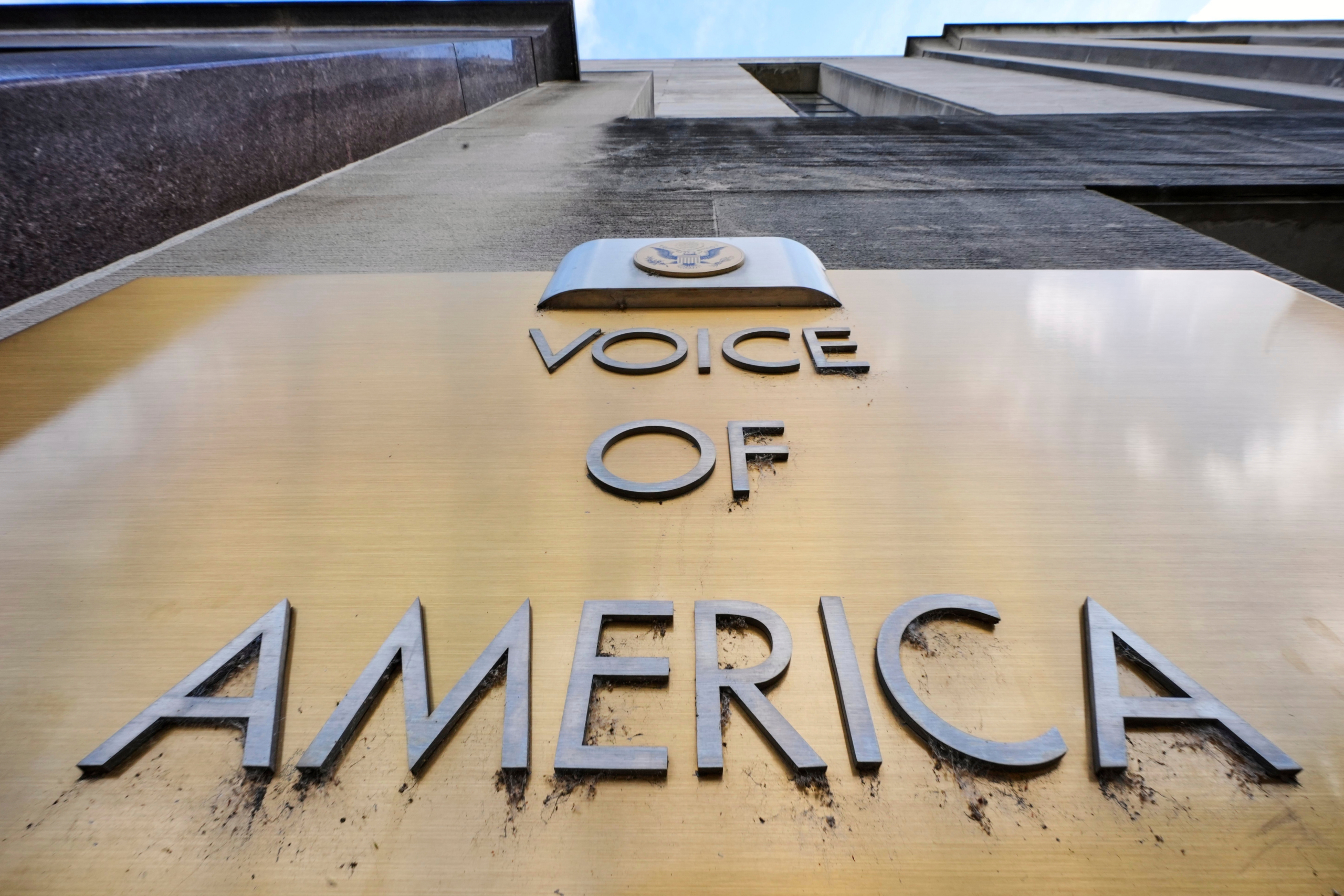
For the embattled journalists of Voice of America (VOA), first came the fight to return to the newsroom they’d been unceremoniously booted from by the Trump administration. Now comes another daunting challenge: clawing back their editorial independence.
Late last month, four employees joined with Pen America and Reporters Without Borders to sue the administration over allegations that President Trump and his political appointees at the United States Agency for Global Media (USAGM), which oversees VOA, had censored their coverage, transforming the newsroom into a “partisan mouthpiece of the administration” and breaching a congressionally created editorial firewall. Codified under the 1994 International Broadcasting Act, the firewall is meant to prevent “interference by any US government official in the objective, independent reporting of news.”
The complaint followed a March 17 order by the US District Court for the District of Columbia that paved the way for more than a thousand VOA journalists to return to work. About a year earlier, Kari Lake, who had been acting as the head of USAGM, placed them on administrative leave as part of an effort to stifle the agency; the ruling determined that Lake, who never received Senate confirmation, was operating outside the law. On April 1, a panel of judges with the US Court of Appeals for the DC Circuit stayed a portion of that ruling—which, for now, has halted plans to bring employees back pending further review of the government’s appeal. “This development will not deter us from our fight to restore VOA’s global operations and to broadcast journalism, not propaganda,” Patsy Widakuswara, Jessica Jerreat, and Kate Neeper, the plaintiffs in the case, said in a statement. Notably, the panel left in place the previous finding that Lake’s plan to draw down VOA was illegal—and she has since been appointed as the agency’s deputy CEO. Lake did not respond to a request for comment.
The new lawsuit may prove crucial to ensuring VOA’s editorial independence, but as media law experts told me, the enforcement of any ruling is a separate battle. “VOA journalists need to be permitted to do their jobs and make their own decisions about what content to air,” Seth Stern, the chief of advocacy at the Freedom of the Press Foundation, said. “If the content they decide to air is viewed as American propaganda, then that is a critique of those journalists, but it needs to be dictated by the journalists, not by Donald Trump.”
“American taxpayers fund USAGM and Voice of America, and those funds by law must support broadcasting that reflects US policy and the interests of the American people,” said Alex Nicoll, a USAGM spokesperson, in a statement shared with CJR. “USAGM is responsible for oversight of its networks, including Voice of America, and for ensuring compliance with the VOA Charter, which requires authoritative, accurate journalism that is reflective of and clearly presents US policies.”
In their lawsuit, the plaintiffs allege that administration officials suppressed VOA coverage of anti-regime protests in Iran, “rendering untrustworthy a once-respected source of independent news.” In January, The Hill reported that Ali Javanmardi, the USAGM-appointed adviser overseeing VOA’s Persian, Kurdish, and Afghan services, had banned mentions of Reza Pahlavi, an opposition figure and the son of Iran’s deposed shah.
Much of the outcry from the VOA rank and file stems from the alleged one-sidedness of the coverage the organization now produces. VOA’s Kurdish, Persian, Mandarin, and Korean stories privilege the administration’s point of view on topics ranging from the war in Iran to Trump’s dealmaking with “peace through strength” to mitigate conflicts around the world, the lawsuit argues, rather than presenting a more comprehensive, accurate picture. A VOA journalist on administrative leave who spoke on the condition of anonymity out of fear of repercussion told me that stories now tend to read like press releases, listing statements from Trump, Pete Hegseth, or Marco Rubio and leaving out relevant context or reaction. The journalist said the on-the-ground voices from Iran, reactions from Europe, and statements from lawmakers who disagree with the White House that ordinarily would have been present in VOA stories are nowhere to be seen: “VOA has carried a lot of US government news before, but that is not ever how we would have done it.”
The VOA charter, which was signed into law in 1976, laid out the organization’s governing principles, which include serving as an “accurate, objective, and comprehensive” news source and representing the whole of the country, as opposed to any single segment of American society. VOA is publicly funded, but it was “never intended to be the propaganda arm of any particular administration,” Jane Kirtley, a professor of media ethics and law at the University of Minnesota’s Hubbard School of Journalism and Mass Communication, told me. “Their goal was to provide truthful information to people living in autocratic countries where that kind of information was not going to be obtainable.” Around the world, VOA is commonly seen as a trusted, independent news source.
There’s some precedent for the new complaint. In 2020, a group of VOA journalists brought a similar suit against the first Trump administration, alleging that USAGM leadership had breached the statutory firewall by interfering with personnel and coverage, suppressing stories deemed “insufficiently supportive” of Trump, and investigating journalists for political bias. Though the court denied parts of the journalists’ claims, the judge sided with them on their allegations of violations of the First Amendment and ordered the government to stop interfering with VOA’s coverage.
Stern fears that even if the court sides with VOA this time around, there’s no guarantee of follow-through. When a judge ordered Trump and Hegseth, the secretary of defense, to let Pentagon correspondents back into the building, they responded by banishing them to an annex on the far side of its parking lot. What happens if the journalists prevail in court, only for the administration to ignore the decision? Stern hopes a judge will issue an order to compel the Trump administration to comply if necessary. “When you’re dealing with censorship and the First Amendment, time is valuable. Every day that journalists are not allowed to do their job is an additional constitutional violation. There’s no time for second chances.”
For now, VOA journalists are waiting to see what will happen next in the courts to determine the future of the outlet. “People have asked me, ‘Isn’t there a game plan for, like, three years from now?’” the VOA journalist said. “I’m like, ‘No. Everybody’s trying to survive for the next six months.’”
Has America ever needed a media defender more than now? Help us by joining CJR today.